1. Why CNC Machining Is Widely Used for Robot Parts
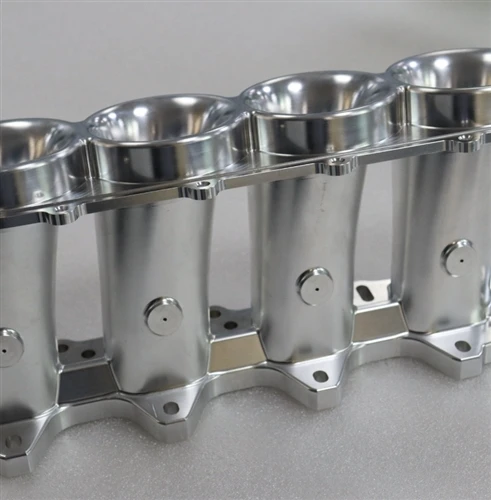
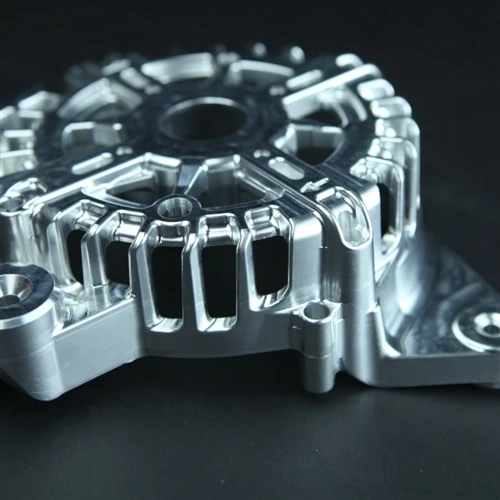
Robot components often have complex geometries, multiple mounting surfaces, precision holes, bearing seats, threaded features, and tight assembly requirements. CNC milling and turning can produce these features directly from metal or engineering plastic materials without the need for production molds.
For robot manufacturers, CNC machining offers several practical advantages:
- Precision: Critical holes, bearing seats, shafts, and mating surfaces can be manufactured to controlled tolerances.
- Design flexibility: Engineers can modify CAD files and produce new versions without making a new injection mold.
- Material options: Aluminum, stainless steel, titanium, steel, POM, PEEK, and other engineering materials can be machined according to the application.
- Prototype-friendly production: CNC machining is suitable for functional prototypes and small production runs.
- Complex geometries: Multi-axis machining can reduce the number of setups required for components with features on several surfaces.
For robot development companies, this makes CNC machining particularly useful during the transition from mechanical design to functional testing and production.
2. Common Robot Components Manufactured by CNC
Different robot architectures require different mechanical components. Typical CNC-machined robot parts include:
Robot Joint Housings
Joint housings contain or support motors, bearings, gearboxes, encoders, and other mechanisms. Their bearing bores and mounting surfaces may require careful control of concentricity, flatness, and position.
Arm Links
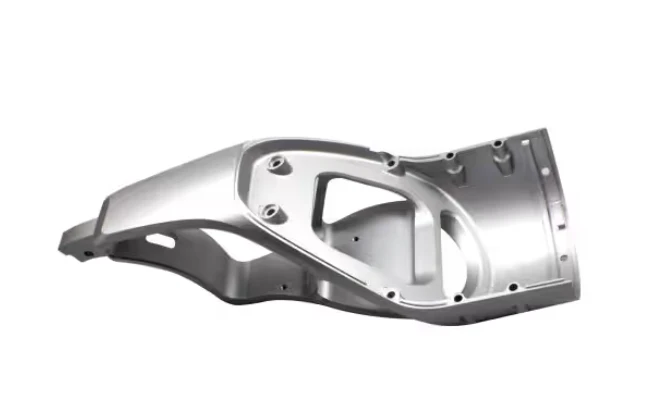
Robot arm links need to balance stiffness and weight. Aluminum alloys such as 6061-T6 and 7075-T6 are commonly considered for lightweight structural components.
Shafts and Bushings
Rotating shafts and bushings require accurate diameters and surface conditions to achieve proper fits and smooth movement.
End Effectors and Gripper Components
Robot hands, grippers, mounting plates, fingers, and custom end-of-arm tooling often contain multiple holes, slots, pockets, and threaded features. CNC machining allows these components to be customized for specific applications.
Robot Chassis and Brackets
Chassis plates, motor brackets, sensor mounts, and structural supports are commonly machined from aluminum or other materials depending on strength, weight, and environmental requirements.
3. Selecting Materials for CNC Robot Parts
Material selection should be based on more than material price. Weight, strength, stiffness, corrosion resistance, wear resistance, operating temperature, and machining characteristics all need to be considered.
6061 Aluminum
6061-T6 is a practical option for many robot brackets, housings, plates, frames, and structural components. It offers a useful combination of strength, low weight, corrosion resistance, and machinability.
7075 Aluminum
7075-T6 provides higher strength than 6061-T6 and is often considered when weight reduction and mechanical strength are important. It can be suitable for highly loaded robot arms, joint components, and other lightweight structural parts.
Stainless Steel
304 and 316L stainless steel can be used when corrosion resistance, strength, or specific environmental requirements are important. Stainless steel components are also found in medical, laboratory, food-processing, and other demanding equipment.
Titanium
Titanium alloys such as Ti-6Al-4V offer a high strength-to-weight ratio and good corrosion resistance. They can be considered for specialized robot components where weight and mechanical performance justify the higher machining cost.
Engineering Plastics
POM, PEEK, and other engineering plastics can be used for low-friction, lightweight, electrically insulating, or chemically resistant components. The appropriate material depends on the operating environment and mechanical requirements.
4. 3-Axis vs. 5-Axis CNC Machining for Robot Components
Not every robot part requires 5-axis machining.
Simple plates, brackets, and components with features accessible from a limited number of directions can often be produced efficiently using 3-axis CNC machining.
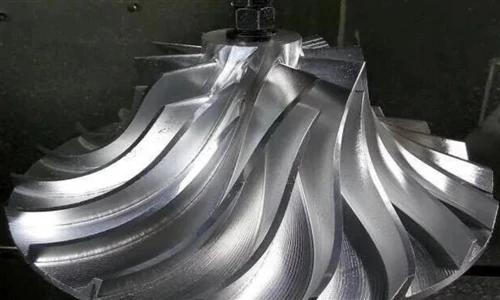
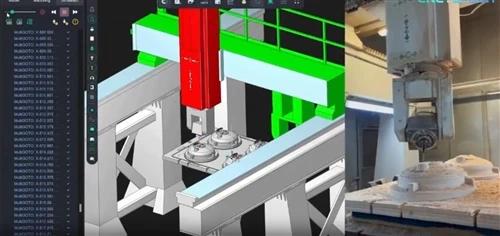
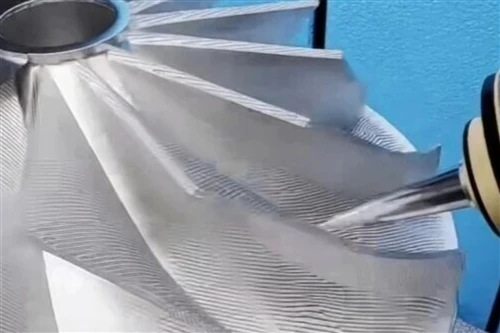
For more complicated parts, 5-axis machining can provide advantages by allowing the cutting tool to approach features from different directions. This can reduce setups and improve consistency between multiple surfaces.
Typical applications for multi-axis machining include:
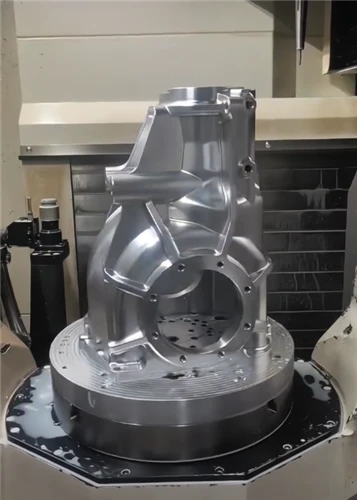
Complex robot joint housings
Lightweight arm structures
Curved or angled components
Multi-sided housings
Parts with deep or difficult-to-access features
Components requiring close positional relationships between surfaces
The most suitable machining process should be determined from the actual CAD geometry, tolerance requirements, material, quantity, and production schedule rather than simply choosing the most advanced machine.
5. Tolerances and Quality Requirements
Precision is important in robot manufacturing, but not every dimension needs the same tolerance.
For example, a non-critical external surface may not require the same tolerance as a bearing bore or precision mounting hole. Applying unnecessarily tight tolerances to every feature can increase machining time and cost without improving robot performance.
Important areas may include:
Bearing bores
Shaft diameters
Gearbox mounting surfaces
Motor mounting holes
Encoder interfaces
Locating features
Mating surfaces
Hole-to-hole positional relationships
A clear technical drawing should define critical dimensions, tolerances, surface finish, threads, material, and finishing requirements.
Quality inspection can include dimensional measurement, visual inspection, thread checking, surface-finish verification, and other inspection methods appropriate to the component.
6. Surface Finishing for Robot Parts
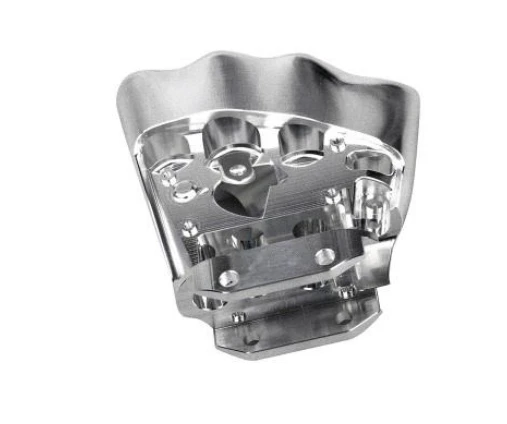
Surface treatment can improve corrosion resistance, wear resistance, appearance, or functional performance.
For CNC-machined aluminum robot parts, common options include:
- Anodizing
- Hard anodizing
- Bead blasting
- Brushing
- Chemical conversion coating
Stainless steel components may use polishing, passivation, or other treatments depending on the application.
The finish should be selected together with the functional requirements. For example, a decorative finish and a precision mating surface may require different processing considerations.
7. Design for Manufacturing: What Robot Engineers Should Consider
A good CNC design is not only easy to machine; it should also provide the required mechanical performance while controlling production cost.
Several DFM considerations can make a significant difference:
- Avoid unnecessarily deep pockets. Deep cavities require longer tools and can increase machining time.
- Use practical internal radii. CNC milling tools are round, so sharp internal corners normally require special machining strategies or smaller tools.
- Standardize holes and threads where possible. Common hole and thread sizes can simplify tooling and inspection.
- Identify critical tolerances. Tight tolerances should be applied where they have a functional purpose.
- Consider workholding. Components with accessible datum surfaces are generally easier to fixture and machine consistently.
- Think about assembly. Bearing fits, fastener access, mating surfaces, and component orientation should be considered before production.
Early DFM communication between the robot engineering team and CNC manufacturer can help identify manufacturing problems before machining begins.
8. Controlling CNC Machining Costs
The cost of a robot part depends on several factors rather than material price alone.
Major cost drivers include:
Material
Part size and weight
Machining time
Number of setups
Part complexity
Required tolerances
Surface finishing
Inspection requirements
Order quantity
Special tooling or fixtures
For prototypes, machining and setup costs represent a larger portion of the unit price. As production volume increases, programming and fixture costs can be distributed across more parts.
For this reason, it is often useful to review the complete production plan rather than comparing suppliers only by their quoted unit price.
9. From Robot Prototype to Low-Volume Production
Robot hardware usually evolves through multiple design revisions. A component that works in the first prototype may need to be redesigned after testing for strength, weight, assembly, cable routing, motor integration, or thermal management.
CNC machining supports this development process because the same basic manufacturing method can be used for prototype parts and later low-volume production.
A typical workflow is:
CAD file → DFM review → material confirmation → CNC machining → finishing → inspection → assembly/testing → design revision
This approach allows engineering teams to learn from functional testing and update the design without investing in production molds at an early stage.
10. Working with a CNC Manufacturing Partner
For robot companies, choosing a machining supplier involves more than checking machine quantity.
A suitable manufacturing partner should be able to understand engineering drawings, review CAD models, identify manufacturing risks, control critical dimensions, and communicate clearly when design changes are required.
It is also useful to confirm:
Available CNC machining capabilities
Supported materials
Multi-axis machining capability
Inspection equipment
Surface treatment options
Prototype and low-volume capacity
Production lead times
Packaging and shipping requirements
Quality documentation
For overseas robot manufacturers, clear communication during DFM and inspection is particularly important because machining problems are much easier to solve before production than after the parts have been shipped.
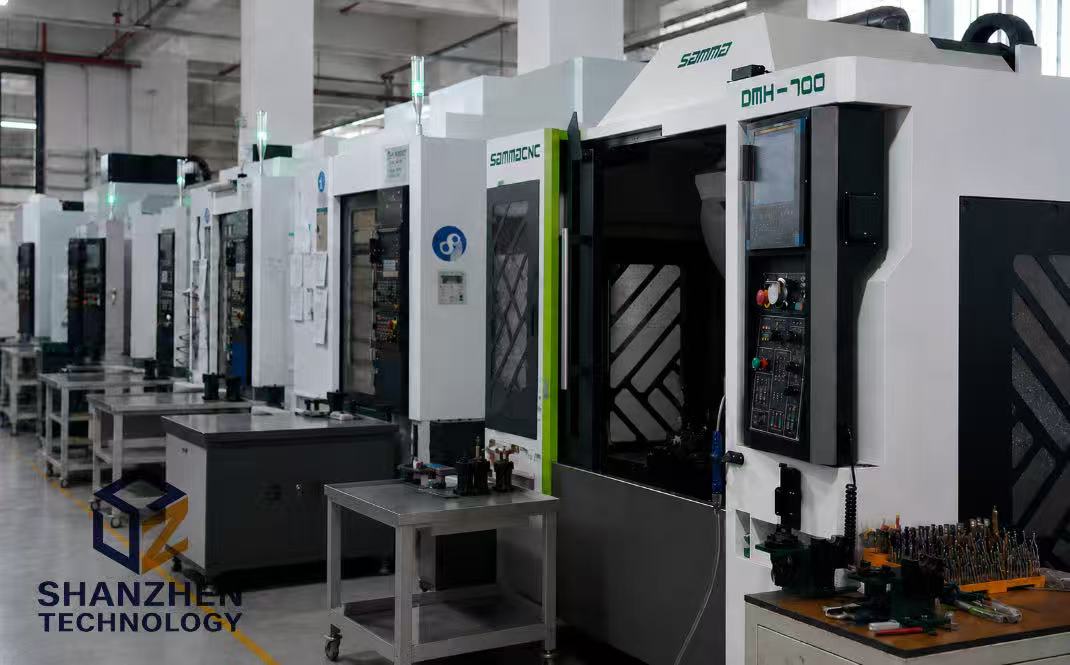
CNC Machining for Custom Robot Parts
Robot hardware requires a combination of mechanical strength, dimensional accuracy, weight control, and reliable assembly. CNC machining provides a flexible manufacturing route for producing custom robot components from prototype quantities to small-batch production.
At Shenzhen Jingcheng Dingyi Precision Manufacturing, we provide 3-axis and 5-axis CNC machining for custom metal and engineering plastic components. Our capabilities cover aluminum, stainless steel, titanium, and other materials for applications including robot joints, arm components, brackets, housings, shafts, chassis parts, and custom end-effectors.
If you have a robot component in the prototype or production stage, send us your 3D CAD model or technical drawing for a manufacturing review. We can evaluate the geometry, material, tolerances, machining process, and finishing requirements before production.