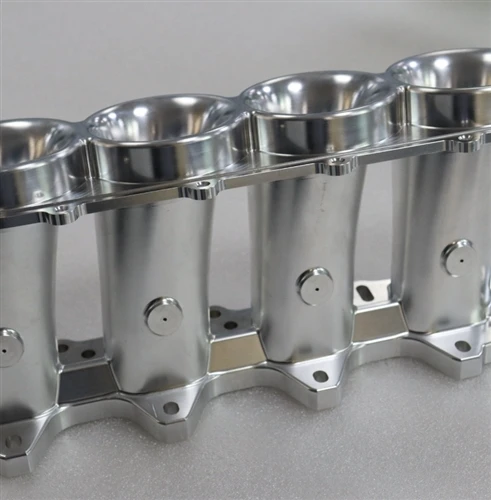
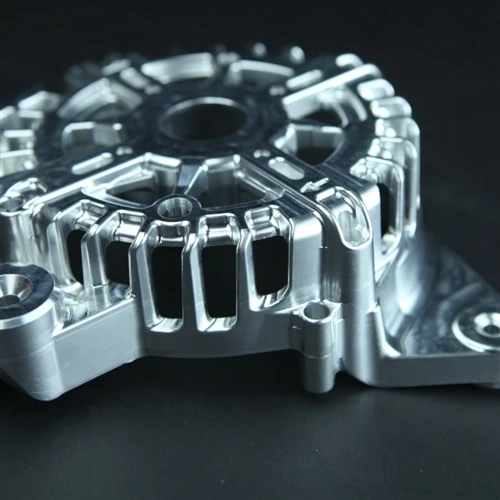
Why 5-Axis CNC Is Useful for Humanoid Robot Components
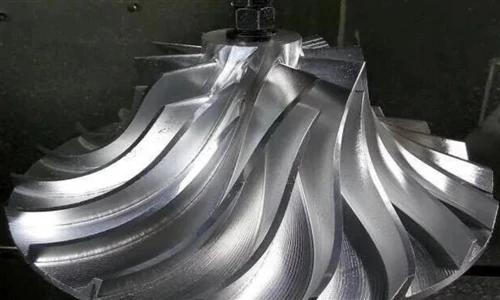
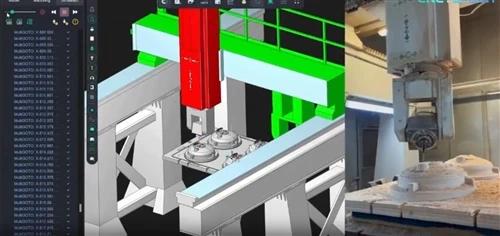
The main benefit is not simply having more machining axes. It is the ability to approach difficult features from better directions while maintaining a stable machining setup.
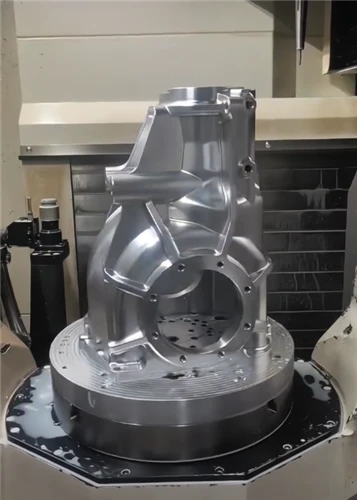
A humanoid robot joint housing, for example, may have bearing bores, mounting holes, curved outer surfaces and threaded features on different faces. Producing all these features with conventional 3-axis machining may require several setups.
Each additional setup creates another opportunity for positioning errors.
With 5-axis CNC machining, more features can often be accessed within the same setup. This can help maintain the relationship between critical holes, mounting surfaces and bearing seats.

Complex Curves and Angled Features
Robot components are not always simple blocks with straight pockets. Lightweight structural parts often use curved surfaces and angled transitions to reduce weight while maintaining stiffness.
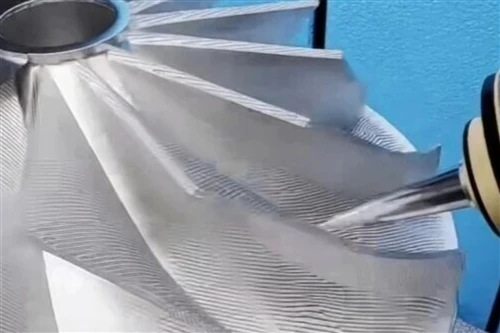
5-axis machining allows the tool orientation to change during machining. This is particularly useful for:
- Curved robot arm links
- Joint housings
- End-effector components
- Lightweight brackets
- Robot foot and leg components
- Complex motor housings
- Structural parts with angled surfaces
Better tool access can also reduce the need for very long cutting tools, which may help improve machining stability and surface quality.
Choosing the Right Material for Robot Parts
Material selection depends on the required strength, weight, corrosion resistance, wear resistance and operating environment.
- 6061 aluminum is widely used for lightweight structural components and prototypes because it is relatively easy to machine and offers a good balance between weight and mechanical performance.
- 7075 aluminum can be considered when higher strength-to-weight performance is required. It is commonly used for load-bearing robot components such as joint structures, arm links and brackets.
- Stainless steel is suitable for components requiring higher corrosion resistance, durability or mechanical strength. Depending on the application, materials such as 304 or 316L may be considered.
For demanding applications, titanium and engineering plastics such as POM or PEEK may also be used.
The material should be selected together with the actual load, assembly method and operating conditions rather than simply choosing the strongest material available.

Precision Matters More at the Assembly Level
For robot parts, overall part dimensions are only one part of the quality requirement.
Features such as bearing seats, shafts, mounting holes and threaded holes may need to work together with other components. A part can meet individual dimensional requirements but still cause assembly problems if the positional relationships are incorrect.
For this reason, manufacturing should pay attention to:
Dimensional tolerances
Hole position and orientation
Concentricity or coaxial relationships
Flatness of mounting surfaces
Bearing-seat dimensions
Thread quality
Surface finish
Part-to-part consistency
The actual tolerance should be determined from the engineering drawing and functional requirements. Not every feature needs an extremely tight tolerance, and applying unnecessarily tight tolerances can increase machining cost.
DFM Should Start Before Machining
A good CNC process begins before the material reaches the machine.
During technical review, the manufacturer can check whether the design has difficult internal corners, unnecessarily deep pockets, thin walls, inaccessible holes or features that require multiple setups.
For humanoid robot parts, several small design changes can make a noticeable difference to manufacturability.
For example, adjusting an internal corner radius to match an available cutting tool can reduce machining difficulty. Increasing wall thickness in a particularly flexible area can also improve machining stability.
When a customer provides 3D CAD files and 2D drawings, the manufacturing team can review the design and suggest practical machining adjustments before production.
From Prototype Parts to Small-Batch Production
Robot companies often move through several manufacturing stages: prototype, functional testing, design revision and then small-batch production.
CNC machining works well in this environment because the same basic manufacturing process can be adapted as the design changes.
For early prototypes, the focus may be on dimensional accuracy and fast design verification. Once the design is confirmed, the process can be optimized for repeatability, surface finishing, inspection and batch production.
This is especially useful for robot manufacturers that need custom metal parts in relatively small quantities rather than thousands of identical components.

How to Control Quality in 5-Axis Machining
A reliable machining process combines equipment, programming, workholding and inspection.
Before production, the machining strategy and tool access should be reviewed. During production, important dimensions can be checked using appropriate measuring equipment. For critical components, inspection may include dimensional measurement of holes, surfaces and positional relationships.
Material identification and production records are also important when traceability is required by the application.
The inspection method should be matched to the actual drawing requirements instead of using the same inspection standard for every robot component.
Working with a CNC Manufacturer
For humanoid robot projects, a CNC supplier needs to do more than simply run a machine.
The supplier should understand how the part will be machined, how it will be inspected and how it will be assembled into the final robot.
At Jingcheng, we provide 3-axis and 5-axis CNC machining for custom robot components, including aluminum and stainless steel parts, joint housings, arm links, brackets, shafts and other precision mechanical components.
We support prototype and low-volume production based on customer CAD files and drawings, with manufacturing and DFM feedback focused on making complex robot parts practical to produce.
If you have a humanoid robot component that requires 5-axis machining, send us the 3D CAD model, 2D drawing, material and required quantity for a technical review.