


Product / Service Overview
OEM custom manufacturing services for precision medical components, surgical instruments, and diagnostic device assemblies. Production supports low-volume clinical trials to full-scale commercial manufacturing within controlled cleanroom environments. Operations align with recognized quality management standards, ensuring complete regulatory compliance and strict design control throughout the product lifecycle.
-
![Medical Prototype Development]() Medical Prototype DevelopmentOrthopedic implants are not ordinary precision parts.A small change in a hole diameter, mating surface, thread, or contour can affect how an implant interfaces with another component or with the
-
![Cnc Medical Parts]() Cnc Medical PartsCustom stainless steel medical components manufactured with 5-axis CNC machining for artificial heart equipment projects.Shenzhen Jingcheng Dingyi Forming Technology Co., Ltd. manufactures precision
-
![Medical Device Components]() Medical Device ComponentsMedical device components refer to high-precision functional and structural components manufactured for medical devices and equipment through CNC precision machining, turning, milling, grinding, and
-
![Surgical Instrument Parts]() Surgical Instrument PartsJingcheng provides high-precision CNC machined plastic parts for surgical instruments, supporting medical device manufacturers with custom components made from advanced engineering plastics such as


Materials & Technical Specifications
Data applies to standard production and custom fabrication runs.
|
Category |
Specifications & Options |
|
Metals & Alloys |
316L Stainless Steel, 17-4PH, Grade 5 Titanium (Ti-6Al-4V), Cobalt-Chrome |
|
Engineering Plastics |
PEEK, PSU, Radel (PPSU), Ultem (PEI), Medical-Grade Silicone |
|
Dimensional Tolerances |
CNC Milling & Turning: +/-0.005 mm or tighter (application-dependent) |
|
Surface Roughness |
Ra <= 0.2 um to 0.8 um via electropolishing and passivation |
|
Identification & Traceability |
Laser-etched UDI (Unique Device Identification) and lot numbers per component |
Manufacturing Process
Production workflows integrate multi-axis CNC machining, Swiss-type turning, micro-laser cutting, and cleanroom injection molding. Secondary operations include chemical passivation, ultrasonic cleaning, and automated laser welding. Cleanroom assembly incorporates solvent bonding, leak testing, and functional calibration prior to final packaging.
Key Features & Capabilities
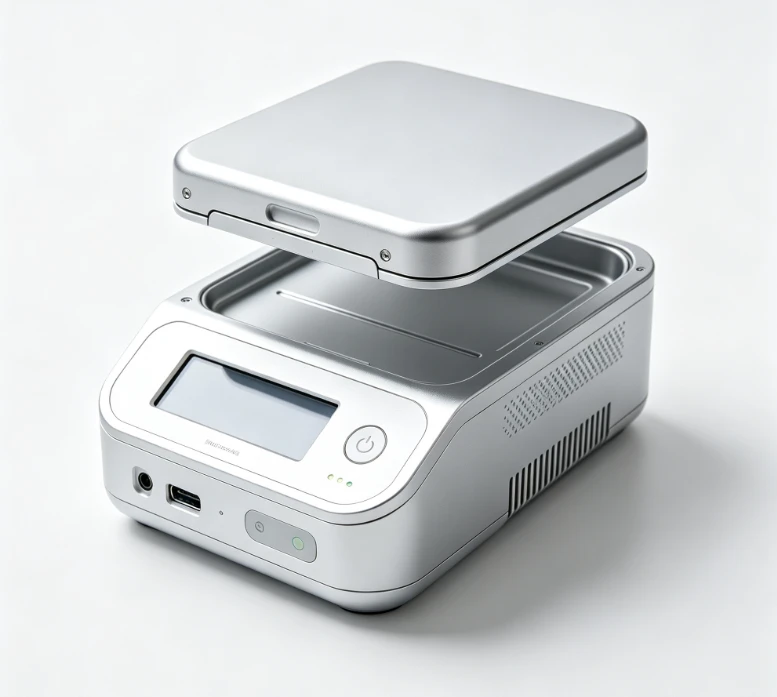
-
Cleanroom Operations
Dedicated controlled environments for assembly and packaging.
-
Micro-Machining
Tight-tolerance milling and turning for complex surgical tools and catheter components.
-
Surface Treatment
In-house passivation, ultrasonic degreasing, and cleanroom-grade deburring.
-
Validation Support
Protocol execution and full process validation documentation.
Applications
Surgical Robotics
Articulated instrument shafts, endoscopic jaws, and actuator housings.
Orthopedics
Spinal fixation plates, bone screws, and reusable surgical trial instruments.
Cardiovascular
Catheter delivery system components, guiding catheter hubs, and valve sub-assemblies.
Diagnostic Equipment
Microfluidic cartridge manifolds, optical sensor mounts, and fluidic connectors.
Customization & Prototype Production
Rapid prototyping services convert 3D CAD models into physical hardware within 7 to 10 business days. Engineering teams conduct Design for Manufacturability (DFM) reviews to identify potential production risks, optimize wall thicknesses, and reduce machining cycles. Custom tooling and fixture development occur on-site to transition prototypes directly into pilot production runs without geometric distortion.

Manufacturing & Quality Control
Inspection infrastructure and compliance metrics under standard QMS.
|
Inspection / Control Item |
Equipment / Method |
Output / Deliverable |
|
Dimensional Verification |
Automated CMM & Optical Vision Systems |
First Article Inspection (FAI) reports |
|
Surface Integrity |
Precision Roughness Testers (Ra) |
Quantitative Surface Data Sheets |
|
Cleanroom Monitoring |
Continuous Particle Counter & Environmental Logger |
Environmental Logs per Batch |
|
Material Verification |
Barcode Scanning & Mill Test Review |
Certificate of Analysis & MTCs |
|
Regulatory Documentation |
Full Traceability Audit Trails |
Complete Technical File Support |
Production & Technical Support
Dedicated project engineering teams coordinate technical transfer, risk management, and supply chain scheduling. Production schedules utilize enterprise resource planning systems to track inventory levels, raw material lots, and lead times in real-time. Post-delivery support includes failure analysis reports, engineering change order management, and continuous process optimization.
FAQ
Shenzhen Jingcheng Dingyi Forming Technology Co., Ltd. is one of the most professional medical manufacturing manufacturers and suppliers in China, also supports customized service with low price. Please feel free to buy bulk cheap medical manufacturing from our factory. For quotation, contact us now.


