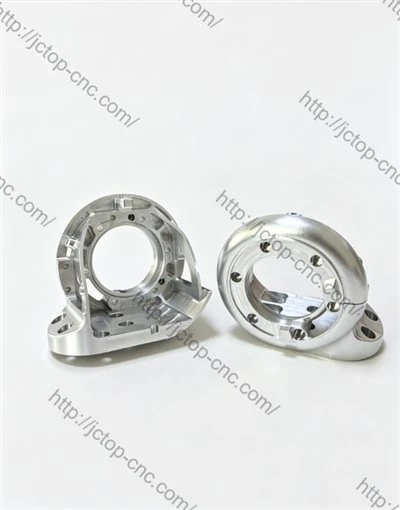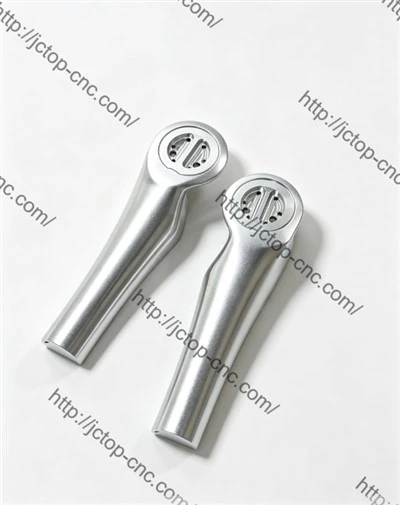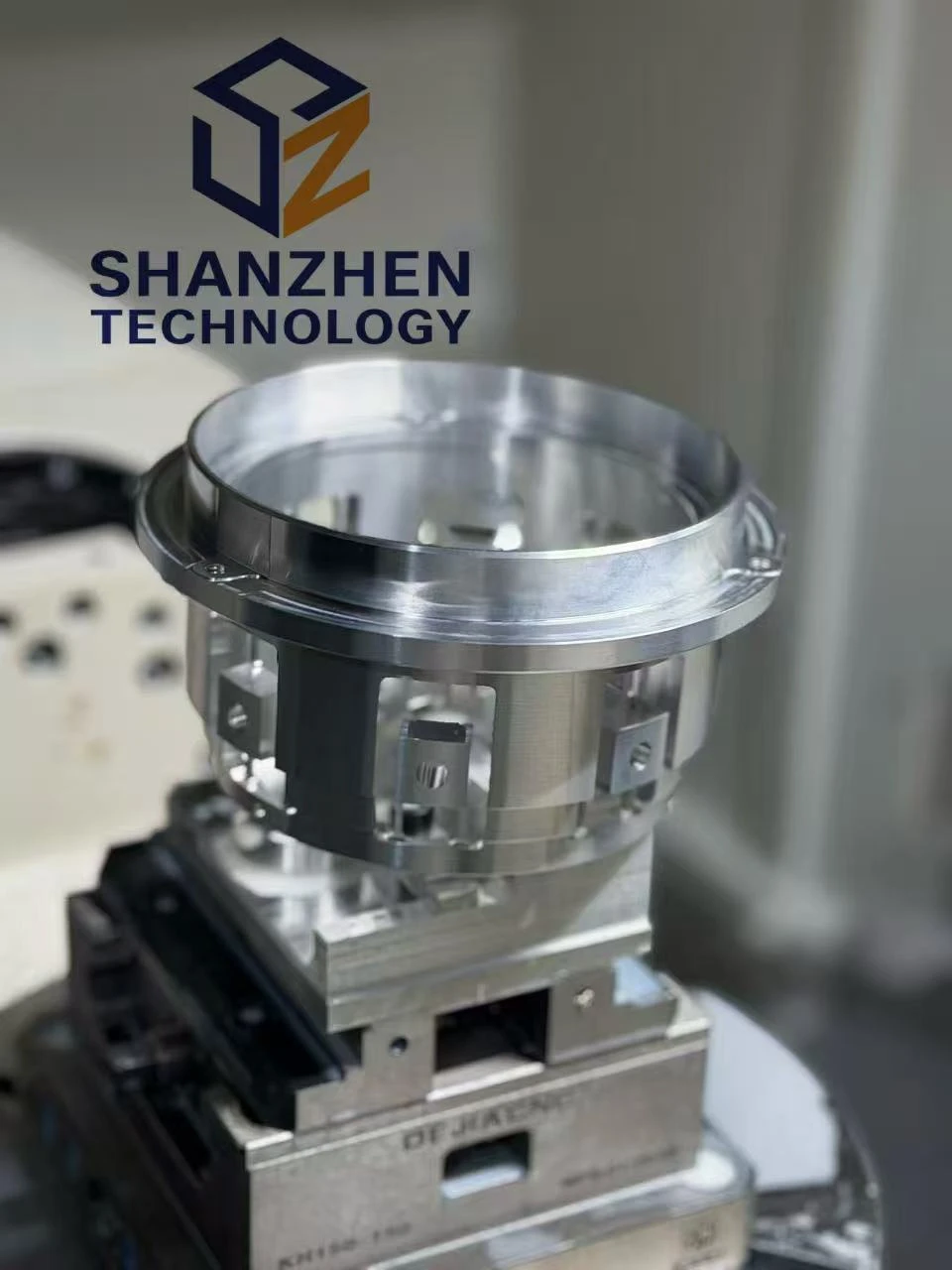
Shenzhen Jingcheng Dingyi Forming Technology Co., Ltd. is one of the leading manufacturers and suppliers of humanoid robot joint shell in China, specialized in providing high quality customized products. If you're going to buy bulk cheap humanoid robot joint shell, welcome to get quotation from our factory. Quality products and low price are available.
Key Features of Robot Actuator Joint Housing
Precision CNC Machining
The housing is CNC machined to achieve accurate mounting surfaces, bearing bores, threaded holes, and mating features. Proper dimensional control helps ensure smooth actuator assembly and reliable joint movement.

Lightweight and Strong Construction
Aluminum alloys such as 6061 and 7075 are commonly selected for robot actuator housings because they offer a good balance between strength, weight, machinability, and corrosion resistance.
For applications requiring higher mechanical strength or specific environmental performance, stainless steel or other engineering materials can also be considered.

Integrated Bearing and Motor Mounting
A robot actuator housing may include precision bores and mounting interfaces for:
- Motors
- Gearboxes
- Bearings
- Shafts
- Encoders
- Covers
- Fasteners
These features can be machined according to the customer's mechanical design.

Customized Surface Finishing
Different surface finishes are available according to the application, including:
- Type II anodizing
- Type III hard anodizing
- Bead blasting
- Polishing
- Passivation
- Powder coating
Hard anodizing can be considered when improved wear resistance and surface durability are required for aluminum robot components.
Materials for Robot Actuator Joint Housing
Different robot applications require different material properties.
| Material | Main Advantages | Typical Application |
|---|---|---|
| Aluminum 6061 | Lightweight, machinable, corrosion resistant | Robot housings and structural parts |
| Aluminum 7075 | High strength-to-weight ratio | High-load robotic joints |
| Stainless Steel | High strength and corrosion resistance | Heavy-duty or demanding environments |
| Titanium | Lightweight and high strength | Specialized robotic applications |
The appropriate material depends on the actuator load, weight requirements, operating environment, production volume, and budget.
Applications
Precision CNC machined Robot Actuator Joint Housings can be used in:
- Humanoid robots
- Robotic arms
- Collaborative robots
- Quadruped robots
- Industrial robots
- Mobile robots
- Autonomous systems
- Robotic exoskeletons
- Automation equipment
The housing can be customized for different actuator architectures and mechanical interfaces.

Custom CNC Robot Actuator Joint Housing
Every robotic joint can have different dimensions, mounting patterns, bearing sizes, and actuator configurations. Therefore, off-the-shelf housings may not always meet the requirements of a new robotic platform.
We support custom CNC machining based on 2D drawings, 3D CAD models, material specifications, tolerances, surface finish, and production quantities.
During manufacturing, critical features such as bearing bores, shaft interfaces, threaded holes, and mating surfaces can be inspected according to the drawing requirements.
Customization Options
Custom dimensions
Custom mounting holes
Bearing bores
Motor mounting interfaces
Gearbox interfaces
Encoder mounting features
Threaded holes
Surface finishing
Logo or marking
Prototype and production quantities
Why Choose CNC Machining for Robot Joint Housings?
CNC machining is well suited for robotic actuator housings because it can produce complex geometries and maintain tight dimensional requirements without requiring dedicated production tooling.
It is particularly useful during robot development, where designs may change between prototype and production stages.
CNC machining can also provide consistent quality for low-volume production and customized robotic components..
FAQ
Q: 1. What is a Robot Actuator Joint Housing?
A: A Robot Actuator Joint Housing is the structural enclosure that supports and protects components inside a robotic joint, such as motors, gearboxes, bearings, shafts, and encoders.
Q: 2. What materials are commonly used for robot actuator housings?
A: Aluminum 6061 and 7075 are commonly used because they provide a good balance between lightweight construction, strength, and machinability. Stainless steel and titanium can also be used for specific applications.
Q: 3. Can the actuator housing be customized?
A: Yes. We manufacture custom Robot Actuator Joint Housings according to customer drawings or 3D CAD files. Dimensions, mounting holes, bearing bores, threads, interfaces, materials, and surface finishes can be customized.
Q: 4. What surface finishes are available?
A: Common options include Type II anodizing, Type III hard anodizing, bead blasting, polishing, passivation, and powder coating. The appropriate finish depends on the material and application.
Q: 5. Can you machine precision bearing bores?
A: Yes. Precision bearing bores and other critical mating features can be CNC machined according to the required drawing tolerances. The final tolerance should be specified clearly on the technical drawing.
Q: 6. Is aluminum 7075 suitable for robotic joint housings?
A: Yes. Aluminum 7075 offers a high strength-to-weight ratio and can be a good choice for robot joints exposed to higher mechanical loads.
Q: 7. Can you produce prototypes and mass-production parts?
A: Yes. CNC machining is suitable for both prototype development and low- to medium-volume production. Production quantities can be discussed based on your project requirements.
Q: 8. What files are needed for a quotation?
A: A 2D engineering drawing and/or 3D CAD file is preferred. Material, quantity, tolerance, surface finish, and other technical requirements should also be provided when available.
Get a Custom Robot Actuator Joint Housing Quote
Need a precision housing for your robotic actuator or joint assembly?
Send us your 3D CAD model or 2D drawing. Our team can review the material, machining requirements, tolerances, surface finish, and production quantity and provide a customized CNC machining solution.
Request a CNC Machining Quote →
Hot Tags: humanoid robot joint shell, China humanoid robot joint shell manufacturers