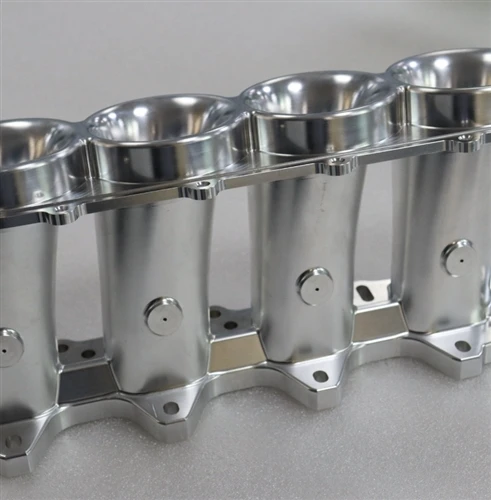
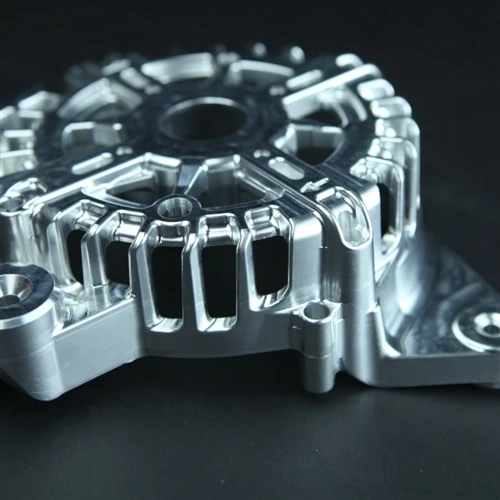
How Does CNC Machining Work?
Although the exact manufacturing process varies from part to part, a typical CNC machining project follows several stages.
1. CAD Design and Manufacturing Information
The process usually starts with a 3D CAD model and, when required, a 2D engineering drawing.
The drawing can define important manufacturing information such as:
- Overall dimensions
- Critical tolerances
- Hole and thread specifications
- Surface finish
- Material
- Geometric tolerances
- Special inspection requirements
Complete manufacturing information helps the machining team understand how the part is intended to function.
2. Manufacturing Review and CAM Programming
Before machining, the geometry is reviewed for manufacturability. Engineers consider tool access, workholding, material, wall thickness, machining orientation and the required tolerances.
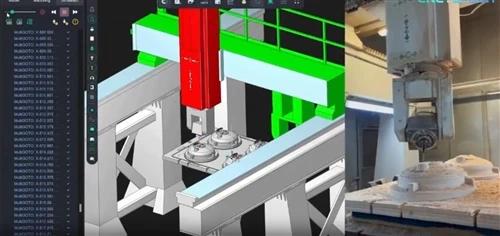
CAM software is then used to generate machining toolpaths. These toolpaths control factors such as cutting direction, tool movement, machining sequence and cutting operations.
3. Machine Setup
The appropriate CNC machine, cutting tools and workholding method are selected according to the part.
The workpiece is securely positioned, tools are installed and the machining program is checked before production begins.
For complex components, multiple setups may be required. In other cases, 5-axis CNC machining can reduce repositioning by allowing the cutting tool to approach the workpiece from different directions.
4. CNC Machining and Inspection
The machine performs the programmed operations, which may include milling, drilling, tapping, turning or other processes.
Operators and quality personnel monitor the process and inspect critical dimensions according to the drawing and quality requirements. Additional finishing operations may be carried out after machining.
Common Types of CNC Machining
CNC Milling:
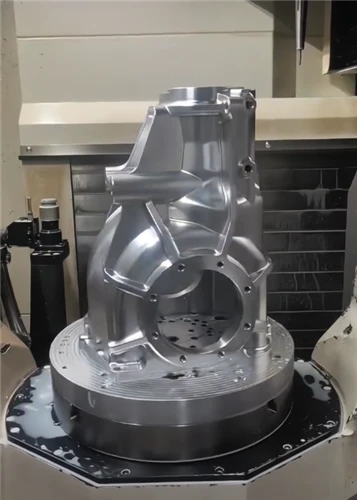
CNC milling uses rotating cutting tools to remove material from a stationary workpiece. It is suitable for housings, brackets, plates, shafts, robot components and many other custom parts.
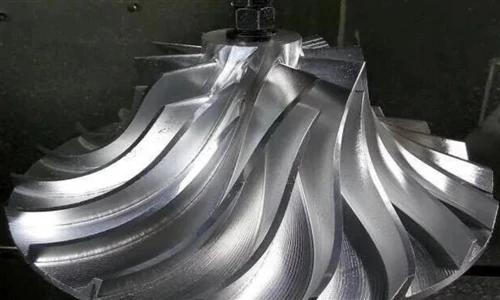
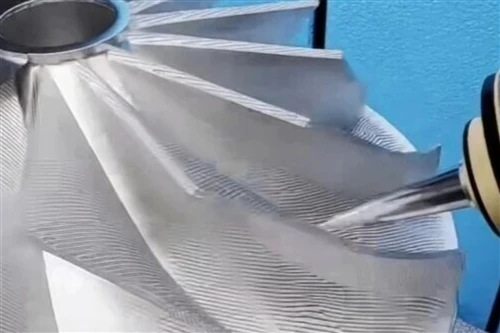
3-axis CNC machining is suitable for many conventional geometries, while 5-axis machining can be useful for complex surfaces, angled features and parts requiring access from multiple directions.
CNC Turning
In CNC turning, the workpiece rotates while a cutting tool removes material. It is commonly used for cylindrical or rotational components such as shafts, pins, bushings, collars and threaded parts.
CNC Drilling and Tapping
Drilling creates holes in a workpiece, while tapping produces internal threads for fasteners. These operations are often combined with milling or turning during the same manufacturing project.
Grinding and Secondary Operations
Depending on the required specification, CNC-machined parts may also require grinding or other secondary operations to achieve specific dimensional or surface requirements.
What Materials Can Be CNC Machined?
One of the major advantages of CNC machining is its compatibility with a wide range of engineering materials.
Common materials include:
- Aluminum: 6061 and 7075 are widely used for lightweight structural parts, robot components, housings and aerospace-related applications.
- Stainless steel: Different grades can be selected when strength, corrosion resistance or durability is required.
- Titanium: Suitable for applications where high strength-to-weight performance and material performance are important.
- Engineering plastics: Materials such as POM and other technical plastics can be machined for lightweight components, electrical insulation and functional prototypes.
Material selection should consider the part's operating environment, mechanical requirements, temperature, wear, corrosion resistance and manufacturing method.

3-Axis vs. 5-Axis CNC Machining
Not every CNC part requires 5-axis machining.
A relatively simple component with features accessible from the top or sides may be manufactured efficiently using 3-axis machining. More complicated parts with curved surfaces, angled features, deep areas or multiple orientations may benefit from 5-axis machining.
The choice depends on the actual geometry and tolerance requirements rather than simply using the machine with the largest number of axes.
What Are the Benefits of CNC Machining?
High Dimensional Consistency
Computer-controlled machining provides repeatable tool movement, making CNC suitable for components with multiple critical dimensions and mating features.
Complex Geometry
CNC machines can produce pockets, holes, slots, contours, threads and other detailed features that may be difficult to manufacture manually.
Flexible Production Volumes
CNC machining is well suited to prototypes, one-off custom components and low-volume production. The same basic manufacturing method can often be adapted as production quantities change.
Wide Material Selection
Metals and engineering plastics can be machined according to the requirements of the application.
No Dedicated Mold Required
For many machined parts, production can begin directly from CAD data without creating a dedicated injection mold or die. This can be particularly useful during product development and design iterations.
CNC Machining for Prototypes and Custom Parts
CNC machining is especially useful when engineers need functional parts rather than visual models.
A prototype can be manufactured from the intended production material, allowing teams to evaluate dimensions, assembly, mechanical function and design before moving to larger-scale production.
For low-volume projects, CNC machining also provides flexibility when product demand does not justify dedicated tooling.
CNC Machining at Jingcheng
Jingcheng provides 3-axis and 5-axis CNC machining for custom precision components in aluminum, stainless steel, titanium and engineering plastics.
Our machining applications include robot components, medical device parts, aerospace and drone components, automation equipment, housings, brackets, shafts and other custom mechanical parts.
We work from customer-provided 3D CAD files and 2D drawings. Before production, our engineering team can review the design for manufacturability and provide DFM feedback where appropriate.
Whether you need a single custom component, a functional prototype or a small production batch, the machining process can be planned around the part's geometry, material, tolerance and application.
Send us your CAD file or technical drawing to discuss your CNC machining requirements.