What Is 5-Axis CNC Machining?
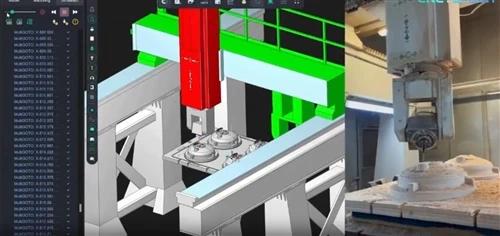
A 5-axis CNC machine combines three linear axes with two rotary axes. Depending on the machine configuration, the additional axes may rotate the workpiece, the cutting head, or both.
The machine does not necessarily need to move all five axes simultaneously for every operation. The important advantage is the ability to change the machining orientation more efficiently.
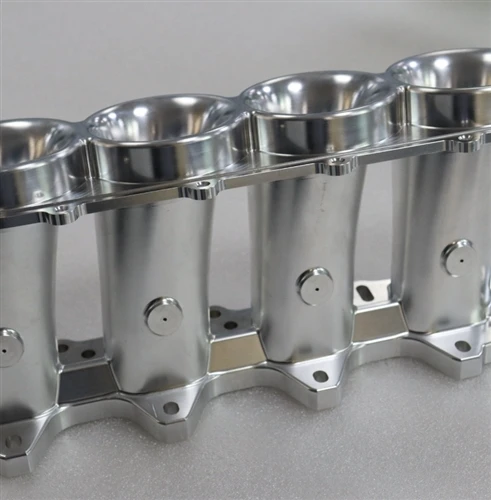
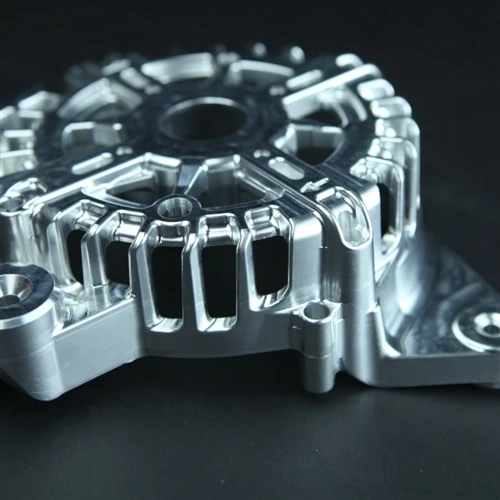
For parts with multiple angled surfaces or complex 3D geometry, this can reduce the number of setups and improve access to difficult areas.
Why Use 5-Axis Machining?
Better Access to Complex Features
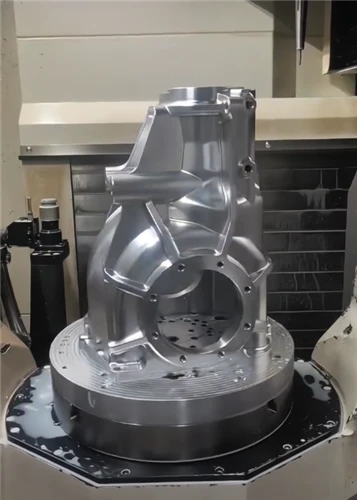
Some components contain deep pockets, angled holes, curved surfaces or features located on several sides of the part.
With conventional 3-axis machining, these features may require the workpiece to be removed and repositioned several times.
5-axis machining allows the cutting tool to approach these areas from more suitable directions. This can simplify the machining process and reduce unnecessary setups.
Improved Accuracy Between Features
Every time a workpiece is removed and repositioned, there is a possibility of introducing alignment variation.
Reducing the number of setups can help maintain the relationship between critical features, particularly when several surfaces or holes need to work together during final assembly.
This is especially useful for components such as robot joint housings, aerospace components, medical device parts and precision mechanical structures.
More Efficient Machining of Curved Surfaces
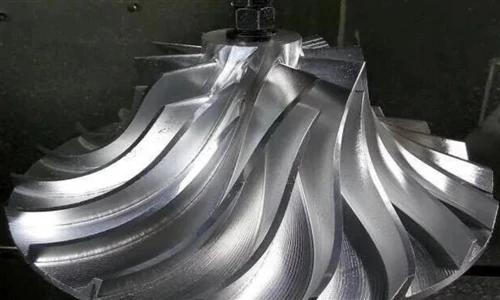
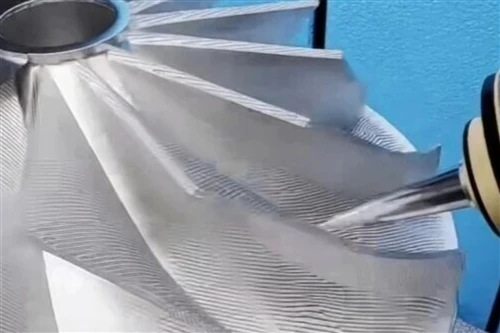
5-axis machining can continuously adjust the tool orientation while following a curved surface.
This provides better control over tool engagement and can make it easier to maintain a suitable cutting condition across complex geometry. The result may include more consistent surface quality and reduced need for additional machining or finishing, depending on the part design.
5-Axis CNC for Difficult Materials
The advantage of 5-axis machining is not limited to geometry.
Materials such as stainless steel and titanium can require careful control of cutting conditions, tool engagement and heat during machining.
By allowing engineers to select more suitable tool orientations and machining strategies, 5-axis equipment can help improve process control when working with these materials.
However, 5-axis machining itself does not automatically guarantee better results. Tool selection, workholding, programming, cutting parameters and inspection all remain important.
Typical Parts Made with 5-Axis CNC
5-axis CNC machining is commonly considered for parts with complex geometry or multiple machining orientations, including:
- Humanoid robot joint components
- Robot arm links and structural parts
- Aerospace structural components
- Turbine and impeller-related components
- Medical device components
- Complex aluminum housings
- Drone components
- Precision automation parts
- Custom prototypes with complicated surfaces
For a relatively simple bracket, plate or block, 3-axis machining may be sufficient. Using 5-axis equipment is not always necessary.
3-Axis vs. 5-Axis CNC Machining
The right machining method depends on the part rather than simply choosing the machine with more axes.
- 3-axis CNC machining can be a practical choice for parts where the main features are accessible from a limited number of directions.
- 5-axis CNC machining becomes more useful when the design includes multiple angled surfaces, compound curves, deep areas or features that would otherwise require several setups.
During manufacturing review, factors such as geometry, tolerance, material, tool access, production quantity and workholding are considered before selecting the machining strategy.
5-Axis Machining at Jingcheng
Jingcheng provides 3-axis and 5-axis CNC machining for custom precision components used in robotics, medical devices, aerospace, drones, automation and other industrial applications.
Our team works with customer-supplied 3D CAD models and 2D engineering drawings. Before machining, we can review the design for manufacturability, machining orientation, tool access and other production considerations.
We machine materials including aluminum, stainless steel, titanium and engineering plastics, with the manufacturing process selected according to the actual part requirements.
For a complex component, 5-axis machining can be an effective way to simplify setups and reach difficult features. For simpler parts, a 3-axis process may provide a more practical solution.
Send us your CAD file or technical drawing for a manufacturing review and CNC machining discussion.