What Is High-Speed CNC Machining?
High-speed CNC machining uses optimized cutting parameters, machine tools, and tooling to remove material efficiently while maintaining control over dimensional accuracy and surface quality.
Compared with conventional machining, an optimized high-speed process can help reduce machining time and improve the quality of certain complex surfaces.
The actual cutting speed depends on factors such as:
Material being machined
Tool diameter and geometry
Spindle capability
Cutting depth and feed rate
Part geometry
Required surface finish
The Role of CNC Machine Technology
Modern CNC machines use high-performance spindles, precision motion systems, and advanced control technology to achieve stable tool movement.
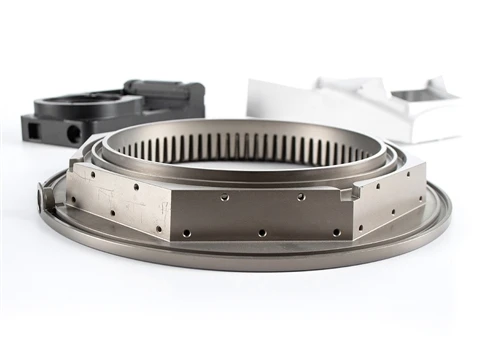
For complex components, accurate positioning and smooth multi-axis movement are particularly important. 5-axis CNC machining can allow multiple surfaces and complex contours to be machined with fewer setups, depending on the part design.
This can be useful for aerospace components, robotic parts, precision mechanical components, and other parts with challenging geometries.
Cutting Tools Also Matter
High-speed machining requires suitable cutting tools. Tool material, coating, geometry, and tool condition can all affect machining performance.
For example, different tool materials and coatings may be selected according to the workpiece material and cutting conditions. Proper tool selection can help control tool wear, surface quality, and production consistency.
High-Speed Machining for Complex Components
High-speed CNC machining can be particularly useful for components with complex surfaces or large amounts of material removal.
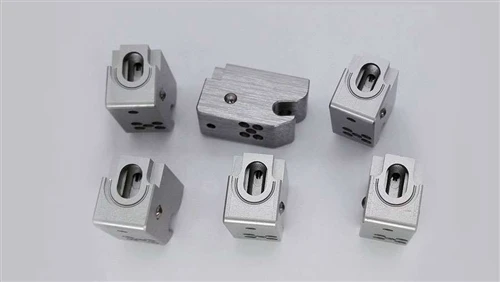
Aerospace components, automation parts, robot components, and precision mechanical parts may require a combination of efficient material removal and controlled surface quality.
For thin-wall or complex components, however, simply increasing cutting speed is not always the solution. Tool paths, workholding, cutting forces, tool selection, and machining sequence also need to be considered.
Precision Requires More Than the Machine
Achieving a precise CNC part depends on the complete manufacturing process.
CAD/CAM programming, material preparation, workholding, tool selection, machining strategy, dimensional inspection, and operator experience can all influence the final result.
For this reason, process planning should be based on the actual drawing requirements rather than relying on machine specifications alone.
CNC Machining at Jingcheng
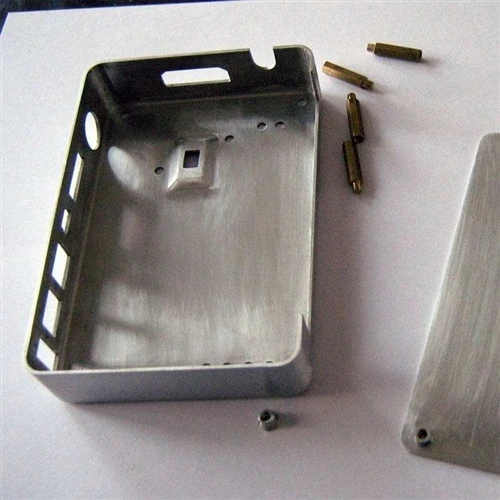
Jingcheng provides 3-axis and 5-axis CNC machining for prototypes and low-volume production. We work with aluminum, stainless steel, titanium, and engineering plastics for customized components.
For each project, machining methods can be selected according to the part geometry, material, tolerance, surface finish, quantity, and application.
If you have a complex CNC component to manufacture, send us your 2D drawing or 3D CAD file. Our engineering team can review the design and determine a suitable machining approach.