What Is CNC Machining?
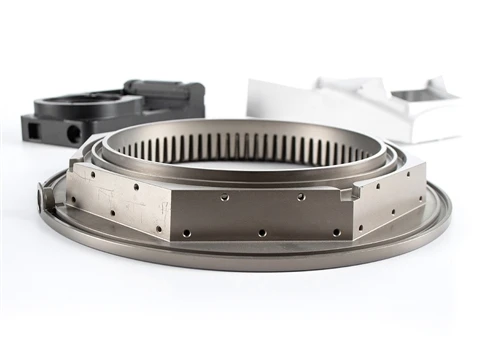
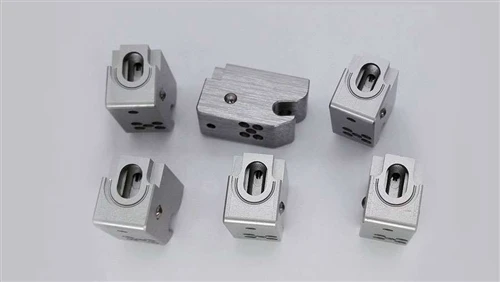
CNC machining uses computer-controlled cutting tools to remove material from a solid workpiece. It can produce precision components from materials such as aluminum, stainless steel, titanium, brass, and engineering plastics.
CNC machining is often selected when a part requires:
Tight dimensional tolerances
Functional mechanical performance
Production-grade materials
Good surface quality
Machined threads and holes
Custom surface finishes
One-off or low-volume production
3-axis and 5-axis CNC machining can be used according to the complexity of the component. 5-axis machining is particularly useful for parts with multiple angled surfaces and complex 3D geometries.
What Is 3D Printing?
3D printing creates parts layer by layer directly from a digital 3D model. It can produce complex shapes without conventional cutting tools or molds.
3D printing is commonly used for:
Rapid prototypes
Concept models
Assembly testing
Appearance verification
Complex geometries
Lightweight structures
Design iterations
Because the manufacturing process starts directly from a digital model, designers can quickly modify a design and produce another version for testing.
CNC Machining vs. 3D Printing
The two technologies are suitable for different manufacturing requirements.
| Requirement | CNC Machining | 3D Printing |
|---|---|---|
| Functional prototypes | Excellent choice | Suitable depending on material |
| Metal parts | Excellent choice | Depends on printing technology |
| Complex geometry | Suitable | Excellent for many geometries |
| Tight tolerances | Suitable | Depends on technology |
| Rapid design iterations | Suitable | Excellent |
| Production-grade materials | Wide material options | Depends on process |
| Surface finish | Wide range of options | Depends on technology |
| One-off parts | Suitable | Suitable |
| Low-volume production | Suitable | Suitable |
These differences do not mean that one process is always better than the other. The appropriate method should be selected according to the actual purpose of the part.
When Should You Choose CNC Machining?
CNC machining is often a good option when the prototype needs to behave similarly to the final component.
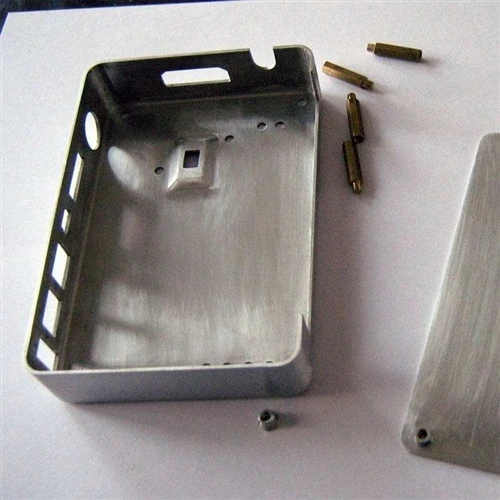
For example, aluminum housings, stainless steel brackets, robot components, mechanical fixtures, and precision assemblies may require the strength, dimensional stability, and surface characteristics of machined materials.
CNC machining can also be combined with processes such as anodizing, polishing, bead blasting, painting, and passivation when specific surface requirements are needed.
When Should You Choose 3D Printing?
3D printing can be particularly useful during the early stages of product development.
If the main goal is to check the shape, assembly, dimensions, ergonomics, or overall appearance of a new design, 3D printing can provide a fast way to create a physical model.
It is also useful for parts with complex internal structures or geometries that would be difficult or inefficient to manufacture through conventional machining.
Can CNC Machining and 3D Printing Be Used Together?
Yes. In many product development projects, CNC machining and 3D printing can complement each other.
For example, a development team may use 3D printing for an early design prototype, then use CNC machining to produce a functional metal prototype for mechanical testing.
This approach allows different manufacturing technologies to be used at different stages of product development.
How to Select the Right Process?
Before choosing a manufacturing method, consider:
Part material
Geometry and complexity
Dimensional tolerances
Surface finish
Functional requirements
Production quantity
Prototype purpose
Required delivery time
Budget
At Jingcheng, we provide both CNC machining and 3D printing services for prototypes and low-volume production. Our team can review your CAD model and technical requirements and help determine a suitable manufacturing process for your project.
Whether you need a 3D printed prototype, a precision CNC machined component, or a combination of both, you can send us your 2D drawing or 3D CAD file for review.