Why Robot Joint Parts Require Careful Machining
Robot joint components are commonly manufactured from materials such as 6061 and 7075 aluminum, stainless steel, and other engineering metals. Aluminum is widely used because of its low weight, while 7075 aluminum is often selected when higher strength is required.
Complex joint components may require several machining operations. A single part can include precision bores, threaded holes, curved surfaces, pockets, and mounting interfaces. If the workpiece is repositioned incorrectly between operations, the positional relationship between these features can shift.
Thin-wall sections can also be sensitive to cutting forces. Excessive tool pressure or an unsuitable machining sequence may cause deformation, making an otherwise accurate CNC program unable to deliver the required final dimensions.
How JCTOP Controls the Machining Process
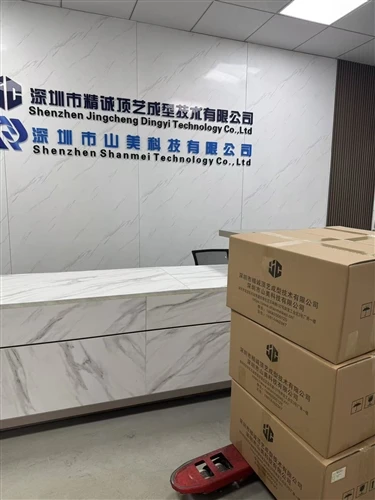
At Shenzhen Jingcheng Dingyi Precision Manufacturing, machining strategies are selected according to the material, geometry, tolerance requirements, and production quantity.
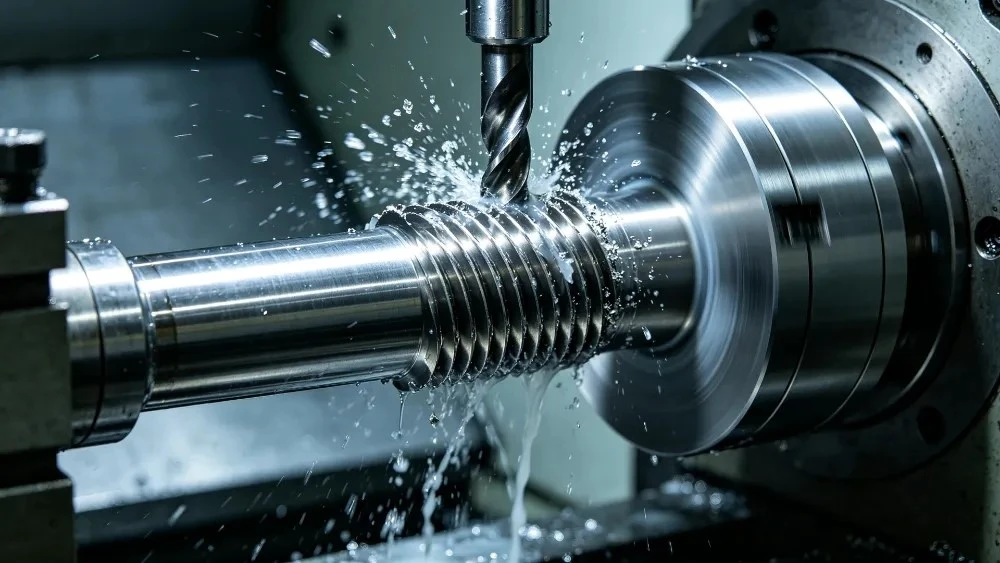
For complex robot components, 3-axis or 5-axis CNC machining can be used depending on the geometry. Where possible, critical features are completed with fewer setups to reduce accumulated positioning errors. Tool selection, cutting parameters, workholding, and machining sequence are also considered before production.
For aluminum robot parts, attention is given to burr formation and surface condition around holes, pockets, and mating surfaces. After machining, parts can undergo deburring and visual inspection before dimensional checking.
Inspection of Critical Features
For robot joint components, not every dimension has the same functional importance. Particular attention is given to bearing seats, shaft bores, mounting holes, threaded features, and critical mating surfaces.
Dimensional inspection is performed according to the drawing requirements, with inspection tools selected according to the feature and tolerance. This helps identify dimensional deviations before parts move to assembly.
Supporting Robot Component Development
JCTOP provides CNC machining for robot components, prototypes, and low-volume production. The company works with aluminum, stainless steel, and other commonly machined materials for applications including robot arms, joint housings, brackets, shafts, and structural components.
For customers developing new robotic hardware, supplying complete 2D drawings, 3D CAD files, material specifications, and critical tolerances helps our engineering team evaluate manufacturability and recommend a practical machining approach.
If you are sourcing precision CNC machined components for robotic equipment, send us your drawings or 3D files for a machining review and quotation.