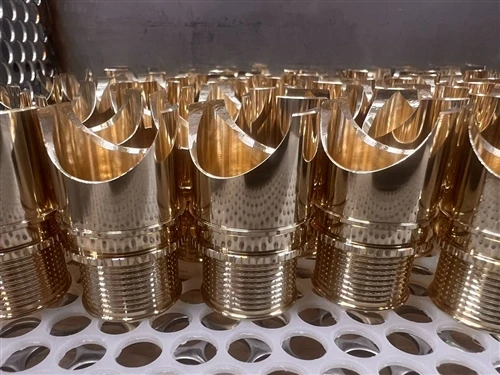
Metal injection molding (MIM) is an advanced manufacturing process that combines powder metallurgy with the design flexibility of injection molding. It enables the production of small, intricate metal components that may be difficult or expensive to manufacture using conventional machining or traditional powder compaction methods.
As products become smaller and more complex, manufacturers increasingly need metal components with integrated features, consistent dimensions, and repeatable production quality. MIM addresses these requirements by using fine metal powders and a binder system to form complex geometries before debinding and sintering.
,
Rather than replacing conventional powder metallurgy, MIM expands its capabilities by making more complex component geometries possible. Today, it is used in selected applications across consumer electronics, medical devices, automotive systems, telecommunications, and other precision manufacturing sectors.
What Makes Metal Injection Molding Suitable for AI Hardware?
Metal injection molding is a manufacturing process that combines fine metal powders with a polymer binder to create a moldable feedstock. The material is injected into a mold, then undergoes debinding and sintering to produce a solid metal component.
This process can manufacture small parts with complex three-dimensional geometries, thin walls, recesses, and other intricate features that may require multiple operations when produced using conventional machining.
MIM is particularly suitable for components with the following characteristics:
Complex geometries: Multiple design features can be integrated into a single molded component.
Small component sizes: MIM is commonly used for compact precision parts.
High-volume production: Once the design and process are stable, the same geometry can be reproduced efficiently.
Material flexibility: Depending on the application and process capability, stainless steel, titanium alloys, copper-based alloys, and other metal systems may be considered.
Material efficiency: Near-net-shape production can reduce material waste compared with machining from solid stock.
However, MIM is not the best choice for every metal part. CNC machining is often more practical for prototypes, low-volume production, and components that require frequent design changes. MIM involves tooling costs and additional process development, so its economic advantages generally become more attractive when part designs are stable and production volumes are sufficiently high.
For AI hardware manufacturers, selecting between MIM and CNC machining depends on component geometry, material requirements, tolerances, production volume, and development timelines.
1. High-Speed Connectors: A Growing Application for MIM Components
High-speed connectivity is essential to AI servers, data centers, and high-performance computing systems. As interconnect technologies evolve from 112G toward 224G and beyond, connector manufacturers face increasingly demanding requirements for structural stability, dimensional consistency, and reliable performance.
These developments are creating opportunities for more advanced metal components in selected connector designs.
Metal injection molding can produce intricate connector housings and structural components with integrated features. For suitable designs, the process may reduce the need for multiple machining operations and support consistent production at scale.
The potential benefits include:
Complex geometries in compact metal components
Repeatable production for high-volume applications
Reduced machining requirements for suitable part designs
Integration of multiple structural features into one component
Nevertheless, the suitability of MIM depends on the specific connector design. Electrical conductivity, contact resistance, dimensional tolerances, surface finish, and mechanical requirements must all be evaluated. Not every connector component is suitable for MIM, and conventional machining or other forming processes may remain preferable for certain features.
As AI server connectivity advances, MIM is becoming a manufacturing option worth evaluating for selected high-speed connector components.
2. Optical Module Housings: Thermal Management and Material Selection
Optical transceivers are critical components in AI data centers because they enable high-speed communication between servers, switches, and other network equipment.
As optical modules advance from 800G toward 1.6T, thermal management becomes an increasingly important design consideration. Higher data rates and evolving module architectures can increase cooling demands, although actual power consumption varies by product and implementation.
This creates opportunities to evaluate alternative materials and manufacturing methods for selected optical module components.
Copper-based materials are attractive for thermal management because copper offers high thermal conductivity. However, copper is relatively soft, so components exposed to repeated insertion, contact, or mechanical wear may require additional attention to hardness, strength, and surface properties.
Copper-based MIM may be considered for suitable small, complex components where thermal performance and geometric integration are important. Depending on the alloy and final component requirements, the process may offer a way to produce intricate shapes while supporting repeatable manufacturing.
Key engineering considerations include:
Thermal conductivity and heat-transfer requirements
Alloy selection and mechanical strength
Dimensional accuracy and surface finish
Wear resistance in contact or insertion areas
Sintering behavior and achievable material properties
Production volume and tooling economics
It is important to distinguish a promising material or manufacturing direction from widespread commercial adoption. The suitability of copper-based MIM for optical modules must be assessed on a component-by-component basis, with actual performance and qualification requirements guiding the final decision.
3. Liquid Cooling Components: Potential for Complex Metal Geometries
Liquid cooling is becoming increasingly important as AI processors and server systems demand more effective thermal management.
High-power GPUs and other computing components generate substantial heat, creating demand for cooling solutions capable of transferring heat efficiently within increasingly compact systems. Cold plates, quick-connect fittings, manifolds, valves, and memory cooling components are among the parts used in liquid cooling architectures.
These components may require complex internal passages, compact flow paths, sealing features, and precise interfaces.
Different manufacturing methods offer different advantages:
CNC machining: Provides design flexibility, supports prototypes and low-volume production, and can achieve precise features. However, deep internal channels and complex enclosed geometries can be difficult or expensive to machine.
Vacuum brazing: Can join multiple metal sections to create internal flow paths, but joint design, process control, and inspection are important to ensure sealing integrity and reliability.
Metal 3D printing: Can produce complex internal geometries with fewer assembly steps, although equipment costs, material considerations, surface finishing, and post-processing can limit its suitability for some production requirements.
Metal injection molding: Can produce complex near-net-shape components efficiently when the geometry, material, and production volume are suitable. It may reduce the number of separate parts and machining operations required for selected designs.
MIM is therefore worth evaluating for small, intricate liquid cooling components with stable designs and substantial production demand. However, the feasibility of molding enclosed channels or multi-layer flow structures depends on mold design, core geometry, debinding, sintering, and the accessibility of internal features for inspection.
For critical cooling applications, manufacturers must also validate pressure resistance, leakage performance, corrosion resistance, thermal performance, and dimensional consistency. MIM should be selected only when the finished component can meet the system's functional and reliability requirements.
MIM vs. CNC Machining: Which Process Is Better for AI Hardware?
MIM and CNC machining serve different manufacturing needs. The best process depends on the design stage, component complexity, required quantity, and quality specifications.
| Evaluation Factor | Metal Injection Molding | CNC Machining |
|---|---|---|
| Complex small geometries | Well suited to suitable molded designs | Depends on tool access and setup requirements |
| Prototype development | Tooling may increase initial cost and lead time | Flexible for design validation |
| Low-volume production | May be less economical due to tooling costs | Often suitable |
| High-volume production | Can be cost-effective after process stabilization | Unit costs may increase with machining time |
| Material utilization | Near-net-shape process can reduce waste | Depends on geometry and stock removal |
| Design changes | Mold modifications may be expensive | Generally easier to implement |
| Dimensional control | Depends on tooling, sintering, and process capability | Depends on machine capability, setup, and inspection |
Neither process is universally superior. For a new AI hardware component, CNC machining may be the more practical choice during prototyping and engineering validation. Once the design is stable and demand increases, MIM may become worth evaluating as an alternative for suitable parts.
The transition should be based on a technical and economic comparison rather than production volume alone.
Key Challenges Before Adopting MIM for AI Hardware
Despite its potential, MIM requires careful engineering and manufacturing control.
Tooling Investment and Development Time
MIM requires dedicated tooling and process development. Mold design, material selection, debinding, and sintering all influence the final result. These requirements can make MIM less attractive for components that are still undergoing frequent design changes.
Dimensional Accuracy and Sintering Shrinkage
Metal parts shrink during sintering, and the amount of shrinkage must be controlled through material characterization, mold compensation, and process optimization. Features with tight tolerances may require secondary machining or additional finishing operations.
Material and Performance Validation
Material selection must reflect the component's actual operating environment. Thermal conductivity, strength, corrosion resistance, wear resistance, and sealing performance should be evaluated against application-specific requirements.
Quality Consistency at Scale
Moving from development to mass production requires repeatable process parameters, suitable inspection methods, and ongoing quality control. For liquid cooling components in particular, dimensional inspection alone may not be sufficient; pressure and leakage testing may also be necessary.
These factors determine whether MIM can deliver its expected cost and production advantages in real-world AI hardware applications.
How CNC Machining Supports AI Hardware Development
Although MIM may offer advantages for suitable high-volume components, CNC machining remains important throughout AI hardware development.
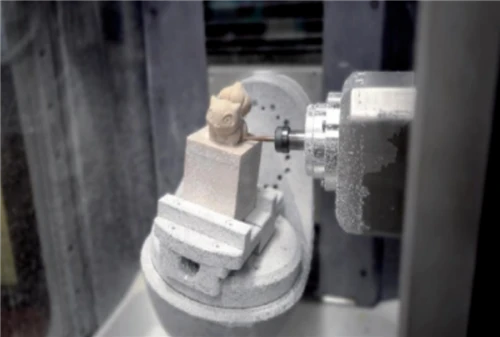
During early engineering stages, CNC machining allows manufacturers to produce metal prototypes without committing to dedicated MIM tooling. Engineers can validate dimensions, assembly interfaces, structural features, and material choices before finalizing the design.
CNC machining is particularly useful for:
Functional prototypes and engineering validation
Low-volume and pilot production
Components with tight dimensional requirements
Parts that need frequent design revisions
Selected geometries that are difficult to mold or finish
For manufacturers developing AI hardware, robotics, automation equipment, and thermal management systems, an appropriate manufacturing strategy may involve CNC machining during development, followed by an evaluation of MIM or other processes when production requirements become clearer.
The decision should account for total manufacturing cost, tooling investment, lead time, quality requirements, and expected annual demand.
Conclusion
AI infrastructure is creating new opportunities for precision metal manufacturing. High-speed connectors, optical communication equipment, and liquid cooling systems all contain components that may benefit from complex geometries, efficient material use, and scalable production.
Metal injection molding offers a potential solution for small, intricate metal parts when designs are stable and production volumes justify the tooling investment. CNC machining remains valuable for prototypes, low-volume manufacturing, and components that require flexibility during engineering development.
Rather than treating MIM as a universal replacement for CNC machining, manufacturers should evaluate each component according to its geometry, material, tolerances, operating conditions, and production requirements.
Looking for a manufacturing partner for your next metal component?
Jingcheng Precision supports custom CNC machining and precision metal part manufacturing for prototypes and low-volume production. If you have a component drawing or 3D CAD model, our team can review the geometry, material requirements, tolerances, and manufacturing approach to help assess feasibility.
Contact us to discuss your project or share your CAD files for a manufacturing review.