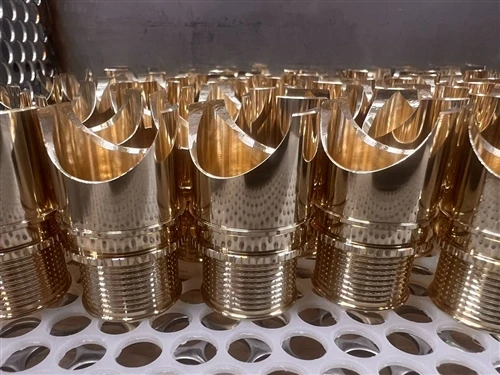
CNC Machining Prototype: The Foundation of Engineering Validation
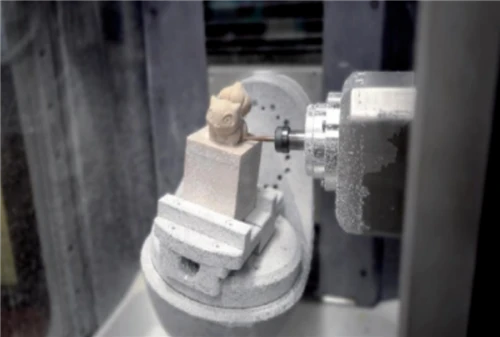
CNC machining prototype production remains the most widely used method for functional testing and engineering validation.
Unlike conceptual models, CNC prototypes are made from real engineering materials such as aluminum, stainless steel, and engineering plastics.
Key advantages:
High dimensional accuracy
Functional strength testing
Production-grade material verification
Fast iteration cycles
CNC prototyping is especially important in aerospace and robotics industries, where precision and reliability are critical.
High Precision CNC Turning Aluminum Parts in Industrial Applications
Aluminum is one of the most commonly used materials in precision engineering due to its excellent strength-to-weight ratio and machinability.
High precision CNC turning aluminum parts are widely used in:
Motor shafts
Connector components
Rotational mechanical parts
Precision housings
Manufacturing advantages:
Excellent surface finish
Tight tolerance control (up to ±0.01mm)
Stable batch consistency
High-speed production efficiency
These properties make CNC turning a core process in modern industrial manufacturing systems.
Precision CNC Machined Aluminum Components for Aerospace Industry
In aerospace engineering, precision is non-negotiable.
Precision CNC machined aluminum components for aerospace applications must meet strict requirements in terms of:
Weight reduction
Structural strength
Thermal stability
Fatigue resistance
Typical applications include:
Aircraft structural brackets
UAV structural components
Aerospace mounting systems
CNC machining ensures that each component meets exact engineering specifications required for high-performance environments.
3D Printing Engineering Plastics: Rapid Design and Functional Testing
3D printing has become an essential tool for early-stage product development, especially when working with engineering plastics.
Common materials:
ABS
Nylon (PA)
PLA (for concept models)
Polycarbonate (PC)
Applications:
Functional prototypes
Design verification models
Assembly testing components
Although 3D printing offers flexibility and speed, it is typically used for non-load-bearing or early-stage testing applications.
Aluminum Casting 3D Print: Hybrid Manufacturing Innovation
A growing trend in manufacturing is the integration of 3D printed patterns with aluminum casting processes.
This approach is often referred to as aluminum casting 3D print technology, where 3D printing is used to create molds or prototypes before final casting.
Benefits:
Reduced mold development time
Lower prototyping cost
Faster product development cycle
Improved design flexibility
This method is widely used in automotive and industrial equipment manufacturing.
Aluminum Precision Frame Parts in Structural Engineering
Aluminum precision frame parts are widely used in robotics, automation systems, and industrial machinery.
Key characteristics:
Lightweight structure
High mechanical strength
Excellent corrosion resistance
Good machining performance
Applications include:
Robot chassis systems
Automation machine frames
Industrial support structures
These parts often require CNC machining or precision extrusion combined with secondary processing.
Precision Sheet Metal Bending and Sheet Metal Stamping Bending
Sheet metal processing remains one of the most important manufacturing methods for structural components.
Precision sheet metal bending is used for:
Enclosures
Brackets
Structural supports
Sheet metal stamping bending combines:
High-volume production efficiency
Consistent dimensional accuracy
Cost-effective manufacturing
These processes are widely used in electronics, automotive, and industrial equipment manufacturing.
Stainless Steel Polishing for Automotive Parts
Surface finishing plays a critical role in both aesthetics and performance.
Stainless steel polishing for automotive parts is commonly used to improve:
Corrosion resistance
Surface smoothness
Appearance quality
Wear resistance
Applications include:
Automotive trims
Structural decorative parts
Exhaust system components
High-quality polishing ensures both functional durability and visual appeal.
Integrated Manufacturing Approach: The Future of Engineering Production
Modern manufacturing no longer relies on a single process.
Instead, companies combine:
CNC machining for precision components
3D printing for rapid prototyping
Casting for mass production
Sheet metal fabrication for structural systems
Surface finishing for durability and aesthetics
This integrated approach improves:
Product development speed
Manufacturing flexibility
Cost efficiency
Final product performance
Our Manufacturing Capabilities
We provide comprehensive manufacturing solutions for industrial clients across robotics, aerospace, and automation sectors.
CNC Machining Services:
CNC machining prototype
High precision CNC turning aluminum parts
Precision CNC machined aluminum components for aerospace
Additive Manufacturing:
3D printing engineering plastics
Rapid prototyping solutions
Metal Fabrication:
Precision sheet metal bending
Sheet metal stamping bending
Aluminum precision frame parts
Surface Treatment:
Stainless steel polishing for automotive parts
Conclusion
As engineering products become more complex and performance-driven, manufacturers must adopt multi-process production strategies combining CNC machining, additive manufacturing, casting, and sheet metal technologies.
This integrated manufacturing approach ensures higher precision, faster development cycles, and more reliable end-use performance.
Request Custom Manufacturing Support
We support custom CNC machining, prototyping, and precision fabrication for industrial applications.
📩 Send your CAD file to get a fast engineering quotation.