Understanding 3-axis, 3+2 axis, and 5-axis machining is essential for manufacturers to boost efficiency and precision in CNC milling production. Each multi-axis machining mode features unique working principles and application scenarios for different part processing needs.
Traditional 3-axis machining operates via X, Y, Z linear axes with a fixed tool direction. It supports fast processing of simple geometric workpieces with low costs and high versatility, perfect for standard and basic CNC parts production. In comparison, 3+2 axis machining adopts dual rotary axes to lock the 3-axis system at a fixed tilt position. This optimized processing method uses shorter, higher-rigidity tools to shorten tool travel, simplify programming, and deliver stable performance for angled plane machining.
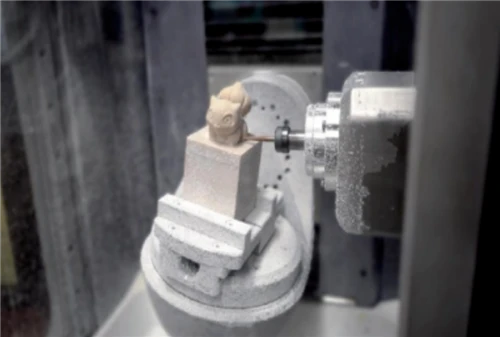
As an advanced solution, 5-axis linkage machining realizes synchronous interpolation of five axes, enabling flexible tool angles and omnidirectional cutting. It handles complex curved workpieces perfectly, avoids repeated clamping, reduces fixture costs, and greatly improves machining accuracy and consistency.
For small-scale high-precision manufacturing, the Xhorse XM-100 E01 desktop 5-axis machining center offers an ideal compact solution. This lightweight 5-axis CNC machine supports both 3+2 positioning and professional RTCP tool center point control. Equipped with an EtherCAT bus system, automatic tool changer, high-precision wireless probe and on-machine tool setter, it supports engraving, milling, drilling and tapping.
Featured with digital twin control, space error compensation and trajectory preview functions, it achieves high-speed, high-precision and error-free processing for various small complex precision components.