1. High-Precision CNC Machines Are Expensive to Operate
Modern CNC machines are significant investments.
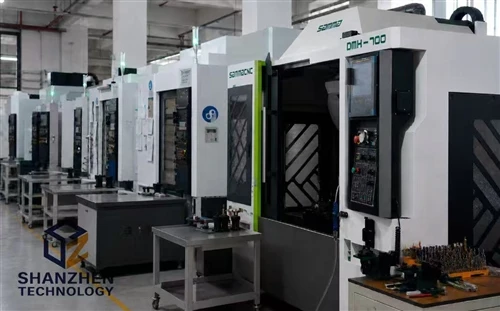
A high-precision 3-axis, 4-axis, or 5-axis CNC machine requires not only the initial equipment investment but also continuous maintenance, calibration, electricity, cutting tools, software, and skilled operators.
For complex parts, 5-axis CNC machining can significantly reduce the number of setups and improve accuracy. However, the hourly operating cost is generally higher than simpler machining equipment.
This means that when a part requires multiple surfaces, complex angles, deep cavities, or tight positional tolerances, more advanced equipment may be required-and the CNC machining cost increases accordingly.

2. CNC Programming and Setup Take Time
Before the first part is machined, preparation work is required.
The manufacturing team may need to:
- Review the 2D drawing and 3D CAD file
- Analyze tolerances and critical dimensions
- Select suitable machining processes
- Program CAM toolpaths
- Choose cutting tools and fixtures
- Set up and test the machine
For a prototype quantity of just one or two pieces, these engineering and setup costs cannot be spread across hundreds or thousands of parts.
This is one reason CNC machining is often more expensive for low-volume production.
For example, producing one custom aluminum housing may require nearly the same programming and setup effort as producing 20 identical housings. As the production quantity increases, the setup cost can be distributed across more parts, reducing the cost per unit.

3. Material Costs Can Have a Big Impact
The material itself is another important factor.
Common materials such as Aluminum 6061 are generally easier and more economical to machine. However, materials such as Titanium, Stainless Steel, Inconel, PEEK, or high-strength Aluminum 7075 may increase both material and machining costs.
Some materials are more difficult to cut, generate more tool wear, or require slower machining speeds.
In addition, CNC machining often starts with a solid block or bar of material. Depending on the part design, a significant amount of material may be removed during machining.
A part with a final weight of 500 g may begin as a much larger piece of raw material. The removed material, machining time, and waste must all be considered in the quotation.

4. Tight Tolerances Require More Time and Inspection
Not every part needs extremely tight tolerances.
A standard CNC machined part may be produced efficiently, while a component requiring tolerances such as ±0.01 mm or even tighter may need additional machining passes, specialized measuring equipment, and more inspection time.
The same applies to:
- High-precision holes
- Critical bearing fits
- Complex geometric tolerances
- Concentricity requirements
- Surface roughness requirements
In other words, higher precision usually means higher CNC machining costs.
One effective way to reduce costs is to apply tight tolerances only to critical features. If every dimension on a drawing requires extremely high precision, manufacturing becomes more complex and expensive.

5.Surface Finishing Adds Additional Cost
The CNC machining process may only be the first step.
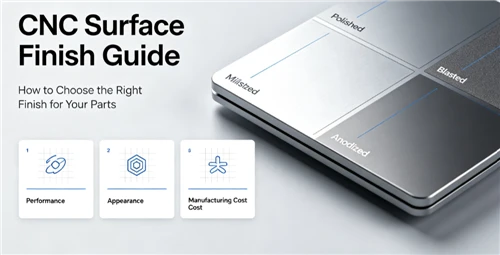
Many parts require additional surface treatments, such as:
- Sandblasting
- Anodizing
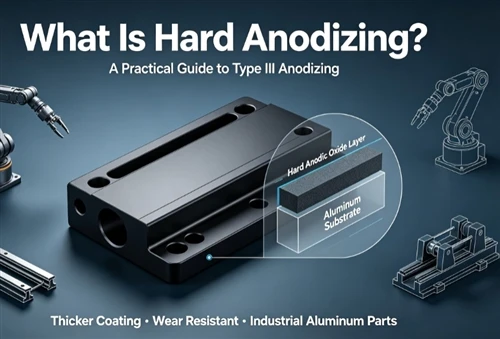
- Hard anodizing
- Powder coating
- Electroplating
- Polishing
- Brushing
- Passivation
- Laser engraving
Each additional process requires extra handling, processing time, quality control, and sometimes minimum order charges from finishing suppliers.
For example, a raw CNC machined aluminum part may have a significantly different cost compared with the same part requiring bead blasting, black anodizing, masking, and laser marking.
When requesting a quote, it is helpful to clearly specify the required finish rather than simply stating "high-quality surface."

6.Small Quantities Usually Have Higher Unit Prices
This is one of the most important reasons why CNC machining can seem expensive.
A prototype order of one piece still requires engineering review, programming, machine setup, material preparation, machining, inspection, and packaging.
For 100 identical parts, many of these costs are shared across the entire production batch.
That is why the unit price often decreases as order quantity increases.
However, CNC machining remains highly competitive for prototypes, custom components, product development, and low-to-medium-volume production because there is usually no expensive mold or tooling investment required.
How to Reduce CNC Machining Costs
Lower cost does not always mean choosing the cheapest supplier. The goal should be to optimize the design and manufacturing process.
Here are several practical ways to reduce CNC machining costs:
- Use standard materials whenever possible.
- Avoid unnecessarily tight tolerances.
- Simplify complex internal features.
- Reduce the number of separate setups.
- Use standard hole sizes and thread specifications.
- Order a larger quantity when production demand allows.
- Choose surface finishing only where it is functionally necessary.
- Ask your CNC machining supplier for DFM feedback before production.
A good manufacturing partner should not simply send a quotation. They should also identify potential cost-saving opportunities before machining begins.
Final Thoughts
So, why is CNC machining so expensive?
The answer usually comes down to a combination of machine time, engineering, material, precision requirements, part complexity, tooling, inspection, and finishing.
CNC machining is not always the cheapest manufacturing method, but it offers major advantages in flexibility, accuracy, customization, and fast production without the high upfront cost of molds.
The key is to work with an experienced manufacturer who understands both your design requirements and your cost targets.

Need a CNC Machining Quote for Your Project?
At Shenzhen Jingcheng Dingyi Precision Manufacturing, we provide custom CNC machining for prototypes, robot parts, medical components, mechanical assemblies, and other precision parts.
Send us your 2D drawings or 3D CAD files, along with your material, quantity, tolerance, and surface finish requirements. Our engineering team can review your design and provide manufacturing feedback and a competitive CNC machining quotation.
👉 Contact us today to discuss your project and find the most cost-effective way to manufacture your parts.