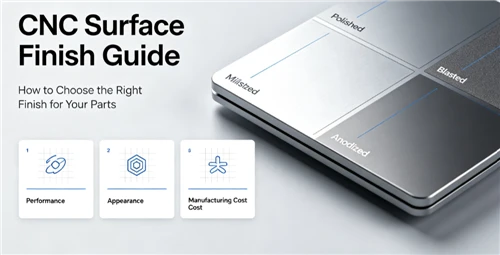
What Is CNC Surface Finish?

CNC surface finish refers to the final condition of a part's surface after machining and any additional post-processing operations.
After CNC milling or CNC turning, cutting tools leave machining marks on the surface. Depending on the requirements of the part, the surface may remain as-machined or receive additional treatment.
A suitable CNC surface finish can help improve:
- Appearance and product aesthetics
- Corrosion resistance
- Wear resistance
- Surface smoothness
- Cleanability
- Chemical resistance
- Component durability
- Product identification and branding
However, not every CNC machined part needs an additional surface treatment. Choosing an unnecessarily complex finish can increase manufacturing costs and lead time.

1. As-Machined Finish
An as-machined finish means the part is delivered directly after CNC machining without additional cosmetic surface treatment.
The surface may show visible milling, turning, drilling, or tool marks.
Advantages
- Lower manufacturing cost
- Shorter production lead time
- No additional coating thickness
- Suitable for precision dimensions
- Good choice for internal or non-visible components
Limitations
- Visible machining marks
- Limited corrosion protection
- Surface appearance may vary depending on the machining process
- As-machined surfaces are commonly used for mechanical components, internal structures, prototypes, fixtures, brackets, and industrial equipment parts.
For example, stainless steel components may be used directly after CNC machining if appearance and corrosion resistance requirements are not particularly demanding.

2. Bead Blasting
Bead blasting uses fine abrasive media to create a uniform matte surface.
It is commonly used to remove machining marks and improve the consistency of the surface appearance.
Advantages
- Creates a clean and uniform appearance
- Reduces visible machining marks
- Produces a matte or satin texture
- Suitable for aluminum, stainless steel, and other metals
Limitations
- May slightly affect the surface texture
- Not ideal for every precision sealing or contact surface
- Usually requires masking for critical dimensions or threaded areas
- Bead blasting is often combined with anodizing for aluminum CNC parts.
For example, robot housings, electronic enclosures, mechanical covers, and consumer product components often use bead blasting followed by anodizing to achieve a professional appearance.

3. Anodizing
Anodizing is one of the most common CNC surface finishes for aluminum parts.
The process creates a protective oxide layer on the aluminum surface, improving corrosion resistance and surface durability.
Anodizing can also provide different colors, including black, silver, red, blue, gold, and other custom colors.

Common Types of Anodizing
Type II Anodizing
Type II anodizing is commonly used for decorative and general industrial applications.
It provides:
- Improved corrosion resistance
- Better appearance
- Multiple color options
- Good durability
Type II anodizing is commonly used for CNC aluminum parts such as robot components, electronic housings, brackets, consumer products, and industrial equipment.

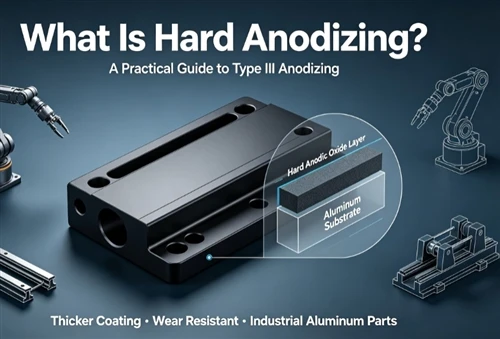
Type III Hard Anodizing
Type III anodizing, also known as hard anodizing, creates a thicker and more wear-resistant oxide layer.
It is often selected for parts exposed to:
- Friction
- Mechanical wear
- Harsh environments
- Repeated movement
Typical applications include mechanical components, automation equipment, robot joints, industrial fixtures, and high-wear aluminum parts.
Important Consideration: Dimensional Changes
Anodizing adds a surface layer to the part.
For CNC machined components with tight tolerances, critical dimensions should be considered before machining.
For example, threads, bearing fits, precision holes, and mating surfaces may require masking or dimensional compensation during manufacturing.

4. Powder Coating
Powder coating applies a protective coating to the surface of a metal part.
It provides a durable and visually consistent finish and is available in many colors and textures.
Advantages
- Good corrosion resistance
- Durable surface
- Wide range of colors
- Suitable for larger metal parts
- Can hide minor surface imperfections
- Limitations
- Adds coating thickness
May not be suitable for extremely tight tolerances
Threads and precision surfaces may require masking
Powder coating is commonly used for sheet metal parts, machine enclosures, brackets, industrial frames, and equipment housings.
For parts with critical dimensions, it is important to clearly identify which surfaces require coating and which surfaces must remain uncoated.
5. Polishing
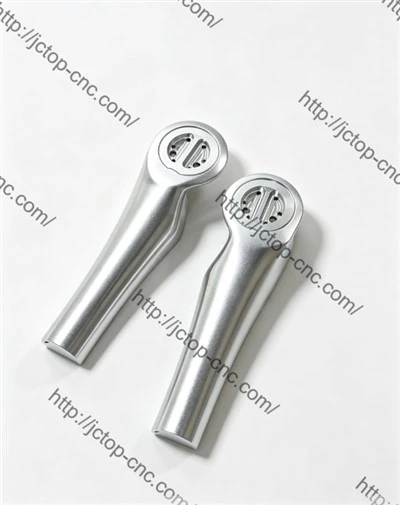
Polishing improves the smoothness and appearance of a metal surface.
Depending on the required result, polishing can range from basic mechanical polishing to a highly reflective mirror finish.
Common Applications
Polishing is often used for:
- Stainless steel components
- Decorative metal parts
- Medical equipment components
- Consumer products
- Parts requiring easy cleaning
A smoother surface can also reduce areas where dirt, moisture, or contaminants may accumulate.
However, highly polished surfaces usually require additional manual processing, which can increase production costs.
For industrial components, it is often better to specify a required surface roughness rather than simply requesting a "mirror finish."

6. Brushed Finish
A brushed finish creates fine, directional lines on the surface of a metal part.
It is commonly used for stainless steel and aluminum components where a consistent decorative appearance is required.
Advantages
Attractive industrial appearance
Can reduce the visibility of fingerprints
Helps create a consistent surface texture
Brushed finishes are commonly used for equipment panels, electronic housings, consumer products, decorative components, and stainless steel parts.
How to Choose the Right CNC Surface Finish
When selecting a CNC surface finish, consider the following factors.

1. Material
Different materials are suitable for different surface treatments.
For example:
- Aluminum: anodizing, bead blasting, polishing
- Stainless steel: polishing, electropolishing, passivation, bead blasting
- Carbon steel: powder coating, painting, plating
- Brass and copper: polishing, plating, protective coatings
- Plastics: polishing, painting, vapor smoothing depending on the material
The material should always be considered before selecting a finishing process.
2. Application Environment
Where will the part be used?
A component used indoors may only require a basic finish.
However, parts exposed to moisture, chemicals, salt spray, friction, or outdoor environments may require additional protection.
For example:
- Outdoor equipment may require corrosion-resistant coatings.
- Moving mechanical components may require wear-resistant finishes.
- Medical equipment may require smooth and easy-to-clean surfaces.

3. Appearance Requirements
If the part will be visible to the end user, appearance may be an important factor.
For example:
- Consumer products may require bead blasting and anodizing.
- Premium metal products may require polishing or brushing.
- Industrial internal components may only require an as-machined finish.
It is important to determine whether the finish is functional, cosmetic, or both.

4. Dimensional Tolerances
Some surface treatments add material thickness or remove a small amount of material.
This is particularly important for:
- Precision holes
- Threads
- Bearing fits
- Mating surfaces
- Sealing surfaces
When designing CNC machined parts with tight tolerances, surface finishing requirements should be considered before production.
Providing both the drawing tolerances and finishing requirements helps manufacturers determine whether dimensional compensation or masking is necessary.
5. Production Quantity and Cost
The best finish is not always the most expensive finish.
For prototype projects, an as-machined or simple bead-blasted finish may be sufficient.
For mass production, the additional cost of surface finishing may be justified by improved durability, appearance, and product consistency.
The ideal solution should balance:
- Function
- Appearance
- Manufacturing cost
- Production quantity
- Lead time

Common CNC Surface Finish Comparison
| Surface Finish | Main Benefit | Suitable Materials | Appearance |
|---|---|---|---|
| As-Machined | Low cost and fast production | Most machinable materials | Visible machining marks |
| Bead Blasting | Uniform matte surface | Aluminum, stainless steel | Matte |
| Type II Anodizing | Corrosion resistance and color | Aluminum | Matte or semi-gloss |
| Type III Hard Anodizing | High wear resistance | Aluminum | Usually darker matte |
| Powder Coating | Durable protective coating | Steel, aluminum | Various colors and textures |
| Polishing | Smooth and decorative surface | Stainless steel, aluminum, brass | Glossy to mirror |
| Brushed Finish | Decorative directional texture | Stainless steel, aluminum | Satin |
| Electropolishing | Smoothness and corrosion resistance | Stainless steel | Bright and smooth |
| Passivation | Improved corrosion resistance | Stainless steel | Minimal appearance change |
Recommended CNC Surface Finishes for Different Applications
Robot Parts
For robot arms, joint housings, motor components, and structural parts, aluminum is commonly used because of its strength-to-weight ratio.
Recommended options include:
- Bead blasting + anodizing
- Hard anodizing for high-wear components
- As-machined for internal precision components
- Critical mating surfaces may need to remain uncoated.

Medical Device Components
Depending on the material and application, medical CNC machined parts may require:
- Electropolishing
- Passivation
- Fine polishing
- Controlled surface roughness
Surface cleanliness and corrosion resistance are often important considerations.
Industrial Equipment
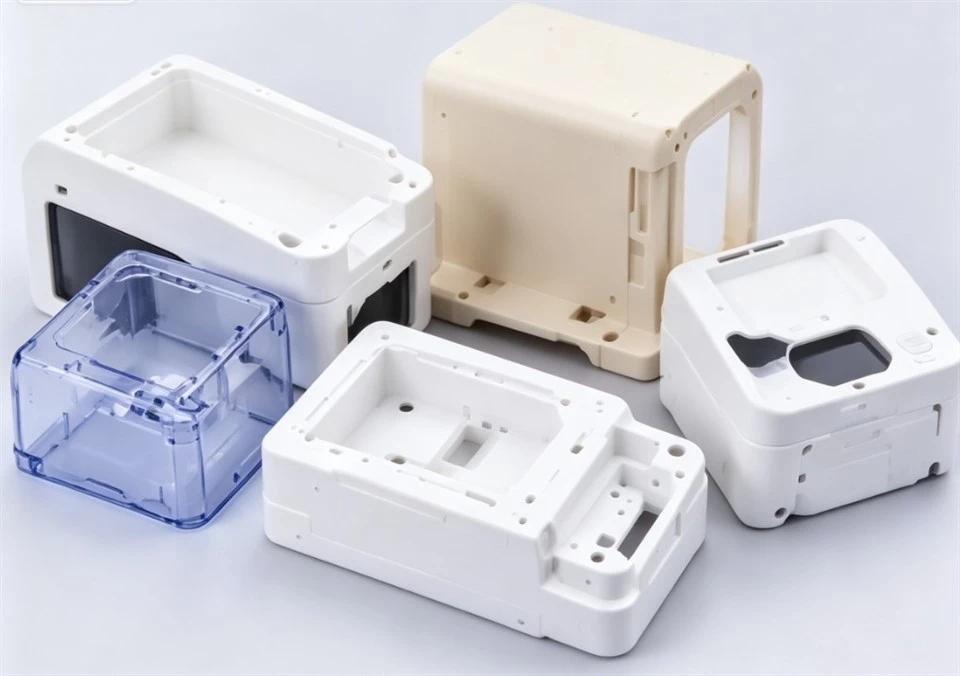
Industrial CNC machined parts may prioritize durability and cost efficiency.
Common options include:
- As-machined
- Powder coating
- Anodizing
- Passivation
The final choice depends on the operating environment and mechanical requirements.

Consumer Products
For visible consumer products, appearance is usually more important.
Popular options include:
- Bead blasting + anodizing
- Brushed finish
- Polishing
- Custom color coatings
A consistent surface finish can significantly improve the perceived quality of the final product.

FAQ
Q: 1. What is the most common surface finish for CNC machined parts?
A: As-machined, bead blasting, anodizing, polishing, passivation, and powder coating are among the most common CNC surface finishes. The best option depends on the material, application, appearance requirements, corrosion resistance, and dimensional tolerances.
Q: 2. Do all CNC machined parts need a surface finish?
A: No. Some parts can be used directly with an as-machined finish. Additional surface treatment is mainly required when the part needs improved appearance, corrosion resistance, wear resistance, surface smoothness, or other specific properties.
Q: 3. What is the best surface finish for CNC aluminum parts?
A: Anodizing is one of the most popular choices for CNC aluminum parts. Bead blasting followed by anodizing can provide a uniform appearance and improved corrosion resistance. Hard anodizing is a better option for aluminum components exposed to greater wear.
Q: 4. What surface finish is recommended for stainless steel CNC parts?
A: Depending on the application, stainless steel CNC parts can use passivation, electropolishing, polishing, bead blasting, or brushing. Passivation is commonly selected when improved corrosion resistance is required without significantly changing the appearance.
Q: 5. Does anodizing affect CNC part dimensions?
A: Yes. Anodizing creates an oxide layer on the aluminum surface, so it can affect critical dimensions. For precision holes, threads, bearing fits, and mating surfaces, the finishing requirements should be considered during CNC machining. Masking or dimensional compensation may be required.
Q: 6. What is the difference between bead blasting and anodizing?
A: Bead blasting is primarily a surface preparation and texturing process that creates a uniform matte appearance. Anodizing creates a protective oxide layer on aluminum. They can also be combined: bead blasting first and anodizing afterward for a consistent, durable finish.
Q: 7. Which CNC surface finish provides the best corrosion resistance?
A: The appropriate finish depends on the material and operating environment. For aluminum, anodizing can provide good corrosion protection. For stainless steel, passivation or electropolishing can improve corrosion resistance. For steel components, powder coating or other protective coatings may be suitable.
Q: 8. Can CNC machined parts be finished in custom colors?
A: Yes. Aluminum parts can often be anodized in different colors, while powder coating provides a wider range of color and texture options. The available color range depends on the selected finishing process and material.
Q: 9. Can surface finishing affect tight tolerances?
A: Yes. Some coatings and finishing processes add or remove material from the surface. If a CNC part has tight dimensional tolerances, precision holes, threads, or mating surfaces, these areas should be clearly identified on the technical drawing so the manufacturing process can account for the finish.
Q: 10. Which CNC surface finish is best for medical components?
A: The appropriate finish depends on the material, device design, cleaning requirements, and application. Stainless steel medical components may use passivation, electropolishing, or polishing when smoothness and corrosion resistance are important. Surface requirements should be specified according to the relevant application and technical standards.
Have a CNC Part That Needs the Right Surface Finish?
Don't choose a surface finish based on appearance alone. The right process should match your material, tolerance, application, durability, and budget.
Send us your CAD file or technical drawing and tell us your expected quantity. Our engineering team can help you select a suitable surface finish and provide a competitive CNC machining quotation.
Get Your CNC Parts Quote Today →