1. Simplify the Part Design
Complex geometry usually means longer machining time and more complicated setups.
Deep pockets, narrow internal corners, thin walls, and difficult-to-reach features may require special cutting tools or multiple machining operations. If certain features are not essential to the function of the part, simplifying them can significantly reduce CNC machining costs.
For example, designing internal corners with a reasonable radius instead of an extremely sharp corner can make machining easier and faster.

2. Avoid Unnecessarily Tight Tolerances
Tight tolerances require more precise equipment, additional inspection, and sometimes slower machining speeds.
Not every feature needs the same tolerance. Critical mating surfaces may require high precision, while non-functional areas can use standard tolerances.
A practical approach is to specify tight tolerances only where they are necessary. This can reduce machining time, inspection costs, and the overall CNC machining price.
3. Choose the Right Material
Material selection has a direct impact on machining cost.
Some materials are easier and faster to machine than others. For example, aluminum alloys such as 6061 are generally easier to machine than materials like titanium or certain hardened stainless steels.
However, the cheapest material is not always the best choice. The key is to select a material that meets your requirements for strength, weight, corrosion resistance, and performance without overengineering the part.
Our engineering team can help customers compare different material options based on both performance and manufacturing cost.

4. Reduce the Number of Setups
Every time a CNC part needs to be repositioned or transferred to another machine, additional time and labor are required.
Whenever possible, parts should be designed to allow multiple features to be machined in fewer setups. Using 4-axis or 5-axis CNC machining can also reduce repositioning for complex components.
At Jingcheng Dingyi Precision Manufacturing, our multi-axis CNC machining capabilities allow us to process complex parts efficiently and reduce unnecessary production steps.

5. Use Standard Tools and Features
Custom tools can increase CNC machining costs, especially for prototype or low-volume orders.
Whenever possible, use standard hole sizes, thread specifications, corner radii, and other common dimensions. Standard tooling is easier to source and allows manufacturers to begin production more quickly.
Small design changes can sometimes create significant savings without affecting the final function of the part.

6. Avoid Unnecessary Surface Finishing
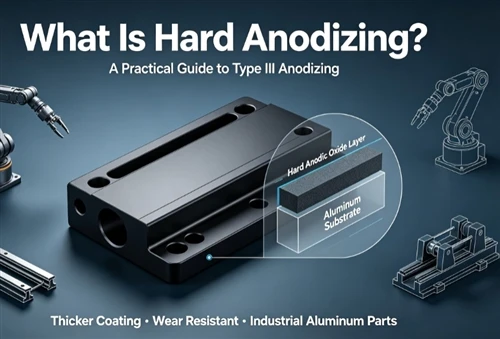
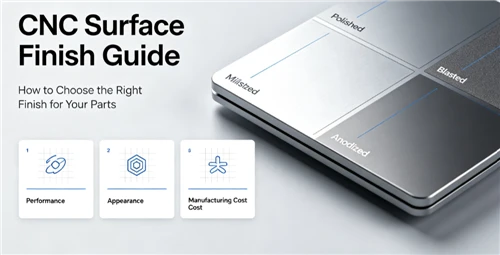
Surface treatments such as anodizing, polishing, bead blasting, electroplating, and painting can improve appearance and performance-but they also add cost.
Before selecting a surface finish, consider its actual purpose.
Does the part require corrosion resistance? Is the appearance important? Does the surface need to meet a specific roughness requirement?
If a finish is purely cosmetic and not necessary for the application, removing it may help reduce the total CNC machining cost.
7. Optimize Your Order Quantity
Very small orders usually have higher unit costs because programming, machine setup, material preparation, and inspection costs are distributed across fewer parts.
If your project allows, increasing the order quantity can reduce the cost per part.
For customers moving from prototyping to small-batch production, we can also review the manufacturing process and recommend more cost-effective production methods.
8. Work With an Experienced CNC Machining Supplier
One of the easiest ways to reduce CNC machining costs is to involve your manufacturer early in the design process.
An experienced supplier can identify difficult-to-machine features, suggest alternative materials, optimize tolerances, and recommend a more efficient machining process before production starts.
At Shenzhen Jingcheng Dingyi Precision Manufacturing Co., Ltd., we provide custom CNC machining for prototypes and production parts, including 3-axis, 4-axis, and 5-axis CNC machining. We work with aluminum, stainless steel, brass, copper, titanium, plastics, and other materials.
Our team focuses on more than simply manufacturing according to drawings-we also help customers find practical ways to improve manufacturability and control costs.

Reduce CNC Machining Costs Without Compromising Your Part
The lowest price is not always the lowest total cost. Poor machining quality, inconsistent tolerances, or rejected parts can create much bigger problems later.
The best approach is to optimize your part design, material, tolerances, machining process, and production quantity before manufacturing begins.
Have a CNC machining project? Send us your 2D drawings or 3D CAD files for a free manufacturability review and quotation. Our engineering team can help identify potential cost-saving opportunities and recommend the most suitable manufacturing solution for your project.
Contact Shenzhen Jingcheng Dingyi Precision Manufacturing today and let's make your CNC parts more cost-effective-from prototype to production.