


Machining to China
When outsourcing CNC machining, many customers are concerned about more than price, tolerance, and delivery time. They also want to know how their CAD drawings, 3D models, and product designs will be handled during manufacturing.
For prototype and low-volume CNC projects, suppliers may need access to detailed drawings, STEP files, specifications, tolerances, and material requirements. These files can contain important product information, so controlling access and communication is an important part of supplier management.
At Jingcheng Dingyi, we understand that CNC machining is not only about making a part correctly. It is also about handling customer drawings and project information responsibly throughout the manufacturing process.
Why CAD Drawing Protection Matters in CNC Machining
A CNC supplier may receive much more information than just the dimensions of a part.
A typical project may include:
- 2D engineering drawings
- 3D CAD or STEP files
- Material specifications
- Surface finishing requirements
- Critical tolerances
- Assembly information
- Special inspection requirements
- Product quantities and production plans
For a prototype or newly developed product, this information may represent months of engineering work.
This is especially important for customers developing robotics, medical devices, automation equipment, aerospace components, consumer products, and other customized products.
For this reason, customers should consider IP protection and drawing management before sending complete design files to a new CNC machining supplier.
Start With a Clear Confidentiality Agreement
Before production begins, customers can establish clear confidentiality requirements with their manufacturing partner.
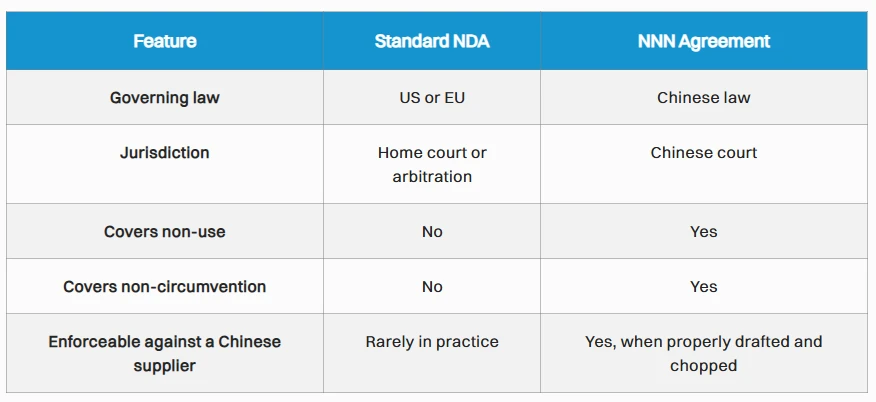
At Jingcheng Dingyi, we can sign NDA (Non-Disclosure Agreement) and NNN (Non-Disclosure, Non-Use, Non-Circumvention Agreement) with customers when required by the project.
These agreements can define how technical drawings, CAD files, specifications, product information, and other confidential materials should be handled.
An NNN agreement can provide additional contractual requirements concerning the disclosure, use, and handling of confidential project information. The exact terms should depend on the customer's project, location, and legal requirements.
For projects involving valuable or commercially sensitive designs, customers may also choose to consult an IP or commercial lawyer before sharing the complete design package.
The purpose is simple: both sides should clearly understand what information is confidential and how it may be used.
Only Share the Information Needed for Manufacturing
A CNC machining supplier does not always need to see the entire product design.
For example, if a supplier is manufacturing an aluminum housing, the production team may only need:
The housing's 3D model
Relevant 2D dimensions
Material specification
Surface finish
Tolerance requirements
Inspection criteria
Information about the customer's circuit board, software, internal mechanism, or final product application may not be necessary for machining that individual component.
Providing the information required for manufacturing helps keep the production process focused while reducing unnecessary exposure of the complete product design.
Control Drawing Access During Production
Drawing management is also important after an order has been placed.
At a CNC machining factory, different teams may be involved in one project, including engineering, programming, machining, quality inspection, and production management.
The customer should understand who needs access to the files and how technical information is transferred between these teams.
At Jingcheng Dingyi, engineering and production work are coordinated around the actual machining requirements of each order. Technical information is used to support processes such as CNC milling, turning, drilling, grinding, wire cutting, and inspection.
This helps keep the information flow connected to the manufacturing process rather than distributing unnecessary project information.

What Happens to Customer Drawings After Production?
Another important question is what happens to customer files after an order has been completed.
At Jingcheng Dingyi, customer drawings and related production files are treated as confidential project information. After production is completed, customer drawings and relevant production documents are destroyed according to our internal document-handling process, rather than being retained unnecessarily.
This is particularly important for prototype and new-product development projects, where customers may not want old CAD files or production information remaining in circulation after an order is finished.
Customers can also discuss their specific document-retention requirements with our team before production starts.
Protecting IP Is More Than Signing a Contract
A confidentiality agreement is only one part of IP protection.
Customers should also look at the supplier's actual working process.
Before sending sensitive drawings, it is useful to ask:
- Who will have access to my CAD files?
- How are drawings transferred to the engineering team?
- Are production files shared with people who do not work on the project?
- How are customer drawings handled during and after production?
- What happens to production files after the order is completed?
- Can the supplier explain its internal confidentiality procedures?
- Is there a clear contact person for technical information?
These questions can help customers understand how a supplier manages sensitive project information in daily production.
IP Protection Is Particularly Important for Prototypes
Prototype projects often involve products that have not yet entered the market.
A prototype may contain a new mechanical structure, customized housing, robotic joint, medical component, or consumer-product concept. At this stage, the design itself can be commercially important.
For this reason, prototype customers should pay attention to both manufacturing capability and information management when selecting a CNC supplier.
A supplier capable of producing a complex part is important, but so is a supplier that understands why the customer's drawings and project information need to be handled carefully.
Choosing a CNC Machining Partner in China
When evaluating a CNC machining supplier, customers can look beyond price.
Important questions include:
- Does the supplier have experience with similar parts?
- Can it handle prototype and low-volume production?
- Does it have 3-axis, 3+2-axis, or 5-axis machining capability?
- Can it work with aluminum, stainless steel, titanium, and engineering plastics?
- What inspection equipment is available?
- How does the engineering team review customer drawings?
- How are customer technical documents handled?
- What happens to drawings and production files after the project?
- Can the supplier clearly explain its confidentiality process?
At Jingcheng Dingyi, we provide custom CNC machining for prototypes and low-volume production, including complex precision components manufactured from aluminum, stainless steel, titanium, and engineering plastics.
Our production capabilities include CNC milling, turning, drilling, grinding, wire cutting, and related machining processes.
What Customers Can Do Before Sending Drawings
Before starting a new CNC project, customers can take several simple steps:
1. Identify sensitive information
Determine which drawings, dimensions, designs, and specifications are commercially sensitive.
2. Establish confidentiality requirements
Discuss an NDA, NNN, or other appropriate confidentiality arrangement before sharing important files.
3. Share only necessary files
Provide the supplier with the information required to quote and manufacture the specific component.
4. Confirm the manufacturing process
Ask how engineering, programming, production, and inspection teams will use the supplied information.
5. Ask about file retention
Confirm how customer drawings and production files are handled during the project and what happens to them after production.
6. Choose a supplier carefully
Review the supplier's machining capabilities, quality system, factory environment, communication process, and experience with similar projects.
CNC Machining and Customer Confidentiality
For an overseas customer, choosing a CNC machining supplier is not simply a matter of finding a factory with the right machine tools.
A successful manufacturing relationship also requires clear communication, controlled technical information, consistent quality, and responsible handling of customer designs.
Whether you are developing a prototype or preparing a low-volume production run, it is worth discussing IP protection before the first drawing is sent.
At Jingcheng Dingyi, we support customers with customized CNC machining projects from prototype parts to low-volume production. When required, we can sign NDA and NNN agreements with customers, and customer drawings and relevant production files are destroyed after production according to our internal document-handling process.
If you have a new component that requires CNC machining, you can contact our engineering and sales team to discuss the material, tolerance, quantity, machining process, and drawing requirements.


