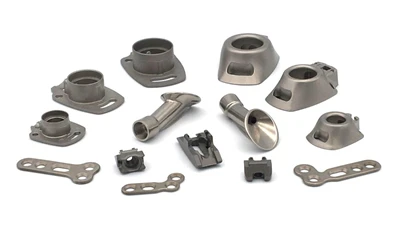
What Are Custom Humanoid Robot Parts? (Why Off-the-Shelf Won't Work)
Custom humanoid robot parts are precision-engineered components specifically designed and manufactured to meet the unique demands of bipedal, anthropomorphic robots. Unlike traditional industrial automation parts, humanoid robot components must balance extreme lightweight construction with high structural integrity, while maintaining sub-millimeter repeatability across thousands of motion cycles.
Custom humanoid robot parts are precision-engineered components specifically designed and manufactured to meet the unique demands of bipedal, anthropomorphic robots. Unlike traditional industrial automation parts, humanoid robot components must balance extreme lightweight construction with high structural integrity, while maintaining sub-millimeter repeatability across thousands of motion cycles.

Key requirements include:
Lightweight design to maximize battery efficiency and agility
High stiffness and strength to handle dynamic loads and impacts
Superior surface finish and geometric accuracy for low-friction joints and precise sensor alignment
Material consistency across production batches for reliable performancethe is 50 KVA, the is 50 KVA, the is 50 KVA, the is 50 KVA.

Typical custom robotic joint components and humanoid robot actuator housing examples include:


| Part Type | Key Challenges | Typical Materials | Benefits of CNC Machining |
|---|---|---|---|
| Joint Housings | Complex curvatures, tight fits | 7075 Aluminum | Single-setup 5-axis precision |
| Actuator Housings | Heat dissipation + structural load | 6061 Aluminum / 316 SS | Excellent thermal properties + strength |
| Linkages & Arms | Weight reduction + rigidity | Aluminum Alloys | Thin walls with high strength-to-weight |
| Sensor Mounts | Precise alignment | Stainless Steel | ±0.005mm tolerances for repeatability |
Off-the-shelf parts often fail in humanoid applications due to mismatched geometries, insufficient precision, or poor material performance under continuous dynamic stress. This is where dedicated custom humanoid robot parts manufacturing makes the difference.
Why CNC Machining Is the Preferred Process for Humanoid Robotics
For most robotics development teams, CNC machining for robotics outperforms alternatives like die casting or 3D printing, especially during the critical R&D and low-volume pilot phases.
Advantages of CNC machining:
- Superior dimensional accuracy and repeatability - essential for robot joint performance
- Excellent material properties - full strength of wrought aluminum or stainless steel (unlike cast or printed parts)
- Design flexibility - rapid iteration without expensive tooling
- Surface quality - Ra 0.4–1.6μm finishes suitable for bearing seats and sliding surfaces
From a procurement perspective, opening molds for die-cast parts is costly and time-consuming (often 8–12 weeks and high minimum orders). In contrast, precision CNC parts manufacturer services like Jingcheng can deliver functional prototypes in 3–7 days, allowing engineering teams to test multiple design revisions quickly - a decisive advantage in the fast-moving humanoid robot sector.
Jingcheng's Core Capabilities for Robot Parts Manufacturing

5-Axis CNC Machining for Complex Geometries
Our 5-axis CNC machining centers excel at producing 5-axis CNC machining aluminum robot parts with complex organic shapes, undercuts, and compound angles common in humanoid joints. By machining multiple faces in a single setup, we eliminate cumulative errors from repositioning, ensuring superior part-to-part consistency.
This capability is particularly valuable for humanoid robot actuator housing and multi-axis joint assemblies where precise angular relationships are critical for smooth motion control.
Aluminum Alloy & Stainless Steel Components
We specialize in high-performance materials tailored to specific robotic functions:
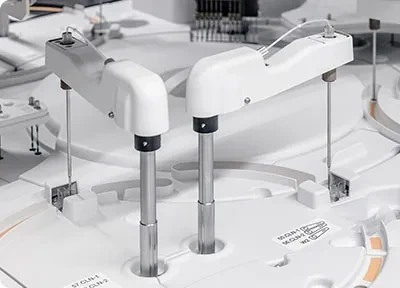
Aluminum Alloys (6061, 7075)
Ideal for aluminum alloy robot parts requiring maximum strength-to-weight ratio. 7075 offers exceptional fatigue resistance for high-cycle joints, while 6061 provides excellent machinability and thermal conductivity for motor housings.
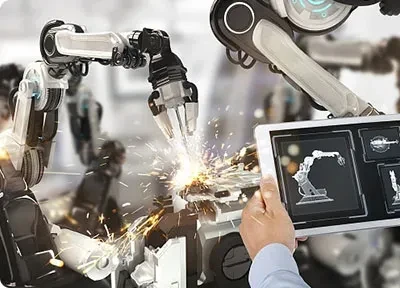
Stainless Steel (304, 316)
Preferred for stainless steel robot joint components needing corrosion resistance, higher wear performance, or magnetic properties in certain sensor environments

Precision Tolerance ±0.005mm - Built for Repeatability
In humanoid robotics, joint clearance and motion precision directly impact overall system performance. Our standard tolerance for critical features in custom humanoid robot parts reaches ±0.005mm, verified using Coordinate Measuring Machines (CMM).
Every production run follows a rigorous quality process:
First Article Inspection (FAI)
In-process patrol checks
Final CMM inspection with full reports
Material traceability certificates
This level of precision CNC parts manufacturer control ensures your robots achieve the repeatability needed for real-world deployment.
Applications in Advanced Robotics
Jingcheng has supplied custom robotic components manufacturer solutions across multiple emerging applications:
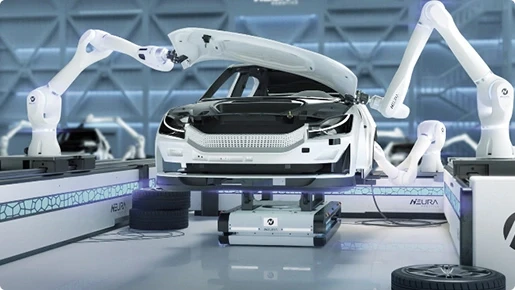
Humanoid robot joint modules and torque transmission systems

Dexterous robotic hands and finger assemblies

Exoskeleton structural components and actuation frames
Collaborative robot (cobot) end-effectors
Research platforms and specialized automation fixtures
Quality Control & Certifications :
Quality is non-negotiable in robotics. Jingcheng maintains ISO 9001 certification and provides comprehensive documentation including material certificates, RoHS compliance, and detailed inspection reports.
Our experienced engineering team - with an average of 12+ years in precision manufacturing - works directly with clients to optimize designs for manufacturability. We understand the unique challenges of humanoid robot development and have supported dozens of robotics projects from early concept to pilot production.
When selecting a robot parts manufacturer, robotics teams prioritize speed, precision, and responsive communication. Jingcheng delivers:
Fast Prototyping: Typical lead times of 3–7 days for initial samples
Low MOQ Flexibility: Perfect for R&D and small-batch pilot runs
One-Stop Service: From material selection advice and DFM feedback to machining, surface treatment (anodizing, passivation, powder coating), and final assembly support
Dedicated English-Speaking Engineering Support: Quick 24-hour quote responses and ongoing technical dialogue
We focus on building long-term partnerships with robotics innovators who need a reliable manufacturing extension of their own team.
Our address
1st Floor, Building 3, Huafeng Zhenbao Industrial Park, No.137 Shihuan Road, ShiYan Town, Bao'An District, ShenZhen, PRC
Phone Number
+86 130 7147 5061
yaqingliang277@gmail.com

FAQ
Q: What tolerance can CNC machining achieve for robot parts?
A: We routinely hold ±0.005mm on critical dimensions for custom humanoid robot parts, with capability studies available upon request.
Q: Can you machine both aluminum and stainless steel robot components?
A: Yes. We are experienced with 6061/7075 aluminum, 304/316 stainless steel, and other engineering alloys suitable for robotics applications.
Q: What is the MOQ for custom humanoid robot parts?
A: We support low-volume production with no strict MOQ, making us ideal for prototyping and initial pilot runs.
Q: How long does prototyping take for robotic components?
A: Standard prototypes are completed in 3–7 days after drawing approval, depending on complexity.
Q: Do you provide material certification and inspection reports?
A: Yes. Full material certificates, CMM reports, and FAI documentation are provided with every order.
Get a Quote for Your Custom Robot Parts!!!
Ready to move your humanoid robot project forward? Send us your STEP or DWG drawings today, and our engineering team will return a detailed quote with pricing, lead time, and DFM recommendations within 24 hours.
We offer free Design for Manufacturability (DFM) review for first-time inquiries to help optimize your designs for cost and performance.
Request a Free Quote →
No MOQ pressure - we proudly support both prototyping and scaling to mass production as your custom humanoid robot parts needs grow.