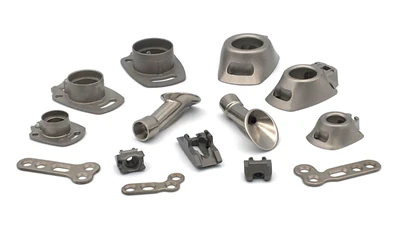
What Are Humanoid Robot Parts?
Humanoid Robot Parts refer to all critical components that form the structural, actuation, perception, and control systems of a humanoid robot, including actuators, joints, sensors, end effectors, and more. These elements enable robots to mimic human movements and perform complex tasks.
According to industry reports, the humanoid robot market is on the cusp of explosive growth. MarketsandMarkets estimates the global market at approximately USD 5.41 billion in 2026, projected to reach USD 50.27 billion by 2035, with a CAGR of 28.1%. Other forecasts similarly highlight strong expansion through 2030, driven by automation demands, labor shortages, and AI advancements. China holds a significant advantage in the supply chain.
Understanding Humanoid Robot Components is the first step in effective sourcing, as it directly impacts performance, cost, and reliability. Let's break them down.
Key Components Breakdown
1. Actuators & Servo Motors
Actuators serve as the "muscles" of humanoid robots, delivering the torque and speed required for joint movement. Key parameters include torque (Nm), precision (angular error), response time, and power density.
Selection Criteria: High-torque joints (hips, knees) require harmonic reducers paired with frameless torque motors; finer joints (wrists) often use coreless motors.
Long-tail Focus: When searching for a humanoid robot actuators manufacturer, prioritize partners offering modular, integrated solutions with built-in torque sensors and encoders.
Humanoid robot servo motors typically utilize permanent magnet brushless DC motors combined with planetary or harmonic gearboxes for high-precision control.
Practical Sourcing Tip: In our experience supporting Western clients, always start with single-joint prototypes to validate torque and thermal performance before full assembly. This avoids costly mold failures and can save over 30% in development costs.
2. Joints & Structural Components
Joints and structural parts form the robot's skeleton. Material choices-aluminum alloys (lightweight and machinable), carbon fiber composites (high strength-to-weight), or titanium alloys (corrosion resistance and strength)-directly affect overall weight, rigidity, and cost.
Reliable humanoid robot joint components supplier partners must excel in precision CNC machining to achieve tolerances as tight as ±0.01 mm for smooth motion. Topology-optimized designs help reduce weight while maintaining structural integrity.
Practical Tip: Use 3D printing for rapid structural validation before transitioning to CNC or casting for production.
3. Sensors & Perception System
The perception system provides the robot's "senses," including torque sensors, vision modules (cameras + LiDAR), IMUs, and tactile sensors.
Humanoid robot sensors and electronics are becoming increasingly integrated. A single robot may process thousands of sensor readings per second. Torque sensors enable force control, while IMUs are essential for balance.
Practical Tip: Choose sensor suites compatible with EtherCAT or ROS 2 for easier integration. Begin with proven off-the-shelf modules and customize later.
4. Control System & PCB
Main control boards and driver PCBs handle signal processing, motion planning, and safety redundancy. Custom PCBs must address thermal management, EMC compliance, and real-time performance.
5. End Effectors / Robotic Hands
These are critical for environmental interaction. Robot end effector manufacturer China excels in dexterous hands with 20+ degrees of freedom and tactile feedback.
6. Power System / Battery Pack
High-energy-density lithium battery packs with advanced BMS (Battery Management Systems) are required for runtime, fast charging, and thermal safety.
Component selection must always balance performance, cost, and supply chain resilience.
How Humanoid Robot Parts Are Manufactured
How humanoid robots are made involves a combination of advanced processes:
- CNC Machining: Ideal for high-precision structural parts and actuator housings; 5-axis CNC excels at complex geometries.
- Precision Casting/Forging: For volume structural components.
- 3D Printing: Rapid prototyping and lightweight topology-optimized parts.
- Injection Molding: For enclosures and non-load-bearing components.
Custom CNC machining for robot parts is a core competency. From the factory floor: raw materials enter, undergo rough CNC machining, heat treatment, precision finishing, surface treatment (anodizing or coating), and final assembly with rigorous testing. Traceability and metrology are emphasized throughout.
Shop-Floor Insight: Our production lines incorporate automated inspection to ensure batch consistency of Humanoid Robot Parts, minimizing client returns and quality risks.
How to Choose a Reliable Manufacturer / Supplier
Selecting a trustworthy Humanoid Robot Manufacturer or Custom Robot Parts Supplier requires evaluating:
- Certifications: ISO 9001, IATF 16949, and robotics-specific experience.
- Capabilities: Full support for humanoid robot OEM/ODM solutions, from prototyping to mass production.
- Lead Times & MOQ: Flexible prototyping (4-6 weeks) and scalable MOQs.
- Payment Terms & References: Balanced terms (e.g., 30% deposit) and verifiable case studies.
Humanoid robot spare parts wholesale suits larger projects. Chinese suppliers often provide strong cost advantages.
Look for clear trust signals: certificates, past projects, and third-party feedback.
Common Mistakes When Sourcing Robot Parts
Price-Only Focus: Cheap components lead to rapid joint wear and high maintenance costs within months.
Skipping Prototyping: Jumping straight to mass production results in integration failures and delays.
Single-Source Dependency: Ignoring geopolitical or capacity risks causes shipment delays.
Overlooking Certifications: Failing compliance for EU/US exports creates major roadblocks.
Underestimating System Integration: Individual parts perform well in isolation but fail when assembled.
These are real industry lessons-always conduct multi-round testing and small-batch validation.
FAQ
Q: What materials are used in humanoid robot parts?
A: Primarily aluminum alloys, carbon fiber, titanium alloys, engineering plastics, and high-strength steels, selected based on functional requirements.
Q: How much do humanoid robot components cost?
A: BOM costs vary significantly by volume. Actuators and reducers represent the largest share; prices drop notably at scale.
Q: Can humanoid robot parts be customized?
A: Yes. Most Custom Robot Parts Supplier partners offer OEM/ODM services tailored to drawings or specific requirements.
Q: What is the lead time for custom robot parts manufacturing?
A: Prototyping typically takes 4-8 weeks; production runs 8-16 weeks depending on complexity. Plan ahead.
Conclusion
The humanoid robotics components sector is advancing rapidly-partnering with an experienced supplier is essential for success. As a dedicated Humanoid Robot Parts manufacturer offering comprehensive Robot Manufacturing Solutions, we have supported numerous international clients.
If you are sourcing reliable components for a humanoid robot project, contact our engineering team today for free selection advice and a competitive quote.