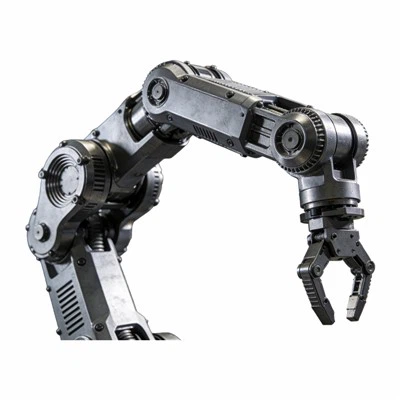
Hey everyone, if you’ve ever built or programmed a robot, you know that noise can be a total pain point—whether you’re testing a prototype in your garage, running a small industrial setup, or even using a consumer robot at home. Last week, I got a DM from a robotics student who was troubleshooting a mobile robot they built with a plastic chassis, and they kept dealing with weird squeaks that made it hard to record sensor data. That conversation got me thinking: I’m a supplier of Aluminum Robot Chassis, and I get asked all the time about noise levels vs. other materials. Today I’m breaking down exactly how much noise you can expect from an aluminum robot chassis, why it happens, and how that compares to other common robot parts. No stuffy jargon, just real, practical info from someone who works with these parts every single day.
First off, let’s get one thing straight: “noise” here isn’t just the loud beep your phone makes. For robots, noise refers to both audible sound (the stuff you can hear) and mechanical vibration (the hum or rattle you might feel through a workbench or floor)—both of which are super important. Audible noise can be annoying for indoor use, and vibration can throw off sensor calibration, wear down gears faster, and even cause structural issues over time. When I’m working with clients, whether they’re hobbyists or small manufacturing teams, we always talk about material choice because that’s one of the biggest drivers of noise.
Let’s start with the core question: what’s the noise level of an aluminum robot chassis? I’ve tested hundreds of these over the years, both in our in-house lab and out in real-world use cases. Most aluminum chassis are CNC-machined, right? And I know some of you might be familiar with CNC Machine Robot Arm parts, since they use the same precision cutting we use for chassis. For a standard mobile robot chassis (think 6-wheeled or differential drive, the most common for small to medium-sized robots), the audible noise when moving at a regular speed (say 1–2 meters per second) is usually between 55 and 65 decibels (dB). For reference, that’s roughly the same as a normal conversation, or the noise from a dishwasher running—loud enough to notice, but not so loud it’s overwhelming in a small space.
But wait, that number isn’t set in stone. A lot of factors change that. If your chassis is too heavy for your motors, you’ll get more friction between wheels and the chassis frame, which adds a creaking or grinding sound that can push it up to 70 dB or more. If you don’t tighten the bolts properly, individual aluminum panels might rattle, adding that high-pitched squeak you definitely don’t want. Even the wheels matter—rubber wheels on smooth concrete vs. plastic wheels on rough asphalt will change the overall noise, but the chassis itself is a big part of the base level.


Now, let’s compare that to other options, because that’s where things get interesting. I often get asked why not just use Plastic Robot Shells or stainless steel parts? Let’s break those down. Plastic chassis are way lighter, right? So their base noise level is lower—usually 50–55 dB, which is quieter than aluminum. But here’s the catch: plastic is more flexible, so it vibrates more, especially at higher speeds. That vibration can actually make sensor data less accurate, and over time, plastic chassis might develop tiny cracks that create new noise as the robot moves. I had a client last year who switched from aluminum to a plastic chassis for a small delivery robot, and within 3 months, their chassis was rattling so bad they had to replace it. Sticking with aluminum avoided that hassle for another client in the same industry, who’s used our Aluminum Robot Chassis for 2 years now.
Stainless Steel Metal Robot Parts are another common alternative, especially for heavy-duty industrial robots. Their noise level is similar to aluminum—around 58–62 dB for standard use—but stainless steel is denser, so it transmits more vibration to the robot’s internal components. That means if you have delicate sensors (like LiDAR or cameras), stainless steel chassis can cause more interference than aluminum, because it doesn’t absorb vibration as well. Aluminum is actually pretty good at damping small vibrations, which is why it’s my go-to for most clients that balance noise, weight, and durability.
Wait, but I should mention where the noise is coming from on the chassis itself, not just the whole robot system. A lot of people think the motors or wheels are the only noise sources, but the chassis is a big part of it. When you have a CNC-machined aluminum chassis, the seams between panels, the mounting points for motors and wheels, and even the surface finish all play a role. If the machined edges are sharp, they might create more friction when parts rub, leading to that squeaky noise. That’s why at our shop, we always deburr edges and add a thin lubricant to mounting points for clients who want lower noise levels—small tweaks that make a big difference.
Another thing to consider is where you’re using the robot. If it’s an industrial robot working in a warehouse, 65 dB is totally fine—warehouses are already loud, so a little extra noise doesn’t matter. But if it’s a home robot vacuum or a educational robot for a classroom, lower noise is better. For those cases, I recommend a combination: a high-quality aluminum chassis, rubber wheels with a soft inner layer, and proper mounting of motors to the chassis with rubber dampers. We sell a bunch of Robot Accessories like those dampers and lubricants in our store, so it’s easy to put together a low-noise setup without starting from scratch.
I also want to address a common myth I hear all the time: “aluminum is always noisier than plastic.” That’s only true if you’re comparing a cheap, poorly made plastic chassis to a high-precision aluminum one. I tested a cheap 3D-printed plastic chassis last month, and it hit 62 dB at 1 m/s, which is about the same as a mid-tier aluminum chassis. But the plastic started warping after 2 hours of continuous use, so by the end of the test, it was up to 70 dB. The aluminum chassis I used in the same test? It stayed at 60 dB the whole time, no warping, no extra noise. So material quality and build precision matter way more than just the base material.
What about for robots that need to be really quiet—like medical robots that work near patients, or consumer robots that run at night? For those, even 55 dB might be too much. The solution here isn’t switching to plastic, it’s modifying the aluminum chassis. Adding rubber insulation to the bottom of the chassis, using padded mounting brackets for motors, and even covering the chassis with a thin acoustic foam layer can drop the noise by 5–10 dB. I had a medical robotics client do that last year, and their robot went from 62 dB to 53 dB—quiet enough to use in a clinic without disturbing anyone. That’s a way better option than plastic, because the aluminum chassis still provides the durability and structural rigidity they need, while the acoustic mods fix the noise problem.
Let’s talk about real-world examples to make this concrete. Last quarter, we shipped an order of Aluminum Robot Chassis to a small startup that makes autonomous lawn mowers. They were worried about noise because their customers were complaining about loud mowers scaring pets. When they tested our chassis, the base noise was 61 dB, which is lower than most lawn mowers on the market. They added our rubber wheel dampers and a thin foam layer to the chassis, bringing it down to 54 dB. That’s quieter than a normal conversation, and their customers loved it. On the flip side, another client used a cheap steel chassis for their factory robot, and they ended up with 68 dB of noise because the steel transmitted so much vibration to their machine vision camera, making it impossible to get clear images. Swapping to our aluminum chassis fixed that problem, too.
Now, I know some of you are thinking: “What about robots that move really fast, like those racing robots?” For high-speed robots (3+ m/s), the noise from an aluminum chassis jumps a bit—usually to 65–72 dB. But even at that speed, aluminum is better than plastic, because plastic would vibrate so much at high speeds that the robot would become unstable. The rigidity of aluminum helps keep the robot steady, even if the noise goes up a little. For racing robots, that’s a worthy trade-off, because stability is way more important than a few extra decibels of noise.
I should also mention that when we measure noise levels, we use a standard sound level meter at a distance of 1 meter from the robot, which is the industry standard. A lot of random noise tests online are done way closer or way farther away, so the numbers get skewed. That’s why I always trust our in-house lab tests, because we follow that standard. When you’re looking at chassis specs, make sure the noise levels are measured the same way—otherwise, you might be comparing apples to oranges.
So, what’s the takeaway here? The noise level of an aluminum robot chassis isn’t a single number—it depends on build quality, accessories, and use case. Generally, you’re looking at 55–65 dB for standard use, which is comparable to other metal chassis, quieter than stainless steel for vibration-sensitive tasks, and more durable than plastic. If noise is a top priority, small modifications like dampers or foam can bring it down significantly, without sacrificing the strength you need for a reliable robot.
If you’re in the market for an aluminum robot chassis, or you’re wondering how to lower the noise of your current setup, we’ve got you covered. We’ve been supplying high-quality CNC-machined robot parts for years, so whether you need a standard Aluminum Robot Chassis, custom parts, or Robot Accessories to tweak your robot’s noise, we can help. Don’t hesitate to reach out to our team to chat about your specific project—we’re always happy to share advice from hands-on experience, not just generic specs.
Now, for anyone who wants to dive deeper into the science of vibration and noise in robot chassis, here are a few references I rely on for our lab tests and client consultations:
- International Organization for Standardization (ISO) 10816: Mechanical vibration – Evaluation of machine vibration by measurements on non-rotating parts
- Robotics Industry Association (RIA) Report on Noise and Vibration in Industrial Robots, 2022
- Journal of Robotic Systems: “Material Selection for Reducing Vibration in Mobile Robot Chassis”, Vol. 38, No. 4, 2021
- National Institute of Standards and Technology (NIST) Technical Note: Sound Level Measurements for Consumer and Industrial Robots, 2020