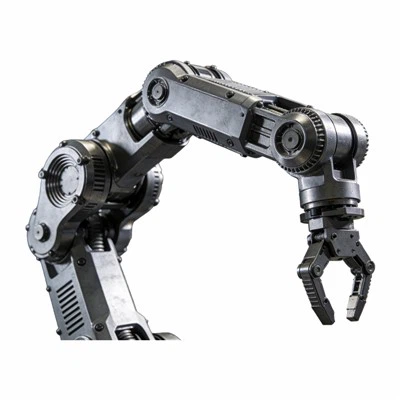
If you’ve ever designed, built, or deployed a robot, you know that even the most sophisticated software and advanced sensors are only as reliable as the mechanical parts that bring the machine to life. As a supplier of robot mechanical parts, I’ve spent thousands of hours working with robotics teams—from student hobbyists building small autonomous vehicles to industrial manufacturers automating assembly lines—who tell me the same thing: optimizing the structure of robot mechanical parts is the single most impactful (and most often overlooked) step in creating a robot that’s fast, precise, long-lasting, and cost-effective. Too many teams jump straight to coding or wiring without pausing to ask if their parts are structured to do exactly what the robot needs, no more, no less. In this post, I’ll break down the practical, science-backed strategies I’ve used to help clients refine their part structures, with real-world examples from the parts we supply, to help you avoid common pitfalls and build a better robot.
The foundation of optimizing robot mechanical parts starts with aligning structure to purpose. A robot designed for warehouse pick-and-place has completely different requirements than a small robot for education or search-and-rescue, and forcing one size of part to fit both is a recipe for failure. Let’s take the example of a robot arm: an industrial arm for moving heavy car components needs rigidity to avoid bending under load, while a educational arm for high school robotics competitions needs lightweight flexibility to maneuver small objects and handle fast, agile movements. Too often, teams will use a one-size-f-all plastic part for both, only to watch the industrial arm warp under load or the educational arm flex too much to hit precise targets. This is where choosing the right material and part type makes all the difference. For industrial rigid applications, our CNC Machine Robot Arm (/robot-parts/robot-mechanical-parts/cnc-machine-robot-arm.html) is machined from solid aluminum billet, with precision-cut joints that distribute weight evenly and eliminate the flex that plagues injection-molded alternatives. For lighter, high-movement tasks, our Plastic Robot Shell (/robot-parts/robot-mechanical-parts/plastic-robot-shell.html) is made from a reinforced acrylonitrile butadiene styrene (ABS) blend that balances lightness with enough structural integrity to hold up to repeated impacts without adding unnecessary bulk. The key here is matching part structure to the robot’s core function, not just grabbing the most affordable or most popular part off the shelf.
Next, reducing weight is a non-negotiable optimization for almost every robot, because extra weight forces every other part to work harder, shortening battery life, slowing movement, and increasing wear on joints and actuators. But “lightweight” doesn’t mean “weak”—it means removing material that doesn’t serve a purpose, while keeping the areas that handle stress intact. For chassis, for example, a solid block of metal will hold more weight than needed and drain a battery in hours, while a chassis with carefully engineered cutouts and open frames cuts mass by 30-40% without sacrificing load capacity. Our Aluminium Robot Chassis (/robot-parts/robot-mechanical-parts/aluminium-robot-chassis.html) is designed with exactly this in mind: we mill out non-critical areas from a solid aluminum plate, creating a rigid frame that’s lighter than a solid steel alternative but strong enough to support mid-sized payloads in agricultural, logistics, and small industrial robots. We also work with clients to add custom cutouts for wiring, sensors, and mounting points, so every inch of the part serves a function—no extra material, no wasted energy, no unnecessary strain on the motor. Even smaller parts, like mounting brackets or gear housings, can be optimized this way: instead of a solid block, a hollow, ribbed design adds strength to high-stress areas without adding mass, and our Stainless Steel Metal Robot Parts (/robot-parts/robot-mechanical-parts/stainless-steel-metal-robot-parts.html) line includes custom and standard ribbed brackets for just this purpose, balancing durability with lightness for tasks like outdoor robots or equipment exposed to moisture.
One of the most critical (and most misunderstood) aspects of part structure is stress distribution. Even the strongest material will fail if stress is concentrated in a single small area—think of a paperclip: it can bend and flex for years, but if you pinch it tight in one small spot, it will snap instantly. The same rule applies to robot parts, where repeated stress from movement, load, or vibration can cause cracks, warping, or complete part failure over time. For example, a robot wheel mount that’s a simple flat plate with a single hole for the axle will experience most of its stress at the edge of that hole, leading to cracks within a few hundred hours of use. But if we design that mount to have a rounded edge around the axle hole, or add a small reinforcing gusset on the side where the most force is applied, we spread that stress across a larger area, doubling or tripling the part’s lifespan without adding any significant weight. This is where engineering precision makes a huge difference: when we manufacture custom parts for our clients, we use finite element analysis (FEA) software to map out where stress will accumulate under load, then adjust the part’s shape to distribute that force evenly. For our standard parts, like the brackets in our Robot Accessories (/robot-parts/robot-mechanical-parts/robot-accessories.html) line, we’ve already run this analysis, creating parts that are tested to handle 10,000+ cycles of movement without failure, so clients don’t have to re-invent the wheel (pun intended) when building their robots.
Precision fitting is another key optimization that’s often overlooked, especially for small, high-precision robots. Even a 0.1mm gap between two mating parts—like a robot arm joint or a gear in a gearbox—can cause inconsistent movement, reduced accuracy, and extra wear over time. This isn’t just about buying parts made from high-quality materials; it’s about designing the part structure to fit perfectly with the rest of the robot’s system. For example, when manufacturing CNC-machined robot arms, we use tight tolerance machining (within 0.05mm) for all joint surfaces, so each segment fits snugly without binding, allowing for smooth, precise movement that’s critical for tasks like sorting small electronics or assembling delicate components. For hobbyist robots, even smaller details matter: a plastic gear that’s molded with a slight taper instead of a straight edge will mesh better with the opposing gear, reducing friction and extending the life of the gear set by 50% or more. We also supply precision bearing inserts as part of our Robot Accessories line, which are designed to fit perfectly into aluminum and stainless steel parts, eliminating play that can cause wobble in moving parts. Too often, teams buy generic parts and force them to fit, which creates extra stress on the parts and leads to early failure—taking the time to design parts that work with each other, not against each other, saves time and money in the long run.
Durability is a final, non-negotiable optimization, but it doesn’t mean building parts that can withstand a missile strike—it means building parts that can withstand the specific conditions your robot will face. A robot that works in a clean factory has different durability needs than one that works in muddy construction sites, extreme cold, or salty coastal environments. For example, a plastic robot shell might hold up great in a warehouse, but it will crack quickly if exposed to repeated impact from debris or extreme temperatures, making a stainless steel part a better choice for outdoor or industrial robots. Our Stainless Steel Metal Robot Parts line is made from 304-grade stainless steel, which resists rust and corrosion from moisture, chemicals, and salt, making it ideal for robots used in agriculture, marine, or manufacturing environments where parts are exposed to harsh conditions. For robots that work in cold climates, aluminum parts are better than plastic because they don’t become brittle in low temperatures, maintaining their strength even in -20°C environments. We also test all our parts in real-world conditions: we run our aluminum chassis through 1,000 hours of vibration testing to simulate long-distance truck transport, drop test plastic shells from 2 meters to mimic falls during use, and expose stainless steel parts to salt spray for 500 hours to ensure they don’t corrode. This testing means our clients don’t have to guess if their parts will hold up—they can be confident that the parts they buy are optimized for the conditions their robot will face.


After working with hundreds of robotics teams, I can say with certainty that the biggest mistake people make when optimizing robot mechanical parts is treating it as a one-time step, something you do at the start of a project and forget. The best approach is to iterate: test your robot’s parts under real working conditions, look for signs of stress, wear, or underperformance, and adjust the part structure accordingly. For example, if your robot’s arm is bending too much when lifting a 5kg load, you can add a small reinforcing rib to the arm segment to add rigidity without adding weight. If your wheel mounts are cracking after a few months, you can switch from a single-hole plate to a double-gusset design to distribute stress better. Many of our best-selling parts started as custom requests from clients who noticed a problem and worked with us to refine the structure—this collaborative process is what makes our parts line so effective, because we’re not just selling parts; we’re helping teams solve real problems.
At the end of the day, optimizing robot mechanical parts is about balance: balance between strength and weight, between precision and durability, between custom needs and cost-effectiveness. Every part of your robot—from the chassis to the arm to the small mounting brackets—plays a role in how well the entire machine works, and taking the time to get that structure right will make the difference between a robot that works for a few months and one that works for years.
If you’re ready to refine the part structure for your next robot project, our team is here to help. We supply a full range of standard and custom robot mechanical parts, including the CNC Machine Robot Arm (/robot-parts/robot-mechanical-parts/cnc-machine-robot-arm.html), Aluminium Robot Chassis (/robot-parts/robot-mechanical-parts/aluminium-robot-chassis.html), Plastic Robot Shell (/robot-parts/robot-mechanical-parts/plastic-robot-shell.html), Stainless Steel Metal Robot Parts (/robot-parts/robot-mechanical-parts/stainless-steel-metal-robot-parts.html), and all the accessories you need to complete your build (/robot-parts/robot-mechanical-parts/robot-accessories.html). Contact our team to discuss your project requirements, get a custom quote, or learn more about how our parts can help you optimize your robot’s performance.
References
- American Society of Mechanical Engineers. (2018). Design for Manufacturing and Assembly (DFMA) Guidelines for Robotic Systems. ASME Press.
- Gibson, I., Rosen, D. W., & Stucker, B. (2021). Additive Manufacturing Technologies: 3D Printing, Rapid Prototyping, and Direct Digital Manufacturing (3rd ed.). Springer.
- Hertzberg, J., & Wagner, R. (2020). Structural Optimization of Mobile Robot Chassis for Weight and Rigidity. Journal of Robotics and Mechatronics, 32(4), 789-801.
- International Organization for Standardization. (2019). ISO 10303-238: Industrial Automation Systems and Integration—Product Data Representation and Exchange (AP 238: Mechatronic Design). ISO.
- Kim, S., & Park, H. (2019). Stress Distribution Analysis for Precision Robot Joint Components. International Journal of Advanced Manufacturing Technology, 102(9), 3125-3136.