CNC (Computer Numerical Control) metal machining is an advanced manufacturing process that has revolutionized the metalworking industry. As a CNC metal machining supplier, I am excited to share with you how this cutting - edge technology works and its significance in various applications.
The Basics of CNC Metal Machining
At its core, CNC metal machining uses computerized control systems to operate and manipulate machine tools. These tools can cut, shape, and finish metal parts with a high degree of precision and repeatability. The process starts with a digital design, typically created using Computer - Aided Design (CAD) software. This digital model serves as a blueprint for the final product.
The Role of CAD and CAM
CAD software allows designers to create detailed 2D or 3D models of the metal parts they want to produce. These models include all the necessary dimensions, geometries, and tolerances. Once the CAD design is finalized, it is imported into Computer - Aided Manufacturing (CAM) software.
CAM software is responsible for generating the toolpaths that the CNC machine will follow. It takes the CAD model and translates it into a set of instructions that are compatible with the CNC machine's control system. These instructions specify the movements of the cutting tools, the speeds at which they operate, and the depths of cuts.
The CNC Machine Setup
Before the machining process begins, the CNC machine needs to be properly set up. The first step is to select the appropriate cutting tools. Different types of tools are used depending on the material being machined, the shape of the part, and the desired finish. For example, end mills are commonly used for milling operations, while drills are used for creating holes.
The metal workpiece is then securely clamped onto the machine's worktable. This ensures that it remains stable during the machining process, preventing any deviations or inaccuracies. The CNC machine's control system is calibrated to account for the position and orientation of the workpiece.
The Machining Process
Once the setup is complete, the CNC machine is ready to start machining the metal part. The control system reads the instructions generated by the CAM software and commands the machine's motors to move the cutting tools along the specified toolpaths.
There are several common machining operations in CNC metal machining:
Milling
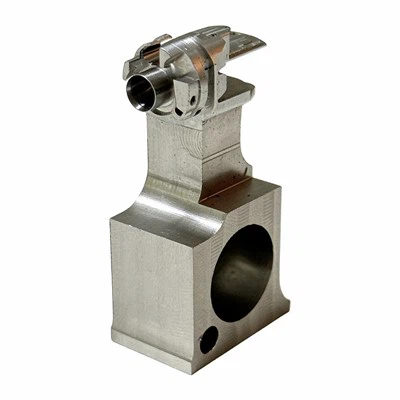
Milling is a process where a rotating cutting tool removes material from the workpiece to create complex shapes and features. End mills can be used to mill flat surfaces, slots, and pockets. The CNC machine can move the cutting tool in multiple axes (usually 3 - 5 axes), allowing for the creation of highly intricate parts. For example, in the production of Custom Metal Badges For Cars, milling operations can be used to create the detailed designs and contours on the badges.
Turning
Turning is another important machining operation, especially for creating cylindrical parts. In turning, the workpiece is rotated while a stationary cutting tool removes material from the outer surface. CNC lathes are commonly used for turning operations. They can produce parts with high precision in terms of diameter, length, and surface finish. CNC Aluminum Lathe Turning Parts are often manufactured using this process, where the lathe can create precise threads, grooves, and other cylindrical features.
Drilling
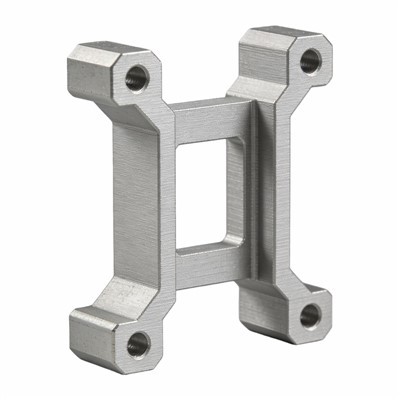
Drilling is used to create holes in the metal workpiece. The CNC machine can precisely control the location, diameter, and depth of the holes. It can perform multiple drilling operations in a single setup, ensuring consistent hole quality across the part.
Throughout the machining process, the CNC machine continuously monitors and adjusts its operations to maintain the desired levels of precision. Sensors on the machine can detect factors such as tool wear, temperature, and vibration, and make appropriate adjustments to ensure the quality of the final product.
Quality Control in CNC Metal Machining
Quality control is an integral part of CNC metal machining. After the machining process is complete, the finished parts are inspected using various measurement tools. Coordinate Measuring Machines (CMMs) are commonly used to measure the dimensions of the parts with high accuracy. This ensures that the parts meet the specified tolerances and quality standards.
Visual inspection is also carried out to check for any surface defects, such as scratches or burrs. If any issues are detected, the parts can be re - machined or repaired to bring them up to the required quality.
The Advantages of CNC Metal Machining
There are numerous advantages to using CNC metal machining:
Precision and Accuracy
CNC machines can achieve extremely high levels of precision, with tolerances as tight as a few microns. This precision is crucial in industries such as aerospace and automotive, where even the slightest deviation can lead to performance issues or safety hazards.
Repeatability
Once a CNC program is created, it can be used to produce multiple identical parts. This repeatability ensures consistency in product quality, which is essential for mass - production.
Efficiency
CNC metal machining is highly efficient compared to traditional manual machining methods. The machines can operate continuously, with minimal downtime between different operations. They can also perform multiple operations in a single setup, reducing the overall production time.
Complexity
CNC machines can manufacture parts with highly complex geometries that would be difficult or impossible to produce using manual methods. This allows for the creation of innovative and high - performance products.


Applications of CNC Metal Machining
CNC metal machining is widely used in various industries:
Automotive
In the automotive industry, CNC machining is used to produce engine components, transmission parts, and CNC Machining Plastic Auto Parts. The high precision and quality of CNC - machined parts ensure the reliability and performance of vehicles.
Aerospace
Aerospace applications require parts with extremely high strength - to - weight ratios and tight tolerances. CNC machining is used to produce components such as turbine blades, fuselage parts, and landing gear components.
Medical
In the medical field, CNC machining is used to manufacture surgical instruments, implants, and prosthetics. The precision and biocompatibility of the materials used in CNC - machined medical parts are crucial for patient safety and comfort.
Electronics
CNC machining is used to produce electronic enclosures, heat sinks, and other components. The ability to create complex shapes and precise dimensions is essential for the proper functioning of electronic devices.
Advanced Technologies in CNC Metal Machining
The field of CNC metal machining is constantly evolving, with the introduction of new technologies. For example, 5 - axis machining allows for simultaneous movement of the cutting tool in five different axes, enabling the creation of even more complex parts with fewer setups.
Rapid prototyping is another area where CNC machining has made significant contributions. Rapid Prototype Machining allows for the quick production of prototypes, reducing the product development cycle time and cost.
In addition, the use of advanced materials such as Carbon Fiber Machining has become more prevalent in CNC metal machining. Carbon fiber offers high strength and low weight, making it an ideal material for applications in aerospace, automotive, and sports equipment.
Conclusion
CNC metal machining is a sophisticated and versatile manufacturing process that has transformed the way metal parts are produced. Its precision, efficiency, and ability to produce complex parts make it an essential technology in many industries.
As a CNC metal machining supplier, we are committed to providing high - quality products and services to our customers. Whether you need custom - made metal badges for cars, precision - machined auto parts, or innovative prototypes, we have the expertise and technology to meet your requirements.
If you are interested in our CNC metal machining services or have any questions about the process, we encourage you to contact us for a detailed discussion. Our team of experts is ready to assist you in bringing your ideas to life.
References
- Groover, M. P. (2010). Fundamentals of Modern Manufacturing: Materials, Processes, and Systems. John Wiley & Sons.
- Boothroyd, G., Dewhurst, P., & Knight, W. A. (2011). Product Design for Manufacture and Assembly. CRC Press.