As a dedicated supplier of robot parts, I've spent years delving into the intricate world of robotic components. One of the most crucial aspects that often goes unnoticed by those new to the field is the vibration characteristics of robot parts. Understanding these characteristics is vital for ensuring the optimal performance, longevity, and safety of robots in various applications.
Importance of Understanding Vibration Characteristics
Vibration in robot parts can have a significant impact on the overall functionality of the robot. Excessive or unwanted vibrations can lead to a multitude of problems, including reduced precision, increased wear and tear on components, and even system failures. For instance, in manufacturing processes where robots are used for tasks such as welding or assembly, vibrations can cause inaccuracies in the positions of the tools, leading to defective products.
In addition to affecting precision, vibrations can also generate noise, which can be a nuisance in work environments. Moreover, prolonged exposure to high - amplitude vibrations can damage the internal structure of the parts, shortening their lifespan and increasing maintenance costs. Therefore, having a comprehensive understanding of the vibration characteristics of robot parts is essential for engineers and designers to develop high - quality and reliable robots.
Vibration Sources in Robot Parts
There are several sources of vibration in robot parts. One of the primary sources is the motor. Robot Drive Motors are responsible for providing the necessary power to move the robot's components. However, the rotating parts inside the motor, such as the rotor and the bearings, can generate vibrations due to imbalance, misalignment, or mechanical friction.
For example, if the rotor of a motor is not perfectly balanced, it will create an uneven force distribution as it rotates. This uneven force causes the motor to vibrate, which can then be transmitted to other parts of the robot. Similarly, misaligned motor shafts can also result in abnormal vibrations, as the uneven load on the bearings can lead to excessive wear and generate vibrations.
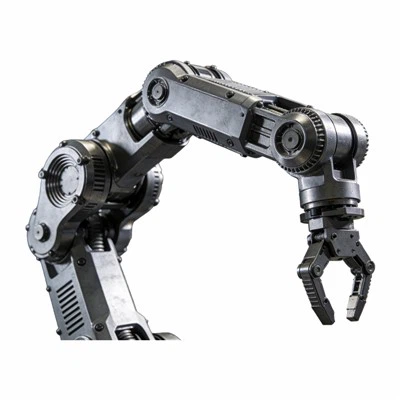
Another significant source of vibration is the movement of the robot's arms and joints. When a Robot Arm Link or a Robot Joint Parts moves, there is a sudden change in momentum, which can create vibrations. These vibrations are particularly noticeable when the robot accelerates or decelerates rapidly.
For instance, a CNC Machine Robot Arm that moves at high speeds to perform machining operations may experience significant vibrations during the starting and stopping phases. These vibrations can not only affect the accuracy of the machining process but also cause stress on the arm's structure, potentially leading to mechanical failures over time.
Types of Vibration
There are two main types of vibration in robot parts: forced vibration and self - excited vibration. Forced vibration occurs when an external force is applied to the part. This external force can be periodic, such as the rotational force of a motor, or non - periodic, such as an impact force during a collision.
When a motor rotates at a constant speed, it applies a periodic force to the connected components, causing them to vibrate at the same frequency as the motor's rotation. The amplitude of the forced vibration depends on the magnitude of the external force and the natural frequency of the part. If the frequency of the external force is close to the natural frequency of the part, a phenomenon called resonance occurs. Resonance can cause the amplitude of the vibration to increase significantly, potentially leading to damage to the part.
Self - excited vibration, on the other hand, is generated by the interaction between the system's internal forces and its motion. This type of vibration is often more difficult to predict and control. For example, in a Robot Hip Joint, the friction between the moving parts and the internal forces generated by the joint's movement can cause self - excited vibrations. These vibrations can be a result of dynamic instabilities in the joint's structure and can lead to erratic motion and reduced performance.
Measuring and Analyzing Vibration Characteristics
To understand the vibration characteristics of robot parts, it is necessary to measure and analyze the vibrations. This can be done using various sensors, such as accelerometers, displacement sensors, and velocity sensors. Accelerometers are the most commonly used sensors for vibration measurement as they can measure the acceleration of the vibrating part.
Once the vibrations are measured, the data can be analyzed using techniques such as frequency analysis and time - domain analysis. Frequency analysis, such as the Fast Fourier Transform (FFT), is used to determine the frequencies present in the vibration signal. This helps in identifying the sources of vibration, as different sources typically generate vibrations at different frequencies.
For example, if a frequency analysis of the vibration signal from a robot arm shows a peak at the same frequency as the motor's rotation, it indicates that the motor is likely the source of the vibration. Time - domain analysis, on the other hand, is used to study the vibration signal's behavior over time. It can provide information about the amplitude, duration, and shape of the vibration signal, which can be useful for detecting sudden changes or abnormal vibrations.
Controlling Vibration in Robot Parts
There are several methods for controlling vibration in robot parts. One of the most common methods is to use vibration isolation techniques. This involves placing isolation mounts or pads between the vibrating part and the surrounding structure. These isolation devices are designed to absorb and dampen the vibrations, reducing their transmission to other parts of the robot.
For example, rubber mounts can be used to isolate a motor from the robot's frame. The rubber material has good damping properties, which can reduce the amplitude of the vibrations transmitted from the motor to the frame. Another method is to use vibration absorbers. Vibration absorbers are additional masses that are attached to the vibrating part. These masses are designed to vibrate in such a way that they counteract the vibrations of the main part, reducing the overall amplitude of the vibration.


In addition to these physical methods, software - based control strategies can also be used to reduce vibration. For example, advanced control algorithms can be implemented to adjust the robot's motion in real - time to minimize vibrations. These algorithms can take into account factors such as the robot's speed, acceleration, and position to optimize its movement and reduce the generation of vibrations.
Impact on Different Robot Applications
The vibration characteristics of robot parts have a different impact on various robot applications. In industrial manufacturing, robots are often used for high - precision tasks such as pick - and - place operations and machining. In these applications, even small vibrations can cause significant errors, leading to reduced product quality and increased rejection rates. Therefore, it is crucial to minimize vibrations in industrial robots to ensure accurate and reliable operation.
In service robots, such as those used in healthcare or logistics, vibrations can affect the comfort and safety of the users. For example, a healthcare robot that is used to assist patients with mobility may experience vibrations during movement. These vibrations can be uncomfortable for the patients and may even pose a safety risk if they cause the robot to lose balance.
In the field of aerospace and defense, robots are often required to operate in harsh environments. Vibrations in these robots can be caused by factors such as high - speed movement, shock, and vibration from the surrounding environment. These vibrations can damage the sensitive components of the robot and affect its performance. Therefore, it is essential to design robots with good vibration characteristics to ensure their reliability in these demanding applications.
Conclusion
As a robot parts supplier, I understand the critical role that vibration characteristics play in the performance and reliability of robots. By having a deep understanding of the sources, types, and measurement methods of vibrations, engineers and designers can develop effective strategies to control and minimize vibrations in robot parts. This not only improves the quality and functionality of the robots but also reduces maintenance costs and extends the lifespan of the components.
If you are in the market for high - quality robot parts and want to discuss how to address vibration issues in your robot applications, I encourage you to reach out. Our team of experts is ready to assist you in selecting the right parts and providing solutions to ensure the optimal performance of your robots. Contact us today to start the conversation about your robot parts needs.
References
- Craig, J. J. (2005). Introduction to Robotics: Mechanics and Control. Pearson Prentice Hall.
- Siciliano, B., Sciavicco, L., Villani, L., & Oriolo, G. (2008). Robotics: Modelling, Planning and Control. Springer.
- Inman, D. J. (2014). Engineering Vibration. Pearson.