1. Why Large Machine Shops Struggle with Low-Volume Robot Prototyping
Large CNC machining companies usually build their business on repeat production. Machining hundreds of identical parts spreads setup cost across more units, improves machine utilization and keeps schedules predictable.
Robotics R&D looks very different.
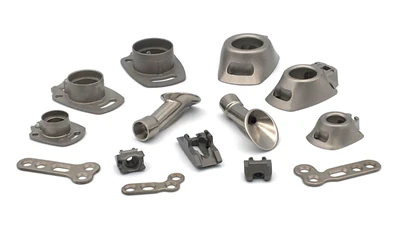
A typical prototype order might include:
- One robotic joint housing
- Two gearbox mounting flanges
- Three end-effector mounting plates
There are only a few pieces, yet each has different geometry, tolerances and process requirements, and the design may change after the first assembly test. A machine tied up with a 100-piece repeat order usually earns more than one running a three-piece prototype, so small R&D orders can receive lower scheduling priority. That is a consequence of how the business is organized, not a reflection of customer service.
The practical result for engineers is longer waits, less predictable start dates and limited flexibility when a prototype is urgent.
What to look for instead: ask whether the supplier regularly handles one-off parts, prototype builds and low-volume CNC machining, not just how many machines it owns.

2. Robot Components Need More Than "Machined to Drawing"
Robot parts directly affect the performance of the assembled system. A deviation that looks minor on paper can change alignment, fit or measurement stability. Three common examples:
Robotic joint housings: a positional error in the gearbox mounting pattern can affect alignment between the gearbox, shaft and surrounding structure, leading to assembly difficulty or degraded motion performance.
End-effector mounting flanges: flatness and interface accuracy influence how the tool sits relative to the robot wrist. The resulting tool-center-point (TCP) error depends on geometry, alignment and assembly stack-up.
Force-sensor brackets: incorrect hole positions or contact surfaces can introduce mechanical stress or misalignment, which may affect sensor performance.
This is why engineering communication matters. A capable manufacturing engineer should review the drawing, flag ambiguous requirements and ask questions such as:
Which dimensions are critical to the assembly?
Do the gearbox mounting holes carry specific positional tolerances?
Does the part need 5-axis CNC machining, or can 3-axis machining with multiple setups hold the tolerance?
Are there thin walls or features that may deform during cutting?
A supplier that only quotes the drawing may still deliver acceptable parts, but your team then has to catch problems that could have been discussed before production. Proactiv
3. Fast Design Iterations Need a Flexible Process
Robotics development is rarely linear. A collaborative robot joint housing may go through several revisions: after the first assembly test, a gearbox mounting hole needs a small adjustment, the CAD model is updated, and a new prototype is required. That cycle can repeat many times before validation.
In a rigid purchasing process, every revision triggers a new request for quotation, another approval round and a new production queue. For each revision the supplier typically needs to:
Review the revised drawing.
Identify the differences from the previous revision.
Reassess machining requirements and price.
Confirm the revised order.
Schedule production and make the part.
Inspect the new prototype before shipment.
If every revision is treated as a brand-new project, your engineers spend more time waiting than evaluating the design. A supplier experienced in low-volume robot prototyping can streamline this by comparing the new drawing with the previous version, explaining the manufacturing impact and issuing an updated quotation once the change is reviewed.
The key is not just machining speed. It is how quickly a design change becomes a manufacturable, inspected part.

4. Not Every Small Shop Has the Right Robotics Experience
If large shops are not always the answer, does any small workshop work? No. Robot components can demand specialized knowledge, especially with precision interfaces, complex geometry and tight geometric tolerances.
Multi-face machining for joint housings: the engineer must plan datums, workholding, setup changes and how positioning errors accumulate between operations. Depending on the geometry, 5-axis machining may reduce the number of setups, while a well-planned 3-axis process can also be suitable.
Precision interfaces for harmonic drive gearboxes: the mounting interface, bore geometry, surface finish and positional tolerances must be checked against the gearbox manufacturer's requirements, and inspection methods must match the specified fit.
End-effector mounting interfaces: the supplier should understand the interface dimensions, mounting pattern and datum scheme for the intended robot model or tool.
An inexperienced shop may still make the part successfully, but it may need more clarification and process development along the way. For custom robot parts, the ideal supplier combines two things:
A low-volume service model: willingness to quote small quantities, responsive communication and flexibility when designs change.
Relevant manufacturing expertise: the ability to review complex drawings, identify critical features and choose suitable machining and inspection methods.
5. How to Choose a CNC Machining Supplier for Robot Prototypes: Three Practical Questions
You do not need to visit a factory for an initial assessment. These three questions reveal how a supplier really works.
Question 1: Can you review this robotic joint housing or end-effector drawing?
Send a representative drawing and watch the response within the agreed review period. A useful engineering reply may point out:
Critical dimensions or geometric tolerances that need clarification
Thin-wall deformation or workholding challenges
Whether 3-axis or 5-axis machining is worth considering
Assembly interfaces that need closer attention
Inspection methods appropriate for the specified tolerances
A quotation alone does not prove a lack of engineering capability, but a supplier that explains its approach and raises relevant questions shows stronger technical engagement.
Question 2: Can you make one robotic joint housing, and what is the estimated lead time?
This shows whether the supplier accepts one-off prototype orders and how it schedules them. Look for a lead time that states its assumptions: material availability, machining complexity, inspection and surface treatment. Be cautious of vague promises. A realistic estimate with clear conditions is more useful than an aggressive date that quietly excludes material procurement or inspection.
Question 3: Which operations are completed in-house?
Ask which processes are done internally and which are subcontracted. Depending on the part, the route may include CNC milling, turning, grinding, wire EDM, surface finishing and dimensional inspection. Outsourcing is not automatically a weakness; specialized external processes can be appropriate. What matters is that the supplier manages those steps, is transparent about them and explains their effect on cost and lead time.
6. Extra Checks for Overseas Buyers Sourcing CNC Prototypes
If you are importing prototype parts, a few export-side details deserve the same attention as machining capability:
Clear quotation terms: confirm the trade term (for example EXW, FOB or DDP), currency, payment terms and what is included in the price.
Shipping and lead time together: ask for production lead time and transit time separately so you can plan assembly tests realistically.
Documentation: confirm what inspection reports, material certificates or packing documents are available with the shipment.
Confidentiality: for unreleased robot designs, ask whether the supplier will sign an NDA before you share CAD files.
Packaging: precision housings and flanges need protective packaging to avoid damage in transit.
A supplier that answers these questions clearly and early usually communicates just as clearly once production starts.
Conclusion: Match the Supplier to Your Development Stage
Large CNC manufacturers are an excellent choice for stable, repeat production, with advantages in capacity, standardization and economies of scale. Low-volume robot prototyping, however, needs a different balance: flexibility with small quantities, responsive engineering communication and a process that adapts as the design evolves.
When comparing suppliers, look beyond factory size and machine count. Evaluate how they review drawings, schedule small orders, handle revisions, inspect critical features and coordinate outsourced processes. The right supplier is not necessarily the largest or the smallest. It is the one whose working model fits your project right now.
FAQ
Q: What is low-volume robot prototyping?
A: It is the production of a small number of robot components, often one to a few dozen pieces, such as joint housings, flanges and mounting plates, to test and refine a design before committing to larger production runs.
Q: Is 5-axis CNC machining always required for robotic joint housings?
A: Not always. Depending on geometry and tolerance requirements, 5-axis machining can reduce setups, but a well-planned 3-axis process with multiple setups may also meet the requirement. A good manufacturing engineer will advise based on your drawing.
Q: How can I shorten lead time between prototype revisions?
A: Choose a supplier with a clear revision workflow, send marked-up drawings that highlight what changed, and confirm critical dimensions up front so the revised part can be quoted and scheduled quickly.
Need CNC Machined Parts for Your Robotics R&D Project?
JCTOP provides CNC machining services for custom precision components, supporting prototype development and low-volume production. Depending on your design and requirements, we offer 3-axis and 5-axis CNC machining for custom robotic brackets, joint housings, mounting plates and other mechanical components.
Send us your 2D drawings and 3D CAD files and our engineers will discuss manufacturability, material selection, machining options and estimated lead time with you.
Request a Quote | Contact JCTOP to discuss your next robot prototype