


Conventional Machining vs. CNC Machining: What Is the Difference?
Both conventional machining and CNC machining are widely used to manufacture mechanical parts, but they differ significantly in how machines are controlled, how processes are planned, and how complex parts are produced.
Understanding these differences can help you choose the right manufacturing method for a prototype, repair part, or low-volume production project.
1. Machine Operation
The biggest difference is how the machine is controlled.
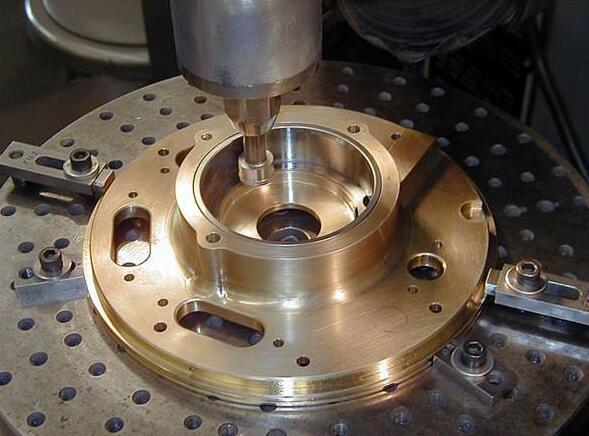
In conventional machining, the operator manually controls machine movements and cutting operations. The machinist's experience plays an important role in positioning, tool selection, cutting parameters, and process control.
CNC machining uses computer-controlled programs to guide the machine. Once the CNC program, tools, workholding, and coordinates have been properly set, the machine can perform the programmed operations with much less manual intervention.
2. Precision and Repeatability
CNC machining generally provides better repeatability, especially when producing multiple identical parts.
Because tool movements are controlled by programmed coordinates, the same machining sequence can be repeated across a production batch. This is particularly useful for components with multiple critical dimensions or complex geometries.
Conventional machining can also produce accurate parts, but results may depend more heavily on the operator's experience and manual adjustments.
3. Part Geometry and Machining Capability
CNC machines are suitable for a wide range of components, including housings, brackets, plates, structural parts, shafts, robot components, and parts with complex surfaces.
Modern 3-axis CNC machines can handle many common milling applications, while 4-axis and 5-axis machines can provide access to multiple faces and complex angled features with fewer setups.
Conventional machines remain useful for simpler machining operations, maintenance work, modifications, and certain one-off components.
4. Number of Controlled Axes
A conventional machine normally requires the operator to control machine movements manually.
CNC machining centers typically use three linear axes-X, Y, and Z. More advanced machines can add rotational axes for 4-axis or 5-axis machining.
5-axis CNC machining is especially useful for complex components where multiple surfaces or angled features need to be machined accurately.
5. Process Planning
CNC machining requires more preparation before cutting begins.
The process may involve CAD/CAM programming, tool selection, workholding design, coordinate setup, cutting parameter selection, and inspection planning.
Although this preparation takes time, it becomes highly valuable when producing multiple parts because the same program can be reused and adjusted for future production.
Conventional machining generally involves more direct manual control and can be convenient for simple or one-off operations.
6. Fixtures and Workholding
Workholding is important for both machining methods, but CNC machining often requires a carefully planned relationship between the fixture, workpiece, machine coordinate system, and machining datum.
For complex CNC parts, a well-designed fixture can reduce the number of setups, improve repeatability, and make multi-face machining more efficient.
Which Machining Method Should You Choose?
There is no single method that is best for every part.
- Conventional machining can be practical for simple parts, repair work, modifications, or certain one-off jobs where manual adjustment is convenient.
- CNC machining is usually a better choice when you need complex geometry, repeatable dimensions, multiple machining operations, prototypes, or low-volume production.
At Jingcheng Precision, we provide 3-axis and 5-axis CNC machining for prototypes and low-volume production. Our capabilities cover aluminum, stainless steel, titanium, and engineering plastics, with engineering review and quality inspection throughout the manufacturing process.
If you have a 2D drawing, 3D model, or STEP file, we can review the part and recommend a suitable machining process based on its geometry, material, tolerance, quantity, and application.


