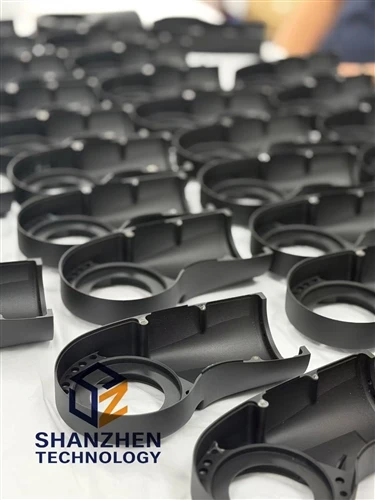
CNC Robot Arm Kits: Democratizing Robotics and Automation
The availability of CNC robot arm kits has significantly lowered the barrier for companies, educational institutions, and hobbyists to engage with robotics. These kits often come with modular components, enabling users to assemble, program, and customize robot arms that meet their specific needs. From simple pick-and-place tasks to intricate operations involving coordinated multi-axis movement, CNC robot arm kits offer versatility at an accessible price point.
One of the main attractions of these kits is their educational value. As automation becomes a critical skill in engineering and manufacturing, hands-on experience with robot arm CNC configuration and operation is invaluable. Schools and universities increasingly integrate these kits into curricula, nurturing a new generation of engineers adept in both CNC programming and robotics.
The Competitive CNC Robotic Arm Price Landscape
The CNC robotic arm price has seen a remarkable decline, thanks to advancements in manufacturing processes, open-source development, and increased market competition. Affordable CNC robotic arms now span from beginner-friendly models costing a few hundred dollars to sophisticated industrial-grade units priced in the thousands. This price diversity means that businesses of all sizes can adopt CNC robotic arms tailored to their operational scale and complexity.
Furthermore, the cost-effectiveness extends beyond the initial purchase. CNC robotic arms typically reduce labor costs, improve product quality by minimizing human error, and enable continuous operation. The return on investment (ROI) is becoming increasingly attractive, encouraging more companies to incorporate automation powered by CNC robotic arms into their workflows.
CNC Arm Robots: Revolutionizing Manufacturing and Beyond
The term CNC arm robot represents robotic arms controlled via CNC systems, combining the precision of numerical control with the flexibility and dexterity of robotics. These systems excel in tasks requiring exact positioning and repeatability, such as milling, welding, assembly, and inspection.
In manufacturing, CNC arm robots have redefined production paradigms. For example, automotive manufacturers utilize robotic arms equipped with CNC to perform painting and machining tasks with unmatched consistency. This consistency translates to improved product reliability and faster production cycles.
Beyond manufacturing, CNC arm robots find applications in sectors like healthcare, agriculture, and logistics. Precision surgical robots, CNC-controlled robotic arms in agricultural harvesting, and automated warehouse picking systems illustrate the broad impact of these technologies.
Robot Arm CNC: A Synergy of Control and Motion
At the heart of the modern robotic arm's success is the synergy between CNC systems and robotic motion, often referenced as robot arm CNC. CNC systems provide deterministic control algorithms that allow robotic arms to execute complex trajectories with high repeatability.
This integration is enabling the development of multi-axis robotic arms that can carry out sophisticated machining processes previously reserved for fixed CNC machines. For instance, 5-axis CNC robotic arms provide the capability to machine complex geometries on large workpieces that are difficult to handle with conventional CNC mills.
The adaptability of robot arm CNC systems also facilitates rapid reconfiguration for different tasks, making them ideal for small batch production and prototyping scenarios where flexibility is paramount.
CNC Robotic Arm: Key Enabler of Industry 4.0
CNC robotic arms are fundamental building blocks in the realization of Industry 4.0-the smart factory ecosystem where machines, systems, and humans collaborate seamlessly with the aid of digital technologies.
Equipped with sensors, connected to industrial IoT platforms, and integrated with AI-based control systems, CNC robotic arms can optimize their operations in real-time. Predictive maintenance, adaptive machining parameters, and autonomous quality control become feasible, enhancing productivity and reducing downtime.
Additionally, collaborative CNC robotic arms, or cobots, are designed to work safely alongside human workers, combining the precision of CNC control with the intuitive adaptability of robots. This collaboration nurtures new workflows that maximize human creativity supported by robotic endurance and accuracy.
The Advancing Frontier of Humanoid Robots and Humanoid Robot Arms
Parallel to advances in CNC robotic arms is the exciting growth in humanoid robots and their components, such as humanoid robot arms and humanoid robot chassis. These robots mimic human anatomy and movement, offering potential not only for industrial applications but also for personal assistance, healthcare, education, and entertainment.
A humanoid robot arm integrates CNC-inspired precision with anatomically inspired design, enabling fluid and highly dexterous movements. Such arms are crucial for humanoid robots to perform delicate, human-like interactions such as grasping objects of varied shapes, typing, or even assisting patients in hospitals.
The humanoid robot chassis serves as the structural foundation, where CNC machining methods and robotic arm technologies converge to produce lightweight, strong, and agile frameworks. With optimized kinematics and control strategies, these chassis support mobility and manipulation skills necessary for dynamic environments.
Synergizing CNC Robotics and Humanoid Robotics for Future Societal Impact
The fusion of CNC robotic arms with humanoid robot architectures heralds new possibilities. Imagine humanoid robots with CNC-precision arms that assist in complex assembly tasks, hazardous environment operations, or service roles requiring fine motor skills. Such robots will enhance workplace safety, efficiency, and even quality of life.
Educational environments, too, benefit greatly from humanoid robots with CNC robotic arms-giving students intuitive, engaging platforms to learn robotics, programming, engineering mechanics, and AI.
Moreover, this synergy is pivotal for exploring human-machine interaction, ergonomics, and emotional robotics-domains essential for advancing robot integration into daily human activities.
Market Outlook and Opportunities
The global market for CNC robot arms and humanoid robots is projected to witness robust growth in the coming years. Factors propelling this expansion include:
- Rising demand for automation in manufacturing, logistics, and healthcare.
- Greater availability of cost-effective CNC robot arm kits and modular components.
- Enhanced capabilities of humanoid robots for service and research.
- Increasing investment in Industry 4.0 initiatives across developed and emerging economies.
Startups and established corporations are investing heavily in R&D, pushing the envelope in precision, intelligence, and adaptability of robot arms and humanoid platforms.
Conclusion: Empowering the Future Through CNC Robotics and Humanoid Innovation
The marriage of CNC technology with robotic arms and humanoid robots is transforming how industries and societies operate. As the CNC robot arm kit, cnc robotic arm price, and related technologies continue to mature, more organizations will harness these tools to enhance productivity, innovate products, and create safer and smarter environments.
With ongoing advancements, the vision of intelligent, precise, and collaborative robots working harmoniously alongside humans inches closer to reality. This exciting future not only boosts economic growth but also inspires a more sustainable, inclusive, and technologically empowered world.
---
In sum, the CNC robotic arm and humanoid robot sectors are vibrant and evolving domains brimming with opportunity. Stakeholders-from manufacturers to educators and researchers-are positioned to reap profound benefits as these technologies advance, demonstrating the tremendous positive impact of CNC robotics on modern industry and society.
 English
- English
- Français
- Deutsch
- 日本語
- Italiano
- Español
- Português
- русский
- हिंदी
- Polski
- Malti
- dansk
- Bai Miaowen
- فارسی
- Indonesia
- עברית
- Việt Nam
- hrvatski
- Български
- বাংলা
- Svenska
- Ελληνικά
- Čeština
- O'zbek
- Lietuvių
- Nederlands
- slovenščina
- Melayu
- România limbi
- Türkçe
- suomi
- íslenska
- Kreyòl Ayisyen
- bosanski
- Srbija jezik (latinica)
- اردو
- Eesti
- عربي
- slovenčina
- Cymraeg
- magyar
- Latviešu
- українська
- 한국어
- Català
- ไทย
- Gaeilgenah Éireann
- Norsk