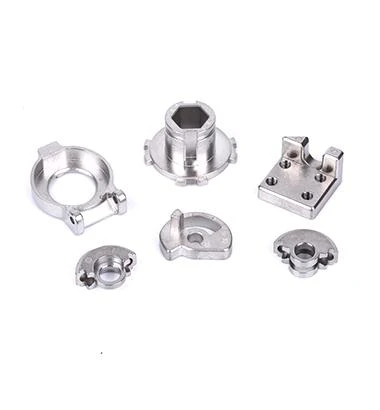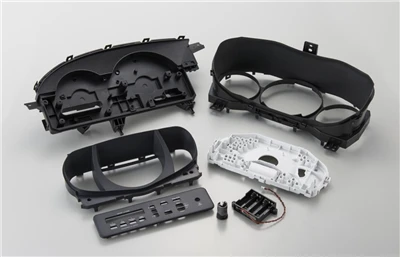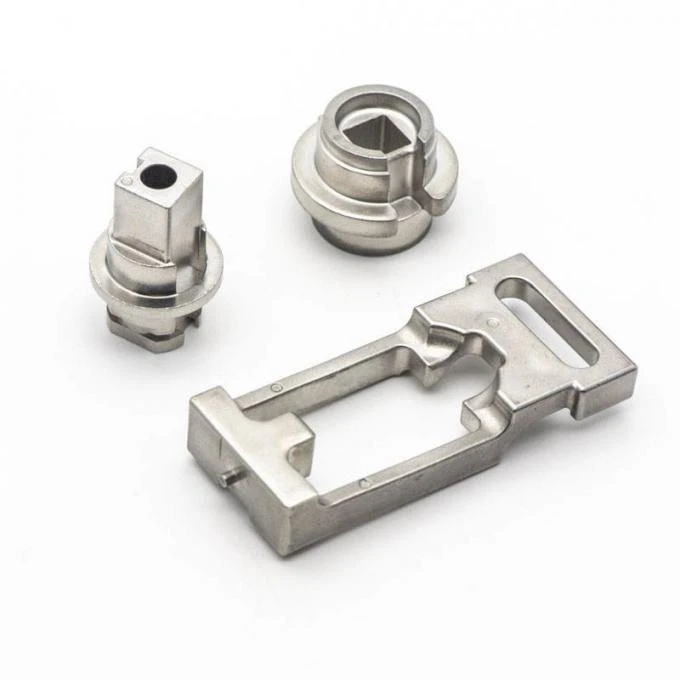
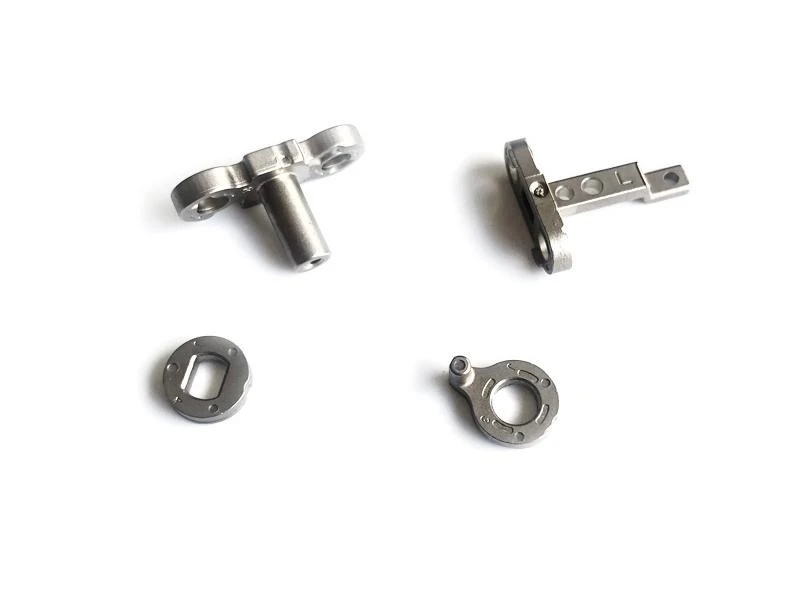
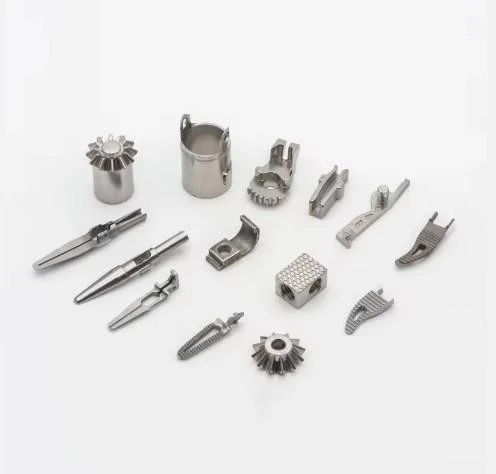
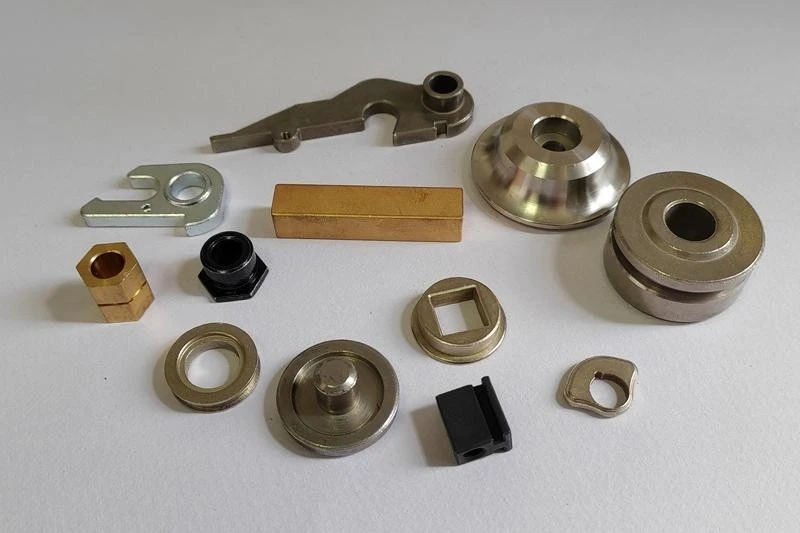
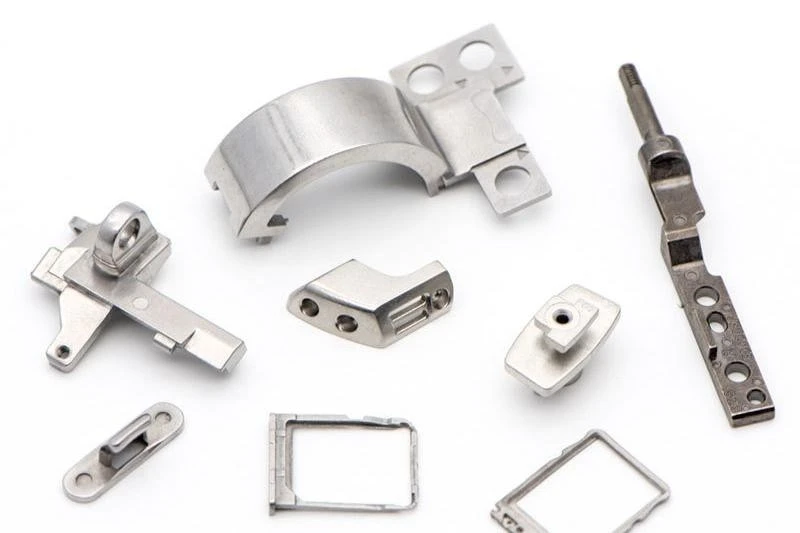
Shenzhen Jingcheng Dingyi Forming Technology Co., Ltd. is one of the leading manufacturers and suppliers of stainless steel injection molding in China, specialized in providing high quality customized products. If you're going to buy bulk cheap stainless steel injection molding, welcome to get quotation from our factory. Quality products and low price are available.
Why Stainless Steel for MIM?
Stainless steel offers a combination of properties that makes it suitable for many small precision components.
Depending on the selected grade and final specification, stainless steel MIM parts can provide:
Corrosion Resistance
Useful for components exposed to moisture, chemicals, or demanding environments.
Mechanical Strength
Suitable for functional components that need to withstand mechanical loads.
Wear Resistance
Important for moving, contacting, or repeatedly operated components.
Dimensional Stability
Suitable for small components where consistent geometry is important.
Surface Appearance
Stainless steel can be further finished when a particular surface condition or appearance is required.
The specific performance depends on the stainless steel grade, MIM process parameters, density, heat treatment, and final application.
Stainless Steel Grades
Different applications call for different stainless steel compositions.
Common stainless steel MIM materials include:
316L Stainless Steel
Known for its corrosion resistance and commonly considered for medical, laboratory, chemical, and other environments where corrosion performance is important.
17-4 PH Stainless Steel
A precipitation-hardening stainless steel that combines high strength with corrosion resistance. It can be considered for mechanical components requiring greater strength.
Other Stainless Steel Grades
Additional stainless steel grades may be available depending on the component, required properties, powder system, and production requirements.
If your drawing specifies a particular stainless steel grade, the material requirement should be confirmed before tooling and production.
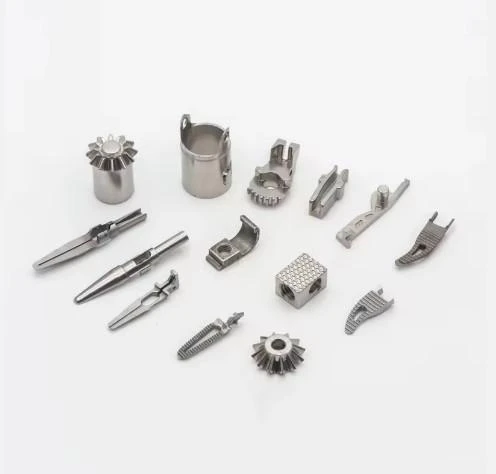
Small Parts, Complex Geometry
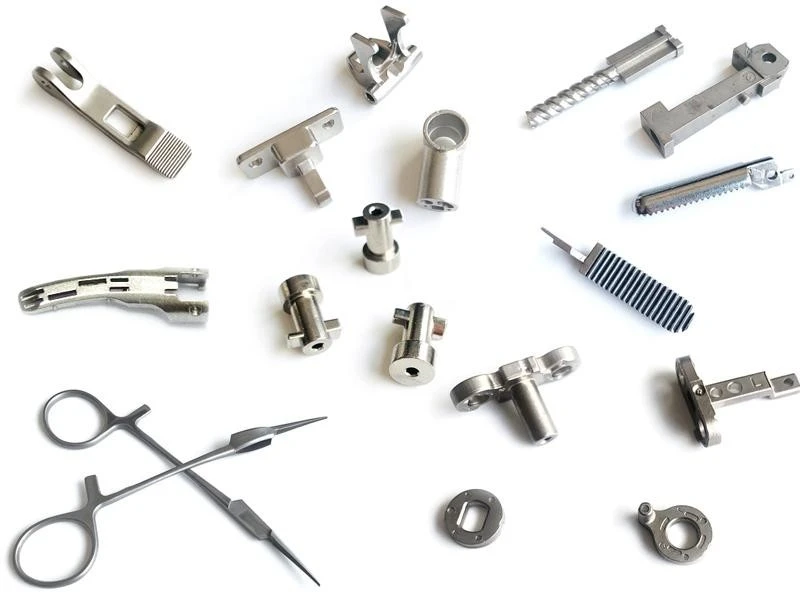
Stainless steel MIM is particularly interesting when a component is physically small but geometrically complicated.
Examples include:
- Small gears
- Levers
- Brackets
- Connectors
- Locking components
- Hinges
- Bushings
- Shafts and mechanical interfaces
- Medical device components
- Electronic hardware
- Precision automation components
Features such as ribs, slots, holes, bosses, curved surfaces, and other intricate details can potentially be incorporated into the molded geometry.
When Stainless Steel MIM Makes Sense
Not every stainless steel component needs MIM.
For a simple bracket with a small quantity, CNC machining may be straightforward.
MIM becomes more interesting when the part combines several of the following characteristics:
- Small size
- Complex geometry
- Difficult-to-machine features
- Repeated production
- Stainless steel material requirement
- Large numbers of identical components
The economics depend on the actual part geometry, quantity, tooling cost, material, and required secondary operations.
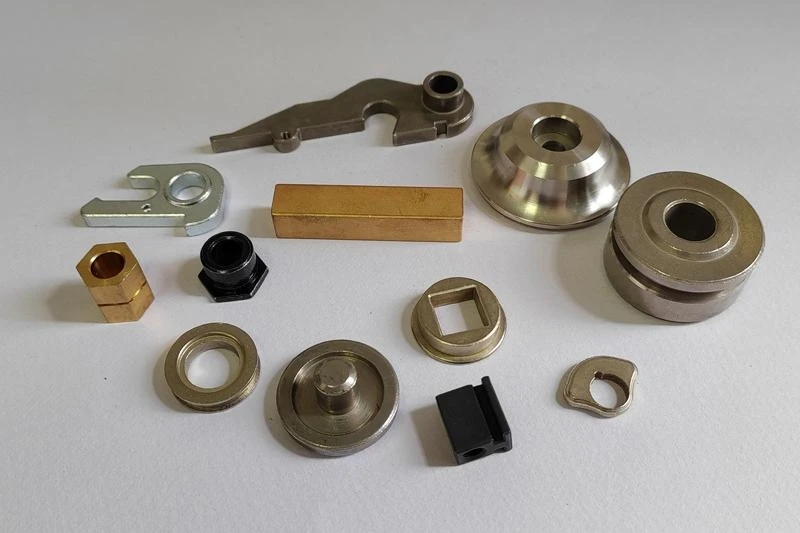
MIM Parts for Medical and Laboratory Equipment
Small stainless steel components are frequently found in equipment where corrosion resistance and clean surfaces are important.
Potential applications include:
- Surgical and medical device components
- Laboratory instruments
- Diagnostic equipment
- Dental equipment
- Small mechanical medical assemblies
- Precision instrument components
The applicable material grade, surface condition, cleanliness requirements, dimensional tolerances, and validation requirements should be defined according to the final application.
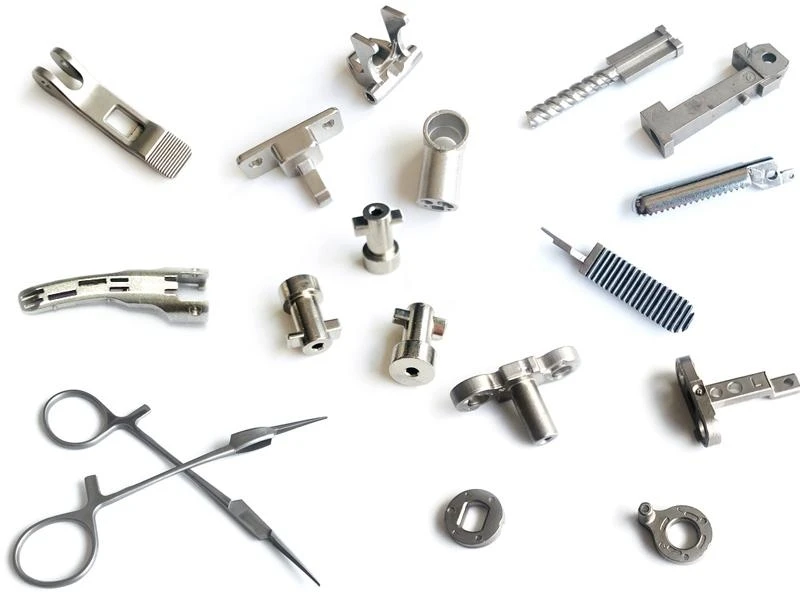
Mechanical and Automation Components
Stainless steel MIM can also be used for compact industrial components where a combination of strength, corrosion resistance, and complex geometry is required.
Typical examples include:
Automation mechanisms
Small levers, locking components, brackets, and moving parts.
Robotic mechanisms
Compact mechanical components where weight, strength, and geometry need to be balanced.
Precision instruments
Small housings, mounts, connectors, and functional mechanisms.
Electronic equipment
Metal components used around connectors, switches, or internal mechanical assemblies.
Surface Finishing Options
The molded and sintered surface is not necessarily the final surface condition.
Depending on the application, additional finishing may be considered for specific areas or for the complete component.
Possible requirements include:
- Polishing
- Grinding
- Passivation
- Deburring
- Heat treatment
- CNC machining of critical features
- Other application-specific surface treatments
The appropriate finishing route depends on the stainless steel grade and the functional requirements of the component.
Controlling Critical Dimensions
MIM involves dimensional changes during debinding and sintering, so critical dimensions need to be considered from the beginning of the project.
For stainless steel MIM parts, particular attention may be required for:
- Hole diameter
- Bore position
- Flatness
- Overall dimensions
- Mating surfaces
- Threaded features
- Concentricity
- Functional interfaces
Where a molded feature cannot economically achieve the required tolerance directly, a secondary machining operation can be considered for that specific feature.
Stainless Steel MIM or CNC?
The two processes solve different manufacturing problems.
If the part is simple, the quantity is small, or frequent design changes are expected, CNC machining may be easier to implement.
If the part is small, complex, and required repeatedly in larger quantities, stainless steel MIM can become an alternative worth evaluating.
The decision should be based on the part geometry, quantity, tolerance, material grade, tooling investment, and required finishing, rather than material alone.
Send Your Stainless Steel MIM Drawing
If you have a stainless steel component that is difficult or expensive to machine, send us the 3D CAD model and 2D drawing.
Please include the required:
Stainless steel grade · Quantity · Critical tolerances · Surface requirements · Application · Annual demand
Our engineering team can review the geometry and determine whether stainless steel MIM is suitable for the component.
Request a Stainless Steel MIM Quote
Hot Tags: stainless steel injection molding, China stainless steel injection molding manufacturers