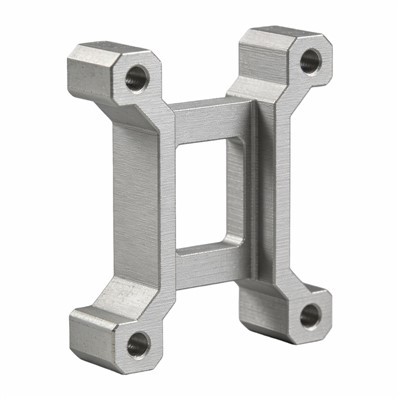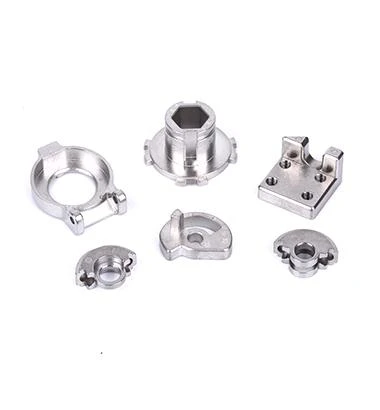
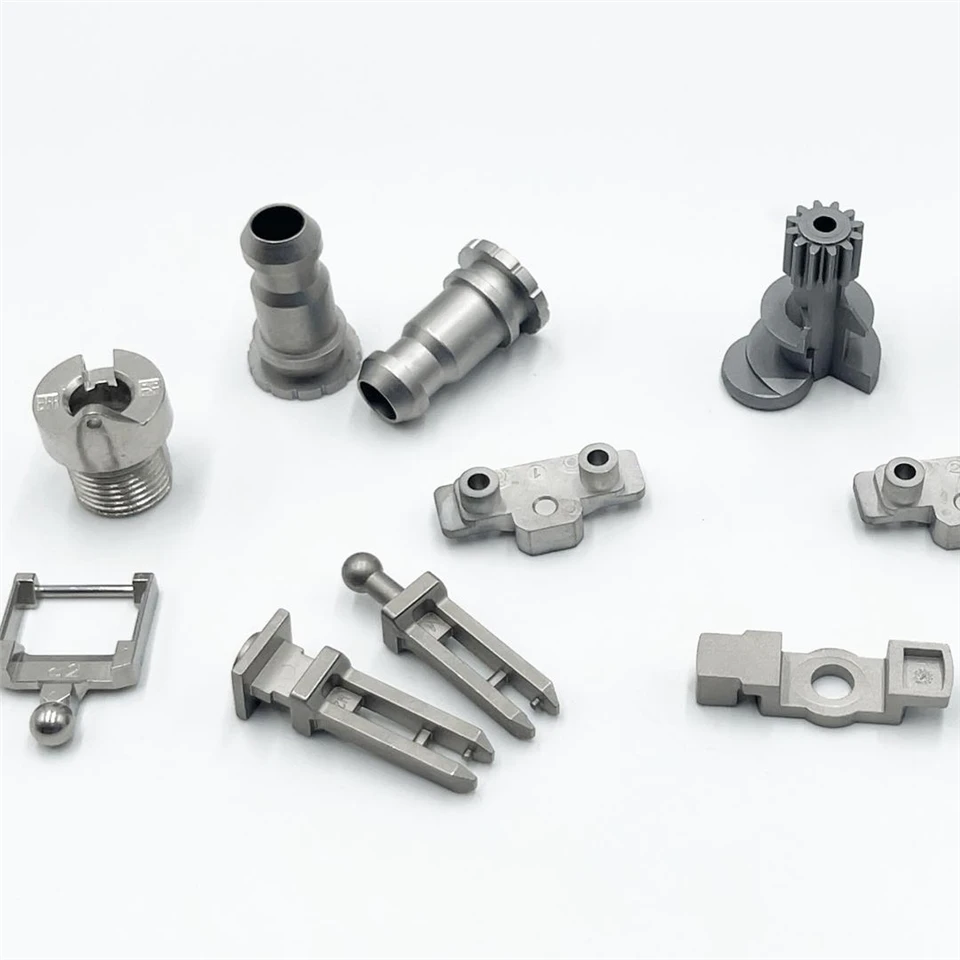
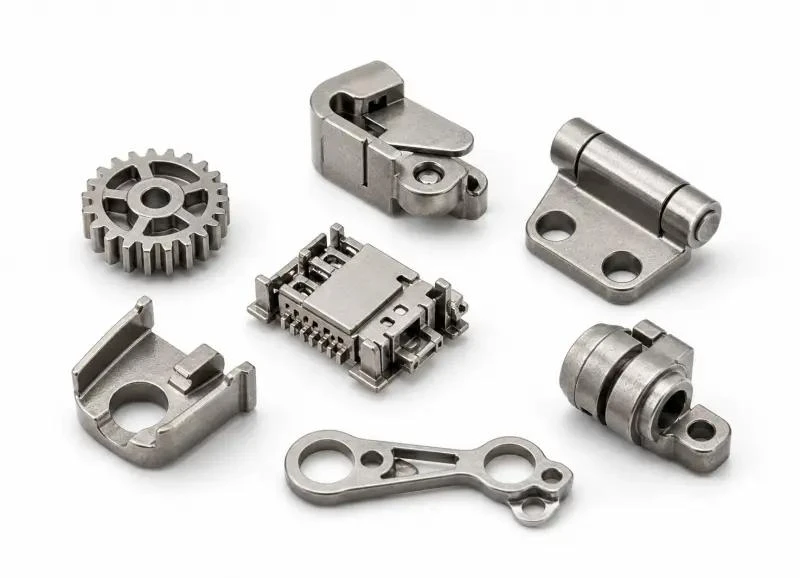

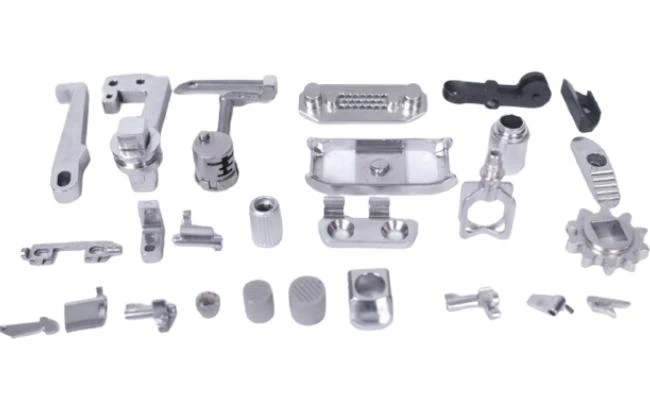
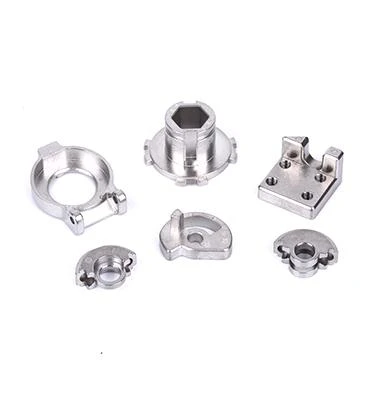
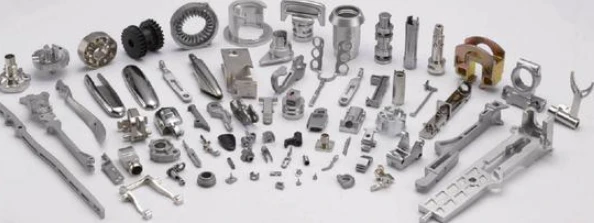
Shenzhen Jingcheng Dingyi Forming Technology Co., Ltd. is one of the leading manufacturers and suppliers of metal injection molded parts in China, specialized in providing high quality customized products. If you're going to buy bulk cheap metal injection molded parts, welcome to get quotation from our factory. Quality products and low price are available.
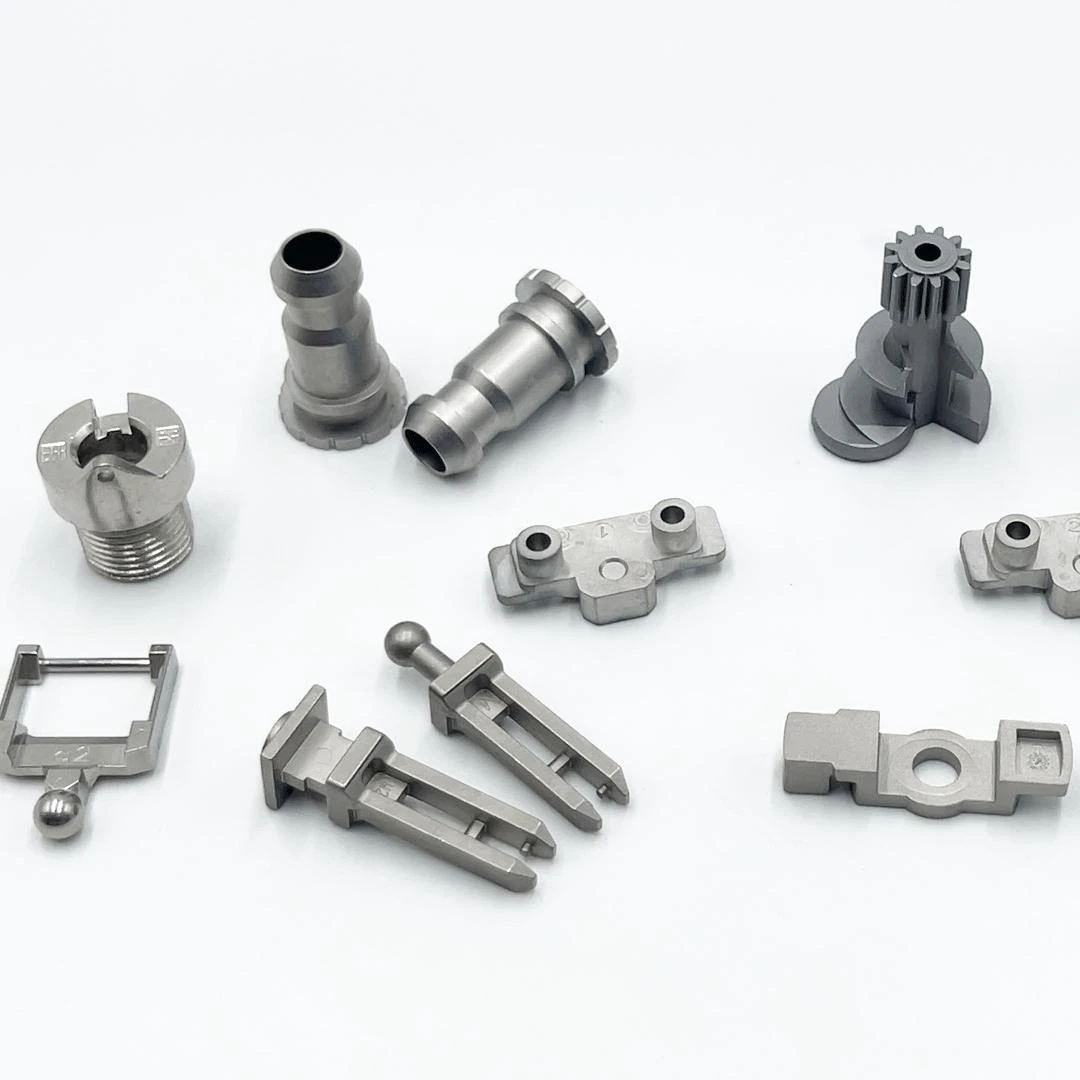
Why Use MIM for Metal Parts?
Some metal components contain features that make conventional machining inefficient.
Deep cavities, fine ribs, small holes, undercuts, thin sections, and complex three-dimensional shapes can require multiple machining operations when produced from solid material.
MIM forms these features during the molding stage, allowing several geometric details to be incorporated into one compact metal component.
It can be considered when a project involves:
- Small and intricate components
- Complex three-dimensional geometries
- High production quantities
- Reduced material waste compared with machining from solid stock
- Repeatable production of the same metal geometry
- Features that are difficult to machine economically
What Kind of Parts Are Suitable?
MIM is generally most attractive for small, relatively complex metal components where the geometry justifies the tooling investment.
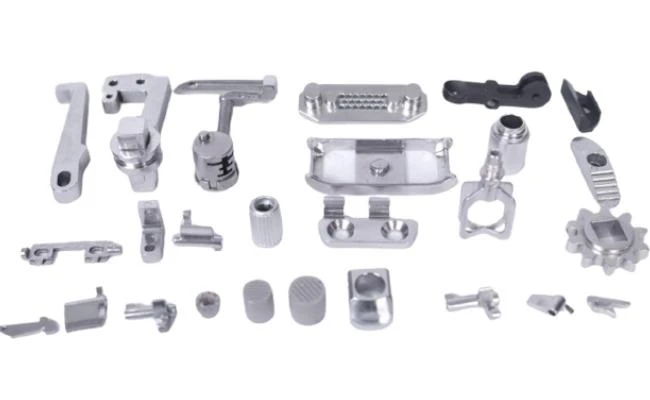
Typical examples include:
Mechanical Components
Small levers, brackets, connectors, locking components, and precision mechanisms.
Robot Components
Compact structural and motion-related parts requiring metal strength in a small package.
Medical Components
Selected surgical and medical device components where the specified material and manufacturing requirements are compatible with MIM.
Electronic & Hardware Components
Small housings, connectors, mounting components, and functional metal parts.
Consumer Product Components
Small metal components requiring complex shapes, repeatability, and a consistent appearance.
From Metal Powder to Finished Component
MIM does not simply inject molten metal into a mold.
The process begins with fine metal powder combined with a polymeric binder system to create a moldable feedstock.
A typical MIM route is:
Metal Powder + Binder → Feedstock → Injection Molding → Debinding → Sintering → Secondary Operations → Inspection
After injection molding, the binder is progressively removed. The remaining "brown part" is then sintered at a controlled temperature, allowing the metal particles to bond and the component to reach its final properties and dimensions.
Because dimensional shrinkage occurs during sintering, mold design and process control are critical parts of MIM manufacturing.
Materials for MIM
Different metal systems can be processed through MIM depending on the required mechanical, corrosion, wear, and thermal properties.
Common MIM material families include:
Stainless steel
Tool steels
Low-alloy steels
Titanium alloys
Cobalt-based alloys
Other application-specific metal powders
The appropriate material depends on the operating environment and performance requirements of the finished component.
For projects where the material has already been specified, the MIM process can be developed around the required grade and final properties.
MIM Design Is Different From Machining
A part designed for CNC machining cannot always be transferred directly into MIM without modification.
MIM design needs to account for:
Uniform Wall Sections
Large variations in section thickness can contribute to molding and sintering problems.
Draft
Appropriate draft can help the molded part release from the tooling.
Corners and Transitions
Smooth transitions can reduce stress concentration and improve material flow.
Small Features
Fine details are possible, but their feasibility depends on feature size, material, tooling, and part geometry.
Shrinkage
The mold cavity must compensate for dimensional changes occurring during debinding and sintering.
For this reason, early DFM review is particularly important for MIM projects.
MIM vs. CNC Machining
The choice between MIM and CNC machining depends heavily on part geometry and production quantity.
| MIM | CNC Machining | |
|---|---|---|
| Complex small geometry | Highly suitable | Possible but may require multiple operations |
| Production volume | Better suited to repeated production | Flexible for low quantities |
| Tooling investment | Required | Generally lower initial tooling |
| Material utilization | Efficient for suitable geometries | More material removed |
| Design changes | Tooling changes can be costly | Usually easier to modify |
| Part size | Generally favors small parts | Wider size range |
MIM is not automatically the better choice for every metal component. For prototypes or very small quantities, machining may be more practical. For suitable complex parts at production volume, MIM can become increasingly attractive.
Dimensional Control After Sintering
The sintering stage is one of the defining characteristics of MIM.
As the molded component densifies, the part undergoes controlled dimensional shrinkage. The amount of shrinkage must therefore be considered during tooling and process development.
For critical features, dimensional requirements may be addressed through:
- Controlled molding conditions
- Consistent feedstock
- Mold compensation
- Sintering process control
- Secondary machining
- Grinding or other finishing operations where required
Critical dimensions should be identified clearly on the drawing so the manufacturing team can determine the appropriate process route.

Secondary Operations
MIM does not necessarily mean that every feature must be completed during molding.
Depending on the component, secondary processes can be used for critical or functional features.
These may include:
CNC machining · Grinding · Deburring · Polishing · Heat treatment · Surface finishing
The combination of MIM and secondary machining can be useful when a part contains both complex molded geometry and a small number of high-precision features.
Is MIM Right for Your Part?
MIM is worth considering when several conditions come together:
Small part size + complex geometry + metal material + repeat production
If the component is very simple, machining or another forming process may be more economical. If the quantity is very low, the tooling cost may also make MIM less attractive.
For this reason, we evaluate the part geometry, material, tolerance requirements, annual quantity, and critical features before selecting MIM as the manufacturing route.
Send Us Your MIM Component
Have a small, complex metal component that is difficult or expensive to machine?
Send us your 3D CAD model, 2D drawing, material specification, tolerance requirements, and estimated quantity.
We can review the component for MIM suitability and discuss tooling, material, secondary operations, inspection requirements, and production options.
Request a MIM Manufacturing Review
Hot Tags: metal injection molded parts, China metal injection molded parts manufacturers