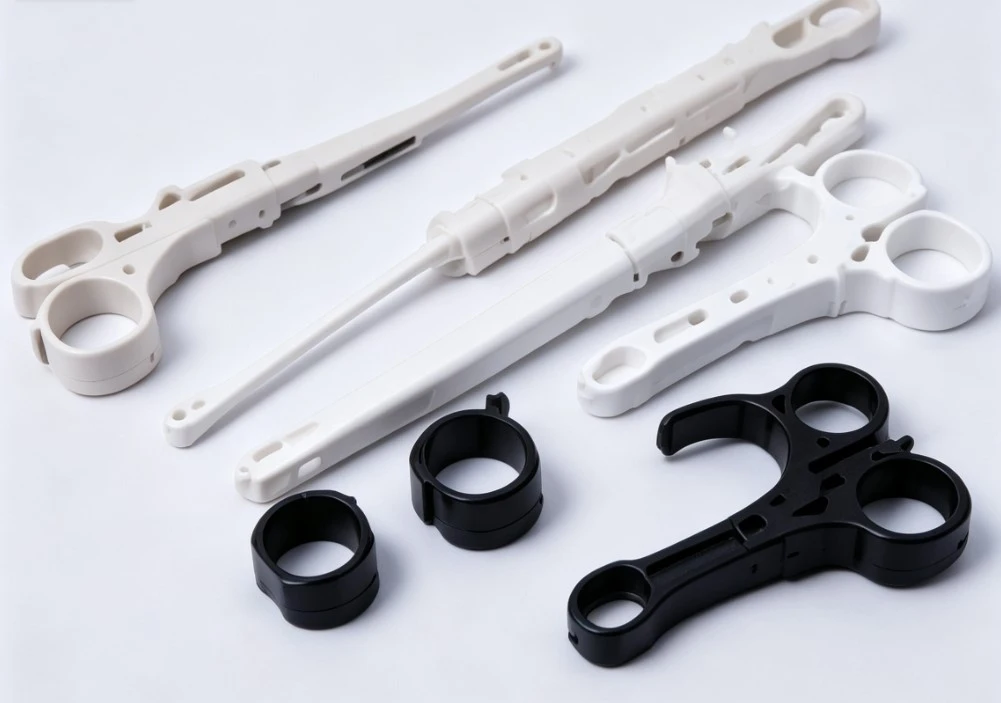
Why Use CNC Plastic Machining for Medical Devices?
Medical device manufacturers often require materials that can withstand repeated use, sterilization processes, and exposure to chemicals. Compared with traditional manufacturing methods, CNC machining offers several advantages for medical plastic components.
1. High Precision and Tight Tolerances
Medical equipment often contains small and complex components that require accurate dimensions.
With precision CNC plastic machining, manufacturers can produce parts with tight tolerances and excellent surface finishes, ensuring proper assembly and reliable operation.
Typical applications include:
Surgical instrument components
Diagnostic equipment parts
Medical device housings
Implant testing fixtures
Laboratory equipment components

2. Rapid Prototyping for Medical Devices
Before mass production, medical companies usually need functional prototypes to verify design, ergonomics, and performance.
CNC machining medical prototypes allows engineers to quickly produce real plastic parts using production-grade materials.
Compared with injection molding, CNC machining provides:
- No tooling cost
- Faster turnaround time
- Easy design modifications
- Suitable for low-volume production
This makes CNC plastic machining an ideal choice for medical product development and engineering validation.

3. Excellent Material Flexibility
Medical applications require different material properties depending on the function of the component.
CNC machining supports a wide range of engineering plastics, including:
- PEEK
- Polycarbonate (PC)
- ABS
- POM (Delrin)
- Nylon
- PTFE
- UHMW-PE
Each material provides different advantages in terms of strength, chemical resistance, temperature resistance, and durability.

What Plastics Are Suitable for Medical Devices?
Choosing the right plastic material is one of the most important steps in medical component manufacturing.
Different applications require different material characteristics, such as:
- Biocompatibility
- Sterilization resistance
- Mechanical strength
- Chemical resistance
- Dimensional stability
- Lightweight design
Below are some commonly used plastics for medical CNC machining.

PEEK CNC Machining for Medical Applications
PEEK (Polyether Ether Ketone) is one of the most advanced engineering plastics used in medical applications.
It is widely used when manufacturers require high strength, excellent chemical resistance, and long-term stability.
Advantages of PEEK:
- Excellent mechanical strength
- High temperature resistance
- Good wear resistance
- Excellent chemical resistance
- Low moisture absorption
- Biocompatible properties
PEEK can withstand repeated sterilization cycles, making it suitable for demanding medical environments.
Common Medical Applications:
- Surgical instrument components
- Medical device fixtures
- Diagnostic equipment parts
- Implant research components
- Laboratory equipment components
Because of its high performance and machining difficulty, PEEK CNC machining requires professional cutting parameters and experienced manufacturers.

Polycarbonate (PC) CNC Machining for Medical Devices
Polycarbonate is another popular plastic used in medical equipment manufacturing.
Unlike PEEK, PC is mainly selected for applications requiring transparency, impact resistance, and lightweight properties.
Advantages of PC:
- High impact strength
- Excellent transparency
- Good dimensional stability
- Easy to machine
- Lightweight
Common Applications:
- Medical equipment covers
- Transparent protective panels
- Diagnostic device housings
- Laboratory instrument components
PC is often chosen when visibility and safety protection are important.
PEEK vs PC: What Is the Difference?
| Property | PEEK | Polycarbonate (PC) |
|---|---|---|
| Strength | Very high | High |
| Temperature Resistance | Excellent | Moderate |
| Chemical Resistance | Excellent | Good |
| Transparency | No | Excellent |
| Cost | Higher | Lower |
| Sterilization Resistance | Excellent | Moderate |
| Typical Use | High-performance medical parts | Covers and housings |
In general:
- Choose PEEK for high-performance medical components requiring durability and sterilization resistance.
- Choose PC for transparent medical equipment parts and protective covers.
The final material selection depends on the operating environment, required performance, and budget.

ABS CNC Machining for Medical Components
ABS is a commonly used engineering plastic for prototypes and general medical equipment components.
It provides a good balance between cost, strength, and machinability.
Advantages:
- Easy machining
- Good impact resistance
- Cost-effective
- Suitable for prototypes
Common applications:
- Medical equipment housings
- Prototype medical devices
- Testing fixtures
- Electronic equipment covers
ABS is often selected during the early stages of medical product development.

POM CNC Machining for Medical Parts
POM (Acetal/Delrin) is known for excellent dimensional stability and low friction.
It is suitable for components requiring smooth movement and wear resistance.
Applications include:
- Mechanical medical components
- Sliding parts
- Precision fixtures
- Small gears and mechanisms
CNC Plastic Machining Process for Medical Devices
Producing medical plastic components requires careful control throughout the machining process.
At Jingcheng, our CNC plastic machining process includes the following steps:

1. Design Review and DFM Analysis
Before machining begins, engineers review the customer's CAD drawings and provide manufacturing suggestions.
We analyze:
- Material selection
- Wall thickness
- Machining difficulty
- Tolerance requirements
- Surface finishing requirements
This helps reduce manufacturing risks and improve part quality.

2. Material Preparation
Based on application requirements, suitable plastic materials are selected.
Common materials include:
- PEEK
- PC
- ABS
- POM
- Nylon
- PTFE
Material certification and traceability can be provided for medical-related projects.

3. CNC Machining
Using advanced CNC milling and turning equipment, plastic blocks are machined into precise components.
Typical operations include:
- CNC milling
- CNC turning
- Drilling
- Thread machining
- Surface finishing
Experienced machinists optimize cutting parameters to avoid:
- Material deformation
- Excessive heat generation
- Poor surface quality

4. Quality Inspection
Medical components require strict quality control.
Inspection methods include:
- Dimensional inspection
- CMM measurement
- Surface quality inspection
- Visual inspection
Inspection reports can be provided according to customer requirements.
Applications of CNC Plastic Parts for Medical Devices
CNC plastic machining is widely used across different medical industries.

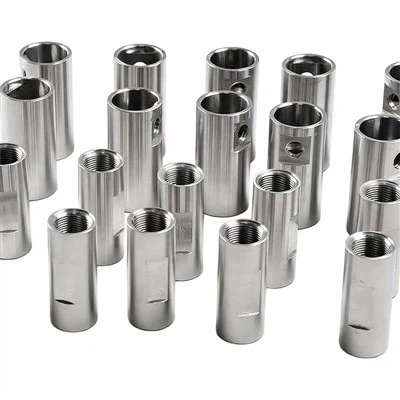
Surgical Instruments
Plastic components are used for:
- Handles
- Fixtures
- Instrument housings
- Supporting components
Materials such as PEEK and medical-grade polymers provide durability and sterilization resistance.
Diagnostic Equipment
Medical testing equipment requires precise and stable components.
Applications include:
- Analyzer components
- Sensor housings
- Laboratory fixtures
- Testing equipment parts
Medical Prototypes
During product development, CNC machining helps engineers quickly validate:
- Product appearance
- Mechanical design
- Assembly performance
- User experience
CNC Plastic Machining vs Injection Molding for Medical Parts
Both CNC machining and injection molding are commonly used in medical manufacturing.
| CNC Plastic Machining | Injection Molding |
|---|---|
| No tooling required | Requires molds |
| Faster prototype production | Better for mass production |
| Suitable for low volume | Suitable for high volume |
| Easy design changes | Higher initial cost |
| Wide material selection | Limited by mold design |
For medical prototypes, customized parts, and small production runs, CNC machining is usually the more flexible solution.
Why Choose Jingcheng for CNC Plastic Medical Components?
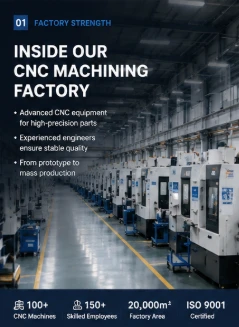
Jingcheng provides professional precision CNC plastic machining services for medical device manufacturers worldwide.
Our capabilities include:
CNC milling and turning
3-axis and 5-axis machining
Plastic prototype manufacturing
Low-volume production
Custom surface finishing
Strict quality inspection
We work with engineering plastics including:
PEEK
PC
ABS
POM
Nylon
PTFE
With experience in precision manufacturing, Jingcheng helps customers transform medical designs into reliable production-ready components.
FAQ
Q: What plastics are commonly used for medical CNC machining?
A: Common medical plastics include PEEK, PC, ABS, POM, Nylon, and PTFE. The best material depends on requirements such as sterilization resistance, strength, chemical exposure, and application environment.
Q: Is PEEK suitable for medical device components?
A: Yes. PEEK is widely used in medical applications because of its excellent strength, chemical resistance, temperature stability, and sterilization performance.
Q: Can CNC machining produce medical prototypes?
A: Yes. CNC machining is commonly used for medical prototypes because it provides fast production, accurate dimensions, and the ability to use final production materials.
Q: What tolerance can CNC plastic machining achieve?
A: The achievable tolerance depends on material, part design, and machining conditions. Precision CNC machining can achieve tight tolerances for medical components when proper manufacturing processes are applied.
Q: Does Jingcheng provide custom CNC plastic machining services?
A: Yes. Jingcheng provides custom CNC plastic machining services for prototypes, small-batch production, and precision medical components.
Conclusion
CNC plastic machining plays an important role in modern medical device manufacturing. Materials such as PEEK, PC, ABS, and POM provide different advantages for medical applications, while CNC machining enables manufacturers to produce accurate, reliable, and customized components.
For companies developing medical devices, CNC machining medical prototypes and precision CNC plastic machining offer a flexible solution for turning complex designs into functional parts.
With advanced CNC equipment and manufacturing experience, Jingcheng supports global customers with high-quality CNC plastic parts for medical devices.