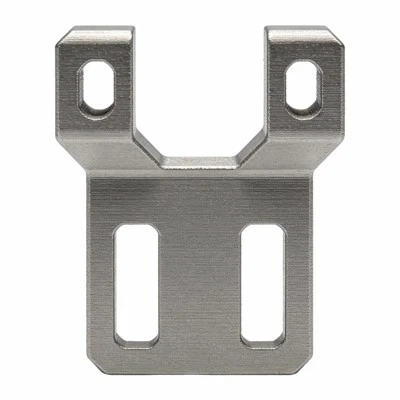
When it comes to manufacturing ABS robot parts, two prominent methods stand out: CNC machining and injection molding. As a supplier specializing in CNC Machining ABS Robot Parts, I've witnessed firsthand the unique characteristics and applications of each approach. In this blog, I'll delve into the differences between CNC machining and injection molding for ABS robot parts, exploring their advantages, limitations, and ideal use cases.
Understanding ABS and Its Significance in Robotics
Acrylonitrile Butadiene Styrene (ABS) is a popular thermoplastic polymer known for its excellent mechanical properties, impact resistance, and affordability. These qualities make it an ideal material for robot parts, which often require durability and the ability to withstand various stresses. ABS is also easy to machine and finish, allowing for the creation of complex shapes and high-precision components.
CNC Machining for ABS Robot Parts
CNC (Computer Numerical Control) machining is a subtractive manufacturing process that uses computer-controlled tools to remove material from a solid block of ABS to create the desired part. This process offers several advantages for producing ABS robot parts:
Precision and Complexity
CNC machining can achieve extremely high levels of precision, with tolerances as tight as ±0.005 inches. This makes it suitable for creating robot parts with intricate geometries, such as gears, joints, and sensor mounts. The computer-controlled nature of the process ensures consistent quality and accuracy across multiple parts.
Quick Turnaround for Prototyping
For rapid prototyping of ABS robot parts, CNC machining is an excellent choice. The setup time is relatively short, and parts can be produced in a matter of days or even hours, depending on the complexity. This allows designers to quickly test and iterate their designs before committing to mass production.
Material Flexibility
CNC machining can work with a wide range of ABS materials, including different grades and colors. This flexibility allows for the customization of robot parts to meet specific requirements, such as chemical resistance, UV stability, or flame retardancy.
Low Volume Production
If you need to produce a small number of ABS robot parts, CNC machining is cost-effective. There is no need to invest in expensive molds, as is the case with injection molding. Each part is machined individually, making it ideal for low-volume production runs or custom orders.
However, CNC machining also has some limitations:
Higher Cost for Large Volumes
As the production volume increases, the cost per part in CNC machining can become relatively high compared to injection molding. This is because each part requires individual machining, which takes time and labor.
Material Waste
CNC machining is a subtractive process, which means that material is removed from the block to create the part. This results in some material waste, which can be a concern for large-scale production or when using expensive materials.
Injection Molding for ABS Robot Parts
Injection molding is a manufacturing process in which molten ABS is injected into a mold cavity under high pressure. The plastic then cools and solidifies, taking the shape of the mold. Injection molding offers several advantages for producing ABS robot parts:
High Volume Efficiency
Injection molding is highly efficient for large-scale production of ABS robot parts. Once the mold is created, the cycle time for each part is relatively short, allowing for rapid production of large quantities. The cost per part decreases significantly with higher production volumes, making it an economical choice for mass production.
Consistent Quality
The use of molds ensures consistent quality and dimensional accuracy across all parts. Injection molding can produce parts with very precise tolerances, making it suitable for applications where tight fits and repeatability are essential.
Design Flexibility
Injection molding allows for the creation of complex shapes and features that may be difficult or impossible to achieve with CNC machining. The mold can be designed to incorporate undercuts, threads, and other intricate details, providing greater design flexibility.
Reduced Material Waste
Unlike CNC machining, injection molding generates minimal material waste. The excess plastic from the sprue and runners can be recycled and reused, making it a more environmentally friendly option for large-scale production.
However, injection molding also has some drawbacks:
High Initial Investment
The cost of creating a mold for injection molding can be substantial, especially for complex parts. This makes it less suitable for low-volume production or prototyping, as the initial investment may not be justified.
Longer Lead Time
The process of designing and manufacturing a mold can take several weeks or even months, depending on the complexity. This results in a longer lead time compared to CNC machining, which can be a disadvantage when quick turnaround is required.
Limited Material Selection
Injection molding is typically limited to a specific range of ABS materials that are suitable for the process. This may restrict the ability to customize parts based on specific material requirements.
Comparing CNC Machining and Injection Molding for ABS Robot Parts
To better understand the differences between CNC machining and injection molding for ABS robot parts, let's compare them based on several key factors:
Cost
For small production volumes (less than 100 parts), CNC machining is generally more cost-effective due to the lower upfront costs and the ability to produce parts without the need for expensive molds. As the production volume increases, injection molding becomes more economical, with the cost per part decreasing significantly for large-scale production.
Lead Time
CNC machining offers a shorter lead time, especially for prototyping. Parts can be produced in a matter of days or hours, allowing for quick design iterations and testing. Injection molding, on the other hand, has a longer lead time due to the mold design and manufacturing process, which can take several weeks or months.


Precision and Complexity
Both CNC machining and injection molding can achieve high levels of precision, but CNC machining is better suited for creating parts with complex geometries and tight tolerances. Injection molding is more limited in terms of the complexity of the parts that can be produced, although it can still create parts with intricate details.
Material Selection
CNC machining offers greater material flexibility, as it can work with a wide range of ABS materials, including different grades and colors. Injection molding is typically limited to a specific range of materials that are suitable for the process.
Production Volume
CNC machining is ideal for low-volume production or custom orders, where the ability to produce parts quickly and without the need for expensive molds is important. Injection molding is best suited for high-volume production, where the cost per part can be significantly reduced.
Ideal Use Cases for CNC Machining and Injection Molding
Based on the above comparison, here are some ideal use cases for CNC machining and injection molding of ABS robot parts:
CNC Machining
- Prototyping: CNC machining is the preferred method for rapid prototyping of ABS robot parts. It allows designers to quickly test and iterate their designs before committing to mass production.
- Low Volume Production: For small production runs or custom orders, CNC machining offers a cost-effective solution. It can produce high-quality parts without the need for expensive molds.
- Complex Parts: CNC machining is well-suited for creating ABS robot parts with complex geometries and tight tolerances. It can achieve the precision required for components such as gears, joints, and sensor mounts.
Injection Molding
- High Volume Production: Injection molding is the most economical choice for large-scale production of ABS robot parts. The cost per part decreases significantly with higher production volumes, making it ideal for mass production.
- Consistent Quality: The use of molds ensures consistent quality and dimensional accuracy across all parts. Injection molding is suitable for applications where tight fits and repeatability are essential.
- Simple to Moderate Complexity Parts: Injection molding can produce parts with a wide range of shapes and features, but it is more limited in terms of complexity compared to CNC machining. It is best suited for parts with simple to moderate complexity.
Conclusion
In conclusion, both CNC machining and injection molding have their own advantages and limitations when it comes to manufacturing ABS robot parts. As a supplier of CNC Machining ABS Robot Parts, I understand the importance of choosing the right manufacturing method based on your specific requirements.
If you need to produce a small number of ABS robot parts quickly or require high precision and complex geometries, CNC machining is the way to go. It offers flexibility, quick turnaround, and the ability to work with a wide range of materials. On the other hand, if you are planning for large-scale production and require consistent quality and cost efficiency, injection molding is the better choice.
When making a decision, consider factors such as production volume, lead time, precision requirements, and material selection. If you have any questions or need further assistance in choosing the right manufacturing method for your ABS robot parts, don't hesitate to get in touch. I'm here to help you find the best solution for your project. You can also explore other related services we offer, such as Carbon Fiber Machining, CNC Milling Aluminum Parts, CNC Aluminum Lathe Turning Parts, and Rapid Prototype Machining.
References
- "Plastics Engineering Handbook," by Myer Kutz
- "Manufacturing Engineering & Technology," by Serope Kalpakjian and Steven Schmid
- "Injection Molding Handbook," by O. Olafsson