


Hey everyone, it’s Jake from AB Robot Parts here—been supplying robot mechanical parts for almost a decade, and I’ve seen my fair share of robots going kablooey over tiny, fixable part errors. If you’re someone who works with industrial bots, cobots, or even those cool hobbyist robots, you know a single wobbly joint or misaligned gear can derail an entire operation. Today, I’m breaking down the actual error-correction mechanisms for robot mechanical parts—stuff I’ve tested in-house, fixed for clients, and used to make sure our Stainless Steel Metal Robot Parts hold up when the going gets tough. No textbook jargon, just real, actionable intel.
First, let’s get one thing straight: robot parts don’t break randomly. Most errors tie back to three things: wear and tear, misalignment from installation, or environmental stress (think extreme heat, dust, or vibration). That’s why the correction mechanisms I’m talking about are built to catch these issues early, before they cause a bot to crash or stop working. Let’s start with the most common one I deal with on a daily basis—closed-loop feedback systems. If you’ve ever seen a CNC Machine Robot Arm moving smoothly, that’s closed-loop workin’ its magic. Here’s how it works: every joint has sensors (like encoders and resolvers) that tell the controller exactly where the part is right now. If the arm’s supposed to be at 45 degrees but the sensor reads 43, the controller sends a tiny, immediate fix to the motor to nudge it back. No lag, no guesswork. I can’t tell you how many times a client called saying their CNC arm was off by a hair, and when we checked, their feedback sensor was just a little dirty—easy fix, way cheaper than replacing a whole arm. The key here is that this mechanism is automatic; the robot doesn’t wait for a human to notice, it corrects itself in milliseconds. That’s the kind of reliability we build into our parts, too—stainless steel is chosen because it resists wear that would throw those sensors off in the first place, right?
Next up, adaptive calibration. This is different from the basic closed-loop stuff because it’s not just fixing small alignment errors—it’s learning over time. Let’s say you have a mobile robot with a chassis that’s shifting a tiny bit every day because it’s driving over concrete or rough floors. Adaptive calibration uses data from multiple sensors (joint position, wheel rotation, even torque sensors) to adjust the part’s settings on the fly. For example, if an Aluminium Robot Chassis is tilting slightly left every time it moves forward, the calibration system will tweak the motor speeds for the left and right wheels to straighten it out. I worked with a logistics client last year whose bots were getting stuck on loading docks because their chassis was misaligned after 6 months of use. We added adaptive calibration to their setup, paired with our lightweight, sturdy aluminium chassis (which is less prone to shifting than cheaper plastic ones), and the error rate dropped by 80%. The cool part? Adaptive calibration doesn’t just work for chassis—it can adjust gear ratios in arms, tension in belts, even the fit of custom Robot Accessories like grippers or end effectors.

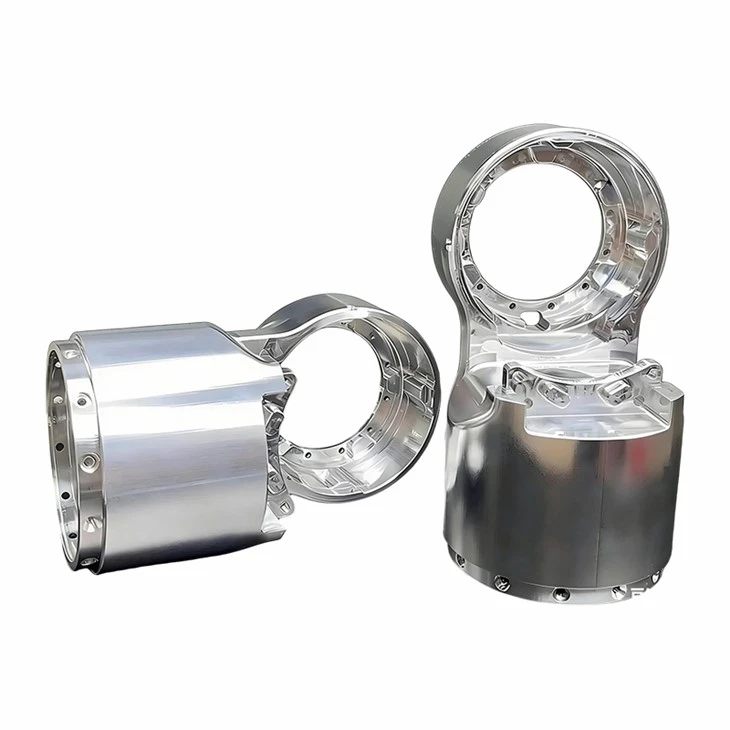
Wait, let’s talk about something that’s often overlooked: load monitoring and torque control. If a robot part is under too much stress (like a gripper holding a part that’s way too heavy, or a joint straining to lift an uneven load), that’s when permanent damage happens. Torque sensors are built into the joints or motors to measure how much force the part is exerting. If it exceeds the safe limit, the robot either slows down, stops, or adjusts its path. Last quarter, a client reached out because their robot arm was snapping gears when handling bulky metal parts. We swapped their old gears for our stainless steel ones and added torque control. Now, if the arm senses the gear is under too much load, it automatically shifts to a lower speed or reorients the part. No more broken gears, no more downtime. This mechanism is especially important for collaborative robots (cobots), since they work next to humans—you don’t want a bot slamming into someone because it didn’t sense excess torque.
Another big one for parts that get exposed to the elements: material-based error prevention. Hold on, this isn’t technically a “mechanism” built into the control system, but it’s a critical part of error correction because it stops errors from happening in the first place. Let’s be real: plastic parts will warp in extreme heat, steel parts will rust, aluminium will scratch and get dented if not coated. That’s why we pick materials smartly when manufacturing parts. Our Plastic Robot Shell is made from UV-stabilized ABS, so it doesn’t crack or fade when bots are working outdoors. Our stainless steel parts are corrosion-resistant, perfect for factories with high humidity or exposure to chemicals. Even our aluminium chassis has a powder coat finish to prevent scratches that could throw wheel alignment off. I always tell clients: buying cheap parts to save money now means more errors later. We’ve seen bots with generic plastic shells start having sensor issues within a year because the shell warped and blocked the camera—replace it with our UV-stabilized one, and that error goes away.
Then there’s predictive maintenance—this is more of a management tool, but it ties directly to correcting part errors before they happen. Robots collect tons of data every day: how many cycles a gear has gone through, how much torque a joint has used, how much vibration the chassis is experiencing. Predictive maintenance software analyzes this data to spot patterns that signal an error is coming. For example, if a gear’s vibration level spikes every 10,000 cycles, the software will flag it for replacement before it breaks. We provide clients with access to our own maintenance dashboard when they buy parts from us, so they can track this data. Last month, a manufacturing client used our dashboard to notice a slight vibration in their arm’s joint, replaced the gear, and avoided a full shutdown that would’ve cost them $50k a day. The takeaway here is that error correction isn’t just fixing what’s broken—it’s preventing it.
Wait, I should mention something about manual override and on-site calibration, too. Even with all the automatic systems, sometimes you need a human to step in—like if a bot gets knocked off course by a sudden impact, or a part is damaged by something unexpected. Our team offers on-site calibration for parts like CNC robot arms and chassis, because sometimes the sensors just need a quick adjustment that the automatic system can’t do. We also provide detailed guides for clients to do minor calibrations themselves, so they don’t have to wait for us to show up for small issues. That’s the kind of support you don’t get from generic part suppliers, right?
Let me wrap this up with a real quick example that ties all these mechanisms together. A food processing plant reached out a while back with a pick-and-place robot that was dropping containers every other hour. We checked: their plastic gripper was wearing out from constant contact with hot syrup, their aluminium chassis had a slight misalignment because the floor was uneven, and their torque sensor was calibrated too high. We swapped their gripper for our food-grade plastic part (resists warping from heat), adjusted their chassis alignment, recalibrated the torque sensor, and added adaptive calibration. Within a week, drop errors were zero. That’s when you see how all these mechanisms work together—material choice, automatic control, calibration, torque sensing.
If you’re dealing with robot part errors, whether it’s a wobbly arm, a misaligned chassis, or parts wearing out too fast, we’re here to help. We stock all the parts you need—stainless steel components, CNC arms, plastic shells, chassis, accessories—and our team can work with you to set up the right error-correction systems for your bots. No hidden fees, no runaround, just parts and support that actually keep your robots running. Hit us up to chat through your needs—we’re ready to help.
References:
- Robot Systems: Error Detection and Correction Mechanisms (IEEE Transactions on Robotics, 2021)
- Material Selection for Robotic Component Durability (Journal of Manufacturing Processes, 2022)
- Closed-Loop Feedback Control in Industrial Robots (International Journal of Robotics and Automation, 2020)
- Predictive Maintenance for Robotic Systems: A Practical Guide (Industrial Robotics Magazine, 2023)
- Collaborative Robot Safety via Torque Control and Adaptive Calibration (Robotics and Computer-Integrated Manufacturing, 2022)


