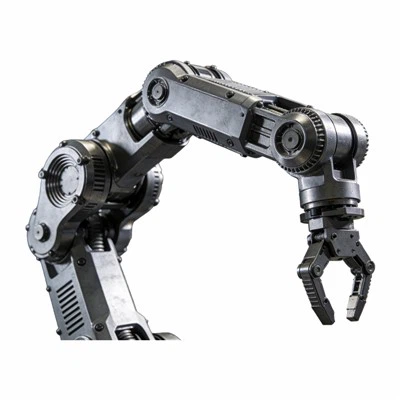
Hey guys, if you’ve ever wondered why humanoid robots don’t feel like clunky, awkward machines stumbling around spaces made for people, let’s break down one of the most unsung heroes of that smooth movement: their joint parts. As a supplier of humanoid robot joint components, I talk to robot builders, hobbyists, and engineers every single day who fixate on high-tech servos or fancy AI brains—and sleep on the tiny, ergonomic bits that make the whole thing work with (not against) humans. Let’s get into the nitty-gritty of how these joints shape a robot’s usability, safety, and overall vibe, no stuffy textbook jargon, promise.
First off, what even are “ergonomic aspects” of robot joints? For a humanoid, that means every single joint (shoulders, elbows, wrists, hips, knees, ankles) has to mimic how human bodies move, but also be safe to interact with. Think about it: if a robot’s elbow joint juts out at weird angles or is sharp enough to scrape a kid drawing, that’s a problem. If its knee joint locks up suddenly when someone’s leaning on it for help, that’s a hazard. Ergonomics here isn’t just about making the robot “look” human—it’s about designing parts that work with human spaces, not against them.
Let’s start with movement range, because that’s the first ergonomic check. Humans have a certain range of motion for each joint: our shoulders rotate 360 degrees (well, almost), our elbows bend 180, our knees only bend one way, right? Humanoid robot joints need to match that, but not go overboard—too much range and you get wobbly, unstable movement. I’ve had a client who built a robot for elder care tell me their original knee joints only bent 90 degrees, and when they tried to program it to kneel down at the same height as a sitting senior, it couldn’t. That’s where the right joint design comes in. We don’t just sell off-the-shelf parts; we work with builders to tweak range limits so the robot doesn’t overshoot or underperform. For example, our shoulder joints have built-in torque limiters that stop rotation before they reach a human-like maximum, which prevents both damage to the joint and accidental bumps to people nearby.
Next up, force sensitivity—this is huge for safety, which is core to ergonomics when robots are around humans. A human’s skin can feel pressure, so our bodies automatically adjust how much force we use when we touch a glass or hug someone. Robots need that same sense, but their joints have to translate that into movement that’s gentle, not rigid. Let’s say a humanoid is passing a book to a kid: if its elbow joint doesn’t have force sensors, it might squeeze the book too tight, or swing the arm fast enough to knock over a lamp. Our joint parts integrate low-profile torque and force sensors right into the joint axis, so the robot can adjust its movement in real time. We’ve seen this pay off in small humanoid robots for education, where kids pick them up and move their arms around for coding exercises—no one’s ever gotten hurt because the joint stopped moving when it felt human touch.


Then there’s the physical fit of the joint itself, because let’s be real—no one wants a bulky robot that takes up twice as much space as a human. Ergonomics here means compact, streamlined joints that fit within a humanoid’s frame, so it can navigate doorways, sit on a couch, or reach a shelf like a person would. A big part of that is the materials we use. Wait, you might be thinking “materials? That’s a robotics thing, not ergonomics”—but hear me out. If a joint is made of cheap, heavy metal, it makes the whole robot top-heavy, which throws off balance and makes it hard to move around. That’s why we work with builders to pick the right materials, depending on their use case. For example, robots meant to work in tight retail spaces benefit from lighter, durable parts—we even recommend pairing our joint assemblies with lightweight structural bits like CNC Machine Robot Arm links that keep the whole rig slim without sacrificing strength. For robots that need to lift heavier items for logistics (but still work around warehouse workers), we use high-torque steel alloy joints, but pair them with lighter, flexible covers like Plastic Robot Shell to soften edges. Speaking of which, those covers aren’t just for looks—rounded, non-sharp edges on joints mean less risk of accidental cuts, which is pure ergonomic design.
I also want to talk about modularity, which is a big ergonomic win for both builders and end users. How? If a joint breaks, you don’t have to replace the whole robot—you just swap out the faulty part. That’s not just convenient for repairs; it lets builders adjust the robot’s design as they go. For example, a college robotics team might start with a basic knee joint, then later upgrade it for running (they can swap in our higher-torque modular knee joint without rebuilding the entire leg assembly). Modularity also makes it easier to calibrate the robot’s movements, which ensures every joint works in sync, like a real human. We’ve seen teams save months of time on testing because our modular joints plug into standard Robot Accessories hubs, so they don’t have to wire everything from scratch.
Wait, let’s get real about common mistakes I see. A lot of new robot builders focus on specs: max torque, speed, price, without thinking about how the joint interacts with the whole humanoid system. For example, a joint that’s great for lifting heavy might vibrate so much that it makes the robot’s head (which has sensors for navigation) shaky, making it hard for the robot to recognize a human’s face or navigate a room. That’s an ergonomic fail because even if the robot’s movements are strong, it can’t interact smoothly with its environment. Our joints are designed with vibration-dampening built right in, so they don’t throw off the robot’s other systems. Another mistake? Ignoring weight distribution. If a robot’s hip joints are too heavy, it has to work extra hard just to stand, which drains battery life and makes it move slowly. We help builders balance the weight of joints across the whole body, so each part works with the others, not against them.
And for robots that interact with vulnerable people—like elders or kids—there’s an extra layer of ergonomics: accessibility. A humanoid designed to help someone who uses a wheelchair needs to reach armrests, grab snacks off a low table, and move slowly enough for someone with limited mobility to keep up. That means its joints can’t move too fast, have to be precise, and fit within a frame that doesn’t make them too tall or short. Our custom joint sets let builders adjust the range of movement and speed settings, so they can tailor the robot to specific use cases. We’ve worked with a small team that built a companion robot for elderly adults with dementia—they adjusted the wrist joint to move slowly and gently when handing over a pill, and the elbow joint to stop moving if it senses a weak grip, which prevents the senior from dropping things.
Now, let’s talk about materials again, because that ties into everything. We don’t just use one material for all joints—we match it to the job. For example, shoulder joints, which move a lot and get stressed, need to be durable, so we use high-grade alloy steel. For joints on the lower legs, which take impact when walking, we use a blend of aluminum and lightweight composite materials to keep weight low while withstanding force. We always point builders to our Aluminium Robot Chassis and Stainless Steel Metal Robot Parts pages for structural supports that complement our joints—like, a knee joint paired with a robust chassis makes the whole leg more stable, no wobbly movement. And for external parts that come into contact with people, like joint covers, we use food-safe, non-irritating plastics that don’t scratch skin, which is key for robots that interact with kids or people in healthcare settings.
Wait, let’s address a question I get all the time: “What’s the difference between a regular robot joint and an ergonomic humanoid joint?” A regular robot joint is built for speed, precision, and heavy lifting in factories—they don’t care if they bump a worker, because factories have safety cages. Humanoid joints? They have to balance precision with safety, movement range with stability, and strength with weight. That’s why every part of the joint has to be designed with human interaction in mind. Even small details, like how smooth the joint rotates—no grinding, no jerky movement—makes the robot feel more natural, like a real person. No one wants to shake hands with a robot that moves like a broken toy; ergonomic joints make that interaction feel seamless.
I know a lot of robot builders are focused on pushing tech forward, but sometimes the most important innovations are the ones that make robots work for people, not just on their own. The next time you see a humanoid robot that feels intuitive, that doesn’t feel scary or clunky, take a closer look—chances are, its joints are designed with those ergonomic principles I’m talking about. They’re not just metal and plastic bits; they’re the reason a robot can kneel down to talk to a kid, pass a cup without spilling, or navigate a living room without knocking over a lamp.
If you’re building a humanoid robot and need joint parts that balance performance, safety, and ergonomics, get in touch with us to chat about your project. We can help you pick the right components, whether you need standard modular joints or custom-designed ones for your specific use case. We work with everyone from hobbyist teams to industrial partners, so no project is too big or too small.
References
- International Organization for Standardization (ISO). "Robots and Robotic Devices—Safety Requirements for Humanoid Robots" ISO 13482:2014.
- Vukobratović, M. and Potkonjak, V. "Humanoid Robots: Basics of Modeling and Control" Springer, 2013.
- Ryu, J. and Kim, W. "Force Control for Safe Human-Robot Interaction: A Review" IEEE Transactions on Robotics, vol. 32, no. 3, 2016, pp. 515-533.
- Zhang, L. et al. "Ergonomic Design of Humanoid Robot Joints for Home Assistance Applications" Proceedings of the 2020 IEEE International Conference on Robotics and Automation (ICRA), 2020, pp. 5678-5684.