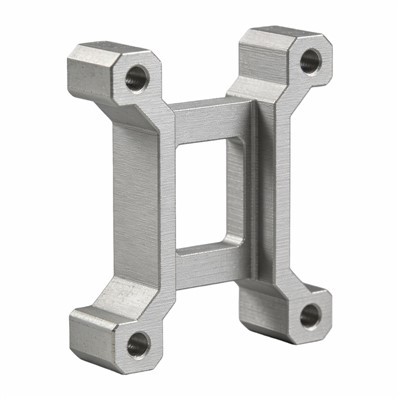
As a seasoned supplier of CNC Machining Plastic Auto Parts, I've witnessed firsthand the distinct characteristics and challenges that come with machining thermoplastic and thermosetting plastics for the automotive industry. In this blog, I'll delve into the core differences between these two types of plastics in the context of CNC machining auto parts.
Material Properties
Thermoplastics
Thermoplastics are polymers that become pliable or moldable above a specific temperature and solidify upon cooling. This property is reversible, meaning they can be heated and cooled multiple times without undergoing significant chemical changes. Common thermoplastics used in auto parts include polypropylene (PP), polyethylene (PE), and acrylonitrile butadiene styrene (ABS).
One of the key advantages of thermoplastics is their high ductility. They can be stretched and deformed to a certain extent without breaking, which is crucial for parts that need to withstand impact or vibration in automotive applications. For example, interior trim parts made from thermoplastics can absorb energy during a collision, reducing the risk of injury to passengers.
Another benefit is their relatively low melting point, which makes them easier to process using CNC machining. The lower heat requirement translates to less energy consumption and reduced wear on machining tools. However, this also means that thermoplastics may have lower heat resistance compared to thermosetting plastics, making them less suitable for applications where high temperatures are involved.
Thermosetting Plastics
Thermosetting plastics, on the other hand, undergo a chemical change when heated. Once they are molded and cured, they cannot be remelted or reshaped. This irreversible process gives thermosetting plastics excellent dimensional stability and high heat resistance. Epoxy, phenolic, and polyester are common thermosetting plastics used in the automotive industry.
The high heat resistance of thermosetting plastics makes them ideal for parts that are exposed to high temperatures, such as engine components and electrical insulators. They also have good mechanical strength and resistance to chemicals, which is important for maintaining the integrity of auto parts in harsh environments.
However, the curing process of thermosetting plastics can be more complex and time - consuming compared to thermoplastics. Once the plastic has cured, it becomes very hard and brittle. This can pose challenges during CNC machining, as it requires more powerful cutting tools and careful control of machining parameters to avoid cracking or chipping.
Machining Process
Cutting Forces
When CNC machining thermoplastic auto parts, the cutting forces are generally lower compared to thermosetting plastics. The softer and more ductile nature of thermoplastics allows the cutting tool to penetrate and remove material with less resistance. This results in less wear on the cutting tools and lower power consumption during the machining process.
In contrast, thermosetting plastics are much harder and more brittle. Machining them requires higher cutting forces to break and remove the material. The increased cutting forces can lead to faster tool wear, especially if the machining parameters are not properly optimized. This means that when machining thermosetting plastics for auto parts, we need to use more robust cutting tools and may need to replace them more frequently.
Heat Generation
Heat generation is an important consideration in CNC machining of plastics. In the case of thermoplastics, the low melting point means that excessive heat during machining can cause the plastic to melt and stick to the cutting tool. This can lead to poor surface finish, tool clogging, and even damage to the machined part. To mitigate this, we often use coolant or lubricants during the machining process to dissipate heat and reduce friction.
For thermosetting plastics, the high heat resistance helps to prevent melting during machining. However, the high cutting forces required to machine them can still generate a significant amount of heat. If not properly managed, this heat can cause thermal stress in the part, leading to warping or cracking. Therefore, we also need to pay close attention to heat management when machining thermosetting plastic auto parts.
Surface Finish
The surface finish of CNC machined auto parts is crucial, especially for parts that are visible or require a high - quality fit. Thermoplastics generally produce a smoother surface finish during machining. Their ductile nature allows the cutting tool to produce fine chips and leave a more uniform surface. This is beneficial for parts that need to have a good aesthetic appearance or a tight seal.
Thermosetting plastics, due to their brittleness, may produce a rougher surface finish. The broken chips can sometimes leave jagged edges on the machined surface. Additional finishing processes, such as sanding or polishing, may be required to achieve the desired surface quality.
Design Considerations
Thermoplastics
When designing thermoplastic auto parts for CNC machining, we can take advantage of their flexibility and ease of forming. Thermoplastics can be easily molded into complex shapes, making them suitable for parts with intricate geometries. For example, we can design parts with thin walls or undercuts, as long as the machining process can access these areas.
However, we also need to consider the shrinkage of thermoplastics during cooling. After machining, thermoplastics will shrink as they cool down to room temperature. This shrinkage can affect the dimensional accuracy of the part, and we need to account for it in the design phase by adjusting the dimensions accordingly.
Thermosetting Plastics
Designing thermosetting plastic auto parts requires more careful consideration of the material's brittleness. Parts with sharp corners or sudden changes in cross - section are more likely to crack during machining or in service. Therefore, it is recommended to use rounded corners and gradual transitions in the design to reduce stress concentration.
Since thermosetting plastics cannot be remelted, it is important to get the design right in the first place. Any mistakes in the machining process may result in a scrap part, as there is no way to rework the material. This means that we need to conduct thorough simulations and prototyping before mass - producing thermosetting plastic auto parts.
Cost Analysis
Material Cost
The cost of thermoplastics and thermosetting plastics can vary depending on the specific type and grade. In general, thermoplastics are more widely available and often less expensive than thermosetting plastics. This is because the production process of thermoplastics is more straightforward and can be scaled up more easily.
However, for applications that require high - performance properties such as heat resistance and chemical resistance, the cost - effectiveness of thermosetting plastics may be higher. In such cases, the long - term benefits of using thermosetting plastics, such as reduced maintenance and longer service life, may outweigh the higher initial material cost.


Machining Cost
As mentioned earlier, the machining of thermoplastics generally requires less energy and tool wear compared to thermosetting plastics. This results in lower machining costs for thermoplastic auto parts. The lower cutting forces and less complex machining processes also mean that the production cycle time can be shorter, further reducing the overall cost.
For thermosetting plastics, the higher machining costs are due to the need for more powerful equipment, specialized cutting tools, and additional finishing processes. The longer production cycle time also contributes to the increased cost. However, the unique properties of thermosetting plastics may justify the higher cost in certain automotive applications.
Product Applications
Thermoplastics
Thermoplastics are widely used in a variety of automotive applications. Interior parts such as dashboard panels, door trims, and seat components are commonly made from thermoplastics due to their good aesthetic appearance, low weight, and ease of machining. Exterior parts like bumpers and grilles are also made from thermoplastics because of their ability to absorb impact energy and their resistance to weathering.
For more high - tech applications, thermoplastics are used in electronic components and wiring harnesses. Their electrical insulation properties and flexibility make them suitable for these applications. For instance, CNC Machining ABS Robot Parts often involve the use of ABS, a common thermoplastic, due to its good mechanical strength and ease of machining.
Thermosetting Plastics
Thermosetting plastics find their niche in applications where high heat resistance and dimensional stability are required. Engine components such as valve covers, intake manifolds, and gaskets are often made from thermosetting plastics. Their ability to withstand high temperatures and chemical exposure makes them ideal for these harsh - environment applications.
Electrical insulators and circuit boards in automotive electronics also benefit from the use of thermosetting plastics. Their excellent electrical insulation properties and resistance to heat and moisture ensure the reliable operation of electronic systems in vehicles.
Conclusion
In summary, the differences between CNC machining thermoplastic and thermosetting plastic auto parts are significant in terms of material properties, machining process, design considerations, cost, and product applications. As a supplier of CNC Machining Plastic Auto Parts, we need to have a deep understanding of these differences to provide the best solutions for our customers.
Whether you are looking for 5 Axis CNC Service, Custom Metal Parts, CNC Turning Milling Parts, or Carbon Fiber Machining, we have the expertise and experience to meet your needs. If you are interested in our CNC machining plastic auto parts, please feel free to contact us for a detailed discussion on your specific requirements. We are committed to providing high - quality products and excellent services to help you achieve your automotive manufacturing goals.
References
- "Plastics for Engineers: Properties, Processing, and Applications" by Dominick V. Rosato and David V. Rosato
- "CNC Machining Handbook" by Peter Smid
- Various industry reports and research papers on automotive plastics