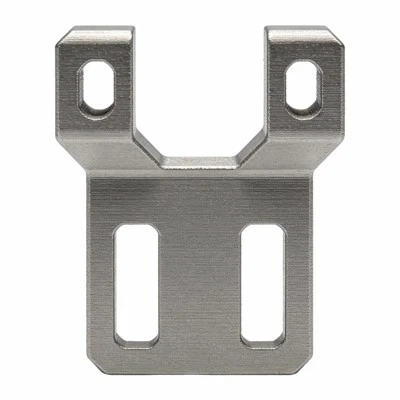
Hey there! As a supplier of 3D Printing Plastic Parts, I've seen firsthand the challenges that come with ensuring the dimensional stability of 3D printed plastic parts. It's a crucial aspect, especially when you're dealing with parts that need to fit precisely or perform specific functions. In this blog, I'm gonna share some tips and tricks on how to make sure your 3D printed plastic parts come out with the right dimensions every time.
Understanding the Basics of Dimensional Stability
Before we dive into the solutions, let's quickly go over what dimensional stability actually means. In simple terms, it refers to the ability of a 3D printed part to maintain its shape and size over time. When a part lacks dimensional stability, it can warp, shrink, or expand, which can cause all sorts of problems, like poor fit, reduced functionality, or even complete failure.
There are several factors that can affect the dimensional stability of 3D printed plastic parts. These include the type of plastic material used, the printing process, the design of the part, and the post-processing steps. Let's take a closer look at each of these factors and how you can address them.
Choosing the Right Plastic Material
The choice of plastic material is one of the most important factors in ensuring dimensional stability. Different plastics have different properties, such as shrinkage rates, thermal expansion coefficients, and moisture absorption. Some plastics are more prone to warping and shrinking than others, so it's important to choose a material that is suitable for your specific application.
For example, ABS (Acrylonitrile Butadiene Styrene) is a popular choice for 3D printing because it's strong, durable, and has a relatively low shrinkage rate. However, it can be prone to warping, especially when printed on a large scale. On the other hand, PLA (Polylactic Acid) is a biodegradable plastic that is easy to print and has a low shrinkage rate. It's a good choice for parts that don't require high strength or heat resistance.
If you're looking for a plastic material that offers high dimensional stability, you might want to consider materials like PETG (Polyethylene Terephthalate Glycol), Nylon, or Polycarbonate. These materials have low shrinkage rates, high strength, and good resistance to heat and moisture. You can check out our 3D Printing Service ABS Plastic Rapid Prototype for more information on ABS and other plastic materials.
Optimizing the Printing Process
The printing process also plays a crucial role in ensuring dimensional stability. There are several parameters that you can adjust to improve the quality of your prints and reduce the risk of warping and shrinking. These include the printing temperature, the print speed, the layer height, and the infill density.
The printing temperature is one of the most important parameters to consider. If the temperature is too low, the plastic may not melt properly, which can result in poor adhesion between the layers and a rough surface finish. On the other hand, if the temperature is too high, the plastic may overheat and warp. It's important to find the right temperature for your specific plastic material and printer.
The print speed is another important parameter. If the print speed is too fast, the printer may not have enough time to deposit the plastic properly, which can result in gaps and uneven layers. On the other hand, if the print speed is too slow, the plastic may cool too quickly, which can cause warping. It's important to find the right balance between speed and quality.
The layer height is also an important factor to consider. A smaller layer height will result in a smoother surface finish and better dimensional accuracy, but it will also take longer to print. A larger layer height will result in a faster print, but it may also result in a rougher surface finish and lower dimensional accuracy. It's important to choose the right layer height for your specific application.
The infill density is the amount of plastic that is used to fill the interior of the part. A higher infill density will result in a stronger and more rigid part, but it will also use more plastic and take longer to print. A lower infill density will result in a lighter and faster-printed part, but it may also be less strong and rigid. It's important to choose the right infill density for your specific application.
Designing for Dimensional Stability
The design of the part also plays a crucial role in ensuring dimensional stability. There are several design principles that you can follow to reduce the risk of warping and shrinking. These include avoiding sharp corners, using fillets and chamfers, and designing for uniform wall thickness.
Sharp corners can cause stress concentrations, which can lead to warping and cracking. To avoid this, it's important to use fillets and chamfers to round off the corners of your part. This will help to distribute the stress more evenly and reduce the risk of warping.
Designing for uniform wall thickness is also important. If the wall thickness of your part is not uniform, it can cause uneven cooling and shrinkage, which can lead to warping and distortion. To avoid this, it's important to design your part with a uniform wall thickness.
Post-Processing for Dimensional Stability
Post-processing is another important step in ensuring dimensional stability. There are several post-processing techniques that you can use to improve the quality of your prints and reduce the risk of warping and shrinking. These include annealing, sanding, and painting.
Annealing is a process of heating the part to a specific temperature and then allowing it to cool slowly. This helps to relieve the internal stresses in the part and reduce the risk of warping and shrinking. Sanding is a process of smoothing the surface of the part to improve its appearance and dimensional accuracy. Painting is a process of applying a coating to the part to protect it from moisture and improve its appearance.
Case Studies
Let's take a look at some real-world examples of how these techniques can be used to ensure the dimensional stability of 3D printed plastic parts.
SLA 3D Printing for Medical Parts
In the medical industry, dimensional accuracy is crucial. SLA 3D Printing for Medical Parts is a popular choice because it offers high precision and good surface finish. By choosing the right resin material, optimizing the printing process, and using post-processing techniques like annealing, we were able to produce medical parts with excellent dimensional stability.
SLM 3D Printing Stainless Steel Model
For parts that require high strength and durability, SLM 3D Printing Stainless Steel Model is a great option. However, stainless steel can be prone to warping and cracking during the printing process. By using a support structure, optimizing the printing parameters, and post-processing the part, we were able to produce stainless steel models with excellent dimensional stability.


Nylon SLS 3D Printing Parts
Nylon is a popular material for 3D printing because it's strong, flexible, and has good dimensional stability. Nylon SLS 3D Printing Parts are often used in applications where high strength and flexibility are required. By choosing the right nylon material, optimizing the printing process, and using post-processing techniques like sanding and painting, we were able to produce nylon parts with excellent dimensional stability.
Conclusion
Ensuring the dimensional stability of 3D printed plastic parts is a complex process that requires careful consideration of several factors, including the choice of plastic material, the printing process, the design of the part, and the post-processing steps. By following the tips and tricks outlined in this blog, you can improve the quality of your prints and reduce the risk of warping and shrinking.
If you're looking for a reliable supplier of 3D printed plastic parts, look no further. We have the expertise and experience to provide you with high-quality parts that meet your specific requirements. Contact us today to discuss your project and get a quote.
References
- Gibson, I., Rosen, D. W., & Stucker, B. (2015). Additive Manufacturing Technologies: 3D Printing, Rapid Prototyping, and Direct Digital Manufacturing. Springer.
- Wohlers, T., & Gornet, P. (2017). Wohlers Report 2017: 3D Printing and Additive Manufacturing State of the Industry. Wohlers Associates.
- ASTM International. (2018). Standard Terminology for Additive Manufacturing Technologies. ASTM F2792-12a.