As a supplier of 3D printing model parts, I understand the importance of choosing the right layer height for 3D printing. Layer height can significantly affect the quality, strength, and printing time of your 3D printed models. In this blog post, I'll share some insights on how to select the appropriate layer height for your specific needs.
Understanding Layer Height
Layer height refers to the thickness of each individual layer that the 3D printer deposits during the printing process. It is typically measured in millimeters (mm). A smaller layer height means more detailed and smoother prints, but it also increases the printing time. Conversely, a larger layer height results in faster prints but may sacrifice some level of detail and surface finish.
Factors to Consider When Choosing Layer Height
1. Model Complexity and Detail
If your 3D model has intricate details, fine features, or complex geometries, a smaller layer height is usually recommended. For example, if you're printing a miniature figurine with delicate facial features or a detailed jewelry design, a layer height of 0.05 mm to 0.1 mm can help capture these details accurately. On the other hand, if your model is relatively simple with large, smooth surfaces, you can opt for a larger layer height, such as 0.2 mm to 0.3 mm, to speed up the printing process.
2. Surface Finish Requirements
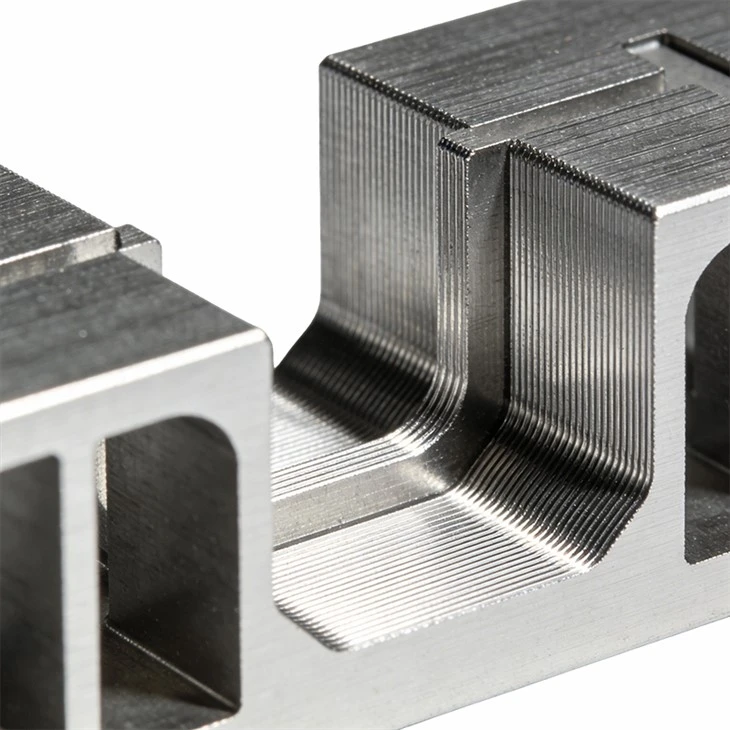
The surface finish of your 3D printed part is another crucial factor. A smaller layer height produces a smoother surface finish because the layers are thinner and less visible. This is ideal for parts that require a high - quality appearance, such as consumer products, display models, or parts that will be painted or polished. For parts where the surface finish is less critical, like functional prototypes or parts that will be hidden from view, a larger layer height can be used.

3. Printing Time
Printing time is directly related to layer height. A smaller layer height means more layers need to be printed, which increases the overall printing time. If you're on a tight schedule or need to print multiple parts quickly, a larger layer height can be a practical choice. However, it's important to balance the need for speed with the quality requirements of your part. You can calculate the approximate printing time based on the layer height, model volume, and the printer's printing speed.
4. Material Properties
Different 3D printing materials have different properties that can influence the choice of layer height. For example, some materials, such as resins used in Resin 3D Printing Parts, can achieve very fine details with a small layer height. Resin printers can typically print at layer heights as low as 0.025 mm, resulting in extremely high - resolution prints. On the other hand, materials like ABS plastic used in 3D Printing Service ABS Plastic Rapid Prototype may require a slightly larger layer height, around 0.15 mm to 0.2 mm, to ensure proper adhesion between layers and to prevent warping.
5. Mechanical Strength
The layer height can also affect the mechanical strength of the 3D printed part. In general, a smaller layer height can result in a stronger part because the layers are more closely bonded together. This is especially important for parts that will be subjected to stress or load, such as mechanical components or structural parts. However, the material properties and the printing process also play a significant role in determining the mechanical strength. For example, SLM 3D Printing Stainless Steel Model can produce strong parts even with a relatively larger layer height due to the nature of the selective laser melting process.
Common Layer Height Ranges for Different 3D Printing Technologies
Fused Deposition Modeling (FDM)
FDM is one of the most common 3D printing technologies. For FDM printers, the typical layer height ranges from 0.1 mm to 0.4 mm. A layer height of 0.1 mm to 0.15 mm is suitable for high - detail prints, while 0.2 mm to 0.4 mm can be used for faster prints or parts where detail is less important.
Stereolithography (SLA)
SLA printers are known for their high - resolution capabilities. They can print at layer heights as low as 0.025 mm to 0.05 mm for extremely detailed and smooth prints. However, for larger parts or when speed is a priority, layer heights of 0.1 mm to 0.2 mm can be used.
Selective Laser Sintering (SLS)
SLS printers use a powder - based material and a laser to sinter the powder into a solid object. The typical layer height for SLS printing ranges from 0.08 mm to 0.15 mm. SLS can produce parts with good mechanical properties and relatively high detail.
Testing and Experimentation
The best way to determine the right layer height for your specific 3D printed model is through testing and experimentation. You can print small test pieces with different layer heights and evaluate the results in terms of detail, surface finish, strength, and printing time. This will give you a better understanding of how the layer height affects the final part and help you make an informed decision for your actual project.
Tips for Optimizing Layer Height
- Calibrate your printer: Ensure that your 3D printer is properly calibrated before printing. An uncalibrated printer can lead to inconsistent layer heights and poor print quality.
- Use support structures: When printing with a small layer height, support structures may be necessary to prevent overhangs from collapsing. Make sure to design your support structures carefully to minimize their impact on the final part.
- Consider post - processing: After printing, you can use post - processing techniques such as sanding, polishing, or painting to improve the surface finish of your part. This can be particularly useful when printing with a larger layer height.
Conclusion
Choosing the right layer height for 3D printing model parts is a crucial step in achieving the desired quality, strength, and printing time. By considering factors such as model complexity, surface finish requirements, printing time, material properties, and mechanical strength, you can make an informed decision. Remember to test different layer heights and optimize your printing process to get the best results.
If you're in need of high - quality 3D printing model parts, we're here to help. We offer a wide range of 3D printing services using different materials and technologies. Contact us to discuss your specific requirements and start your 3D printing project today.
References
- Gibson, I., Rosen, D. W., & Stucker, B. (2010). Additive manufacturing technologies: rapid prototyping to direct digital manufacturing. Springer Science & Business Media.
- Lipson, H., & Kurman, M. (2013). Fabricated: the new world of 3D printing. John Wiley & Sons.