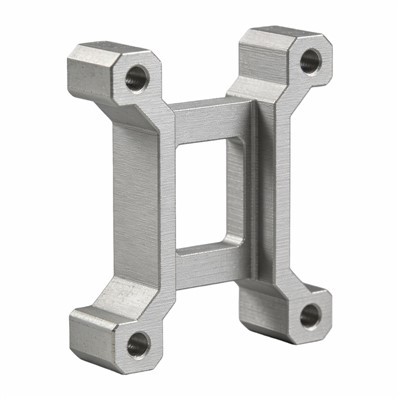
Can 3D printed plastic parts be used in the construction industry? That's a question I get asked a lot as a supplier of 3D Printing Plastic Parts. And let me tell you, the answer is a big yes! In recent years, 3D printing technology has advanced by leaps and bounds, and it's starting to revolutionize the construction world.
First off, let's talk about the advantages of using 3D printed plastic parts in construction. One of the biggest perks is customization. With traditional manufacturing methods, it can be really expensive and time - consuming to create custom - shaped parts. But with 3D printing, we can easily produce plastic components in any shape or size you need. Whether it's a unique architectural detail for a fancy building or a specialized part for a construction machinery, we've got you covered.
Another great thing is speed. In the construction industry, time is money. Traditional manufacturing processes often involve long lead times for tooling and production. But 3D printing cuts out a lot of those steps. We can go from a digital design to a finished plastic part in a matter of hours or days, depending on the complexity. This means that construction projects can move along much faster, which is a huge plus for everyone involved.
Cost - efficiency is also a major factor. For small - scale production runs or custom parts, 3D printing can be much more economical than traditional methods. There's no need to invest in expensive molds or tooling, and the material waste is minimized. This can lead to significant cost savings for construction companies, especially those working on tight budgets.
So, what kind of 3D printed plastic parts are suitable for the construction industry? Well, there are plenty of options. For example, we can print plastic connectors and joints that are used to assemble different building components. These parts need to be strong and durable, and with the right choice of plastic materials and 3D printing techniques, we can make them up to the task.
We also offer 3D Printing Service ABS Plastic Rapid Prototype. ABS plastic is a popular choice in 3D printing because it's tough, impact - resistant, and has a good heat resistance. It can be used to create prototypes of building elements before full - scale production. This allows architects and engineers to test the design, fit, and function of the parts in a cost - effective way.
In addition, we have SLA 3D Printing for Medical Parts, and the technology behind it can also be applied in construction. SLA (Stereolithography) offers high - precision 3D printing, which is great for creating detailed and intricate plastic parts. These parts can be used for decorative elements in building facades, or for specialized components in construction equipment where precision is crucial.


3D Printing Model Parts are another area where 3D printed plastic parts shine in construction. Architects often need scale models to present their designs to clients or to study the spatial relationships of a building. 3D printing can quickly create accurate and detailed models, which are much more realistic compared to traditional hand - made models.
Nylon is also a valuable material in our 3D printing arsenal, and we offer Nylon SLS 3D Printing Parts. Nylon has excellent mechanical properties, including high strength and flexibility. It can be used for making parts that need to withstand heavy loads or repeated stress, such as brackets or supports in construction.
However, it's not all sunshine and rainbows. There are some challenges when it comes to using 3D printed plastic parts in construction. One of the main concerns is the long - term durability of plastic in different environmental conditions. Plastic can be affected by factors like UV radiation, temperature changes, and moisture. But we're constantly working on improving the quality of our 3D printed parts. We select the best materials and use post - processing techniques to enhance their resistance to these environmental factors.
Another issue is the perception of using plastic in construction. Some people may think that plastic is not as "green" as other materials. But in fact, 3D printing can be more sustainable in some ways. As I mentioned earlier, it reduces material waste, and some plastics can be recycled. We're also exploring the use of bio - based plastics, which are more environmentally friendly.
In conclusion, 3D printed plastic parts have a bright future in the construction industry. The benefits of customization, speed, and cost - efficiency are hard to ignore. And as we continue to overcome the challenges, we expect to see more and more 3D printed plastic components being used in all kinds of construction projects.
If you're in the construction business and are interested in using 3D printed plastic parts for your projects, don't hesitate to reach out. We're here to help you find the best solutions for your specific needs. Whether you need a one - off custom part or a large - scale production run, we have the expertise and technology to make it happen. Let's start a conversation and see how we can work together to take your construction projects to the next level!
References
- Gibson, I., Rosen, D. W., & Stucker, B. (2015). Additive Manufacturing Technologies: 3D Printing, Rapid Prototyping, and Direct Digital Manufacturing. Springer.
- Hopkinson, N., Hague, R., & Dickens, P. M. (2006). Rapid Manufacturing: An Industrial Revolution for the Digital Age. Wiley.