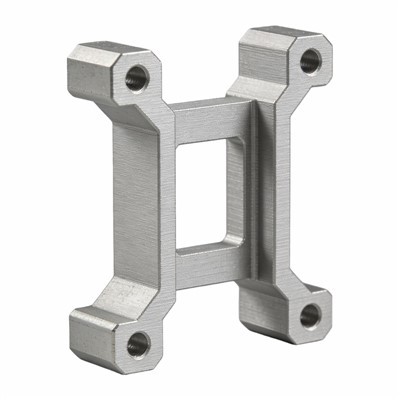
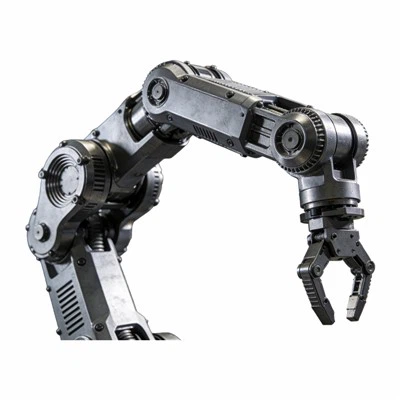
Shenzhen Jingcheng Dingyi Forming Technology Co., Ltd. is one of the leading manufacturers and suppliers of Robot arm joint in China, specialized in providing high quality customized products. If you're going to buy bulk cheap Robot arm joint, welcome to get quotation from our factory. Quality products and low price are available.
Custom CNC Machined Robot Arm Joint Parts
Custom Robot Arm Joint Parts | CNC Machining | Jingcheng
Need custom robot arm joint parts? Jingcheng machines aluminum, stainless steel and titanium components from CAD files and engineering drawings for prototypes and low-volume production.
Robot Joint Parts for Different Applications
Robot joint designs vary with the application, load, available space and assembly requirements. Jingcheng machines custom metal components from customer drawings for different types of robotic systems.
Industrial Robot Arms
We machine custom joint housings, mounting brackets and structural components for industrial robot arms, assembly systems, welding robots and pick-and-place equipment.
Collaborative Robots
For collaborative robot projects, we manufacture custom metal parts used in joint housings, support structures and mounting interfaces. Part geometry and material selection depend on the robot design and assembly requirements.
Humanoid Robots
We support the machining of custom components for humanoid robot arms and legs, including shoulder, elbow, wrist, hip, knee and ankle joint structures.

Case Studies
6061-T6 Robot Arm Joint Fixed Flange Case Study: Semi-Ring Housing
A case study on machining a 6061-T6 robot arm joint fixed flange with semi-ring housing, mounting ears, angled holes, datum holes and curved-profile control.
This case covers a 6061-T6 aluminum fixed flange for a robot arm joint. It is not a simple round flange. The part combines a semi-ring housing, mounting ears, stepped faces and multi-directional holes, so the main risks sit in fixturing, curved profile control and datum-hole relationship.
Project Snapshot
| Industry scenario | Robot arm joint components and precision CNC structural parts |
|---|---|
| Material and finish | 6061-T6 aluminum; final surface condition confirmed by project requirement |
| Critical features | Semi-ring curved housing, mounting ears, angled holes, datum holes, side holes and stepped faces |
| Manufacturing focus | Asymmetric clamping, deformation control, curved profile, shared datum plan and protected delivery |
Structure Review: More Sensitive Than a Round Flange
A standard round flange can often be machined around a central datum. This fixed flange is different: the semi-ring body is open, the mounting ears are asymmetric, and the stepped faces and side holes create several functional directions.
In a robot arm joint, this part may support actuator fixing, housing connection or spatial clearance. Jingcheng first identifies which holes act as assembly datums and which curved surfaces or steps influence contact.
Main Risk: Open Structure, Clamping and Deformation
The semi-ring structure is sensitive to clamping force, especially near the open ends and mounting ears. Excessive clamping can slightly distort the curved profile, while weak clamping can cause vibration during hole and step finishing.
Multi-directional holes add another layer of risk. Holes on mounting ears, side holes and holes near the curved body must share a stable datum plan; otherwise, the holes may align individually while the contact faces load unevenly during assembly.
Jingcheng Manufacturing Solution
Jingcheng first builds the relationship between the semi-ring curved surface, main mounting face and datum holes. Rough machining retains enough support stock so the open area does not lose stiffness too early.
During finishing, mounting-ear hole position, stepped faces, side holes and curved profile are controlled together. Where needed, process support, staged unclamping and remeasurement are used to reduce residual stress and clamping deformation. Hole-mouth chamfers and edge cleaning cover the inner arc, outer arc and step transitions.
Send us your CAD files or engineering drawings to discuss the material, machining process and production requirements for your parts.

Lead Time and Delivery Control
For a 6061-T6 robot arm joint fixed flange like this, prototypes are commonly evaluated around 6 to 9 working days. Small batches are often planned around 9 to 14 working days. Surface treatment, full inspection or fixture-based assembly verification can extend the schedule.
Jingcheng manages roughing, stress-movement observation, finishing, reinspection and packaging as separate process gates. For a complex flange, delivery quality comes from absorbing datum and appearance risks before shipment.

Custom Robot Joint Parts Made to Your Drawings
1. Start With Your CAD Files
Send us your 3D CAD files, engineering drawings or an existing sample for review. We can assess the part geometry, material requirements and machining approach before quoting.
2. Choose the Process for the Part
Depending on the design, we can evaluate CNC milling, CNC turning or 5-axis machining. The suitable process depends on the part geometry, critical features, tolerances and production quantity.
3. From Prototype to Repeat Orders
We accept prototype and low-volume machining enquiries and can assess repeat-production requirements. If you are developing a new robot joint, share the initial quantity and expected future demand so we can review the production approach.
4.Review Critical Dimensions Before Production
For parts with bearing seats, mounting holes or mating surfaces, identify the critical dimensions and tolerances on your drawings. This helps us assess the machining and inspection requirements before production.
What to Check Before Machining a Robot Joint Part
A robot joint part may look straightforward in a CAD model, but small dimensional errors can affect assembly and fit. Before machining, it helps to identify the features that matter most to the final assembly.

Bearing seats and mating surfaces
If the part includes bearing seats or mating surfaces, specify the required dimensions and tolerances on the drawing. These features may need closer attention than non-critical outer surfaces.

Mounting holes and alignment
Hole positions and mounting interfaces should match the connected components. Make sure the drawing includes the relevant dimensions and datums.
Material and weight requirements
Material selection affects weight, strength, machinability and cost. Share the intended application and material grade if these have already been specified.
Prototype quantity and future demand
If you are validating a new robot design, tell us the initial prototype quantity and expected follow-up demand. This helps us assess a suitable manufacturing approach for the project.
If you have a drawing ready, send it to Jingcheng for a machining review and quotation.
Product Specifications
| Item | Details |
|---|---|
| Product Name | Custom CNC Machined Robot Arm Joint Parts |
| Manufacturing Process | CNC Milling, CNC Turning, 5-Axis Machining |
| Materials | Aluminum 6061, Aluminum 7075, Stainless Steel, Titanium |
| Precision | Up to ±0.005 mm, depending on part geometry and requirements |
| Surface Finish | Anodizing, Sand Blasting, Passivation, Polishing, subject to material and process compatibility |
| Production Type | Prototypes and Low-Volume Production |
| Inspection | Dimensional Inspection; CMM Inspection where applicable |
| Application | Industrial Robots, Cobots, Humanoid Robots |
Final material availability, achievable tolerances, finishing options and inspection requirements are confirmed against the part drawings and specifications.
FAQ
Q: What materials can be used for CNC-machined robot joint parts?
A: Aluminum 6061 and 7075 are options for robot joint components where weight, strength and machinability need to be balanced. Stainless steel or titanium may be considered when the application requires different mechanical or environmental properties. The right material depends on the part design, operating conditions and engineering specifications. Include the material grade in your drawing or RFQ whenever possible.
Q: Can you machine robot joint parts from our CAD files?
A: Yes. Jingcheng evaluates custom robot joint parts based on customer CAD files and engineering drawings. Please include the material, required quantity, critical dimensions and surface finish where applicable. We can review the machining requirements and confirm whether the part is suitable for production.
Q: Can you achieve a tolerance of ±0.005 mm?
A: Tolerances down to ±0.005 mm may be achievable for suitable features, depending on the material, geometry, machining process and inspection requirements. Not every dimension or part can be machined to the same tolerance. Please mark the critical dimensions on your drawing so we can assess the requirements before quoting.
Q: Do you manufacture parts for humanoid robot joints?
A: Yes. We accept custom machining enquiries for humanoid robot structural components, including parts designed for shoulder, elbow, wrist, hip, knee and ankle joints. Manufacturing feasibility depends on the component geometry, material, tolerance requirements and quantity. Send us your drawings for a review of the proposed machining approach.
Q: What information do you need to quote a robot joint part?
A: To quote a custom robot joint part, please provide a 3D CAD file or engineering drawing, material grade, required quantity, critical tolerances and surface finish requirements. If the part is part of an assembly, include any important mating dimensions or interface requirements. We will review the information available and advise if anything else is needed for quotation.
Hot Tags: Robot arm joint, China Robot arm joint manufacturers