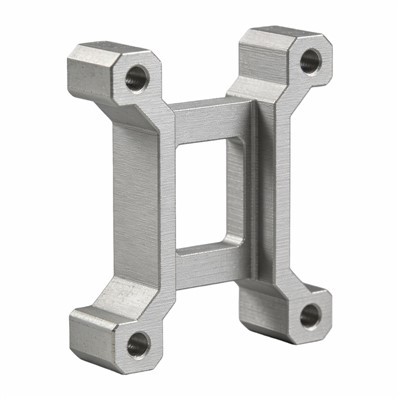
Hey there! As a supplier of Nylon SLS 3D Printing Parts, I often get asked about the thermal expansion coefficient of these parts. So, let's dive right into it and break down what this coefficient means and why it's important for Nylon SLS 3D printed parts.
First off, what exactly is the thermal expansion coefficient? Well, it's a measure of how much a material expands or contracts when its temperature changes. Every material has its own unique thermal expansion coefficient, and it's usually expressed in units of length per degree Celsius (or Fahrenheit, depending on the system you're using).
For Nylon SLS 3D printing parts, the thermal expansion coefficient is a crucial factor. Why? Because in many real - world applications, these parts are going to be exposed to different temperatures. If the part expands or contracts too much with temperature changes, it can lead to all sorts of problems. For example, it might not fit properly in the assembly, or it could cause stress and eventually lead to failure.
The thermal expansion coefficient of Nylon SLS 3D printed parts can vary depending on a few different factors. One of the main factors is the specific type of nylon used. There are different grades of nylon, and each has its own characteristics. Some nylons are more resistant to temperature changes than others, which means they have a lower thermal expansion coefficient.
Another factor that can affect the thermal expansion coefficient is the printing process itself. In SLS (Selective Laser Sintering) 3D printing, the way the nylon powder is sintered by the laser can influence the internal structure of the printed part. A well - sintered part might have a more uniform structure, which can lead to a more predictable thermal expansion behavior.
Now, let's talk about some typical values for the thermal expansion coefficient of Nylon SLS 3D printed parts. Generally, the thermal expansion coefficient of nylon can range from about 80 to 120 x 10^-6 /°C. But keep in mind, this is just a rough estimate. The actual value can be affected by the factors we mentioned earlier, like the type of nylon and the printing process.
So, why should you care about the thermal expansion coefficient when you're considering Nylon SLS 3D printing parts? Well, if you're using these parts in an application where temperature changes are common, you need to make sure they can handle it. For example, if you're using Nylon SLS 3D printed parts in an automotive engine compartment, where temperatures can get quite high, you want to make sure the parts won't expand so much that they cause problems.
On the other hand, if you're using the parts in a cold environment, you need to ensure that they won't contract too much and become brittle or break. Understanding the thermal expansion coefficient can help you design and select the right parts for your specific application.


As a supplier of Nylon SLS 3D Printing Parts, I can offer you high - quality parts with a well - controlled thermal expansion behavior. We use the latest SLS 3D printing technology and carefully select the right type of nylon to ensure that our parts meet your requirements.
If you're interested in other 3D printing services, we also offer 3D Printing Service ABS Plastic Rapid Prototype, Resin 3D Printing Parts, and SLA 3D Printing for Medical Parts. These services can provide you with different options depending on your specific needs.
Whether you're in the automotive, aerospace, medical, or any other industry, our Nylon SLS 3D printing parts can be a great solution. We have the expertise and experience to produce parts that not only have the right thermal expansion properties but also meet high - quality standards.
If you're thinking about using Nylon SLS 3D printing parts for your project, don't hesitate to get in touch. We can discuss your requirements in detail and help you find the best solution for your application. Whether it's a small - scale prototype or a large - scale production run, we're here to assist you.
In conclusion, the thermal expansion coefficient of Nylon SLS 3D printing parts is an important factor to consider. By understanding this coefficient and working with a reliable supplier, you can ensure that your parts perform well in different temperature conditions. So, if you have any questions or need more information, feel free to reach out. We're looking forward to helping you with your 3D printing needs.
References:
- Textbooks on materials science and engineering
- Industry reports on 3D printing materials