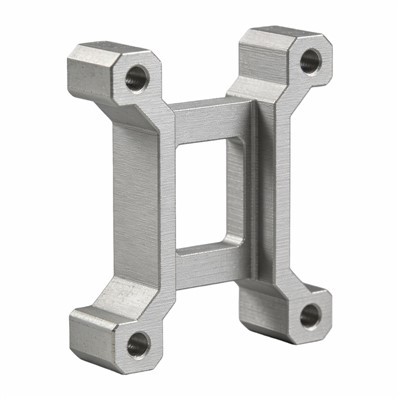
Hey there! As a supplier of Resin 3D Printing Parts, I often get asked about the solvent resistance of these parts. So, I thought I'd take a moment to break it down for you.
First off, let's talk about what solvent resistance actually means. In simple terms, it's the ability of a material to withstand the effects of solvents. Solvents are substances that can dissolve other materials, and they're used in a wide range of applications, from cleaning to manufacturing. When it comes to Resin 3D Printing Parts, solvent resistance is an important factor to consider, especially if the parts will be exposed to solvents during their use.
Now, the solvent resistance of Resin 3D Printing Parts can vary depending on a few different factors. One of the main factors is the type of resin used. There are several different types of resins available for 3D printing, each with its own unique properties. Some resins are more resistant to solvents than others, so it's important to choose the right resin for your specific application.
For example, if you're printing parts that will be exposed to harsh solvents, you might want to consider using a resin that has a high level of chemical resistance. On the other hand, if the parts will only be exposed to mild solvents, a less chemically resistant resin might be sufficient.
Another factor that can affect the solvent resistance of Resin 3D Printing Parts is the printing process itself. The way the parts are printed can have an impact on their overall strength and durability, which in turn can affect their solvent resistance. For example, if the parts are printed with a high level of detail and precision, they may be more resistant to solvents than parts that are printed with a lower level of detail.
In addition to the type of resin and the printing process, the post-processing of the parts can also play a role in their solvent resistance. After the parts are printed, they may need to be cured or finished in some way to improve their strength and durability. This can involve exposing the parts to heat, light, or chemicals, depending on the type of resin used.
So, how can you test the solvent resistance of Resin 3D Printing Parts? There are several different methods that can be used, but one of the most common is the immersion test. In this test, the parts are immersed in a solvent for a specified period of time, and then their appearance and properties are evaluated. If the parts show signs of damage or degradation, it's a sign that they may not be resistant to the solvent.
Another method that can be used to test the solvent resistance of Resin 3D Printing Parts is the wipe test. In this test, a solvent is applied to the surface of the parts using a cloth or sponge, and then the parts are wiped clean. If the parts show signs of damage or discoloration, it's a sign that they may not be resistant to the solvent.
It's important to note that the solvent resistance of Resin 3D Printing Parts can also be affected by other factors, such as the temperature and humidity of the environment in which the parts are used. For example, if the parts are used in a high-temperature or high-humidity environment, they may be more susceptible to damage from solvents.
So, what does all of this mean for you as a buyer of Resin 3D Printing Parts? Well, it means that you need to carefully consider the solvent resistance of the parts before you make a purchase. If the parts will be exposed to solvents during their use, you need to make sure that they are made from a resin that is resistant to those solvents. You also need to consider the printing process and post-processing of the parts to ensure that they are strong and durable enough to withstand the effects of the solvents.


At our company, we offer a wide range of Resin 3D Printing Parts that are designed to meet the needs of our customers. We use high-quality resins and advanced printing techniques to ensure that our parts are strong, durable, and resistant to solvents. We also offer a variety of post-processing options to improve the appearance and properties of our parts.
If you're interested in learning more about our Resin 3D Printing Parts, or if you have any questions about solvent resistance, please don't hesitate to contact us. We'd be happy to help you find the right parts for your specific application.
In addition to Resin 3D Printing Parts, we also offer other 3D printing services, such as SLM 3D Printing Stainless Steel Model and SLA 3D Printing for Medical Parts. These services are designed to meet the needs of a wide range of industries, from manufacturing to healthcare.
So, if you're looking for high-quality 3D printing services, look no further than our company. We have the experience and expertise to provide you with the parts and services you need to succeed.
If you're interested in purchasing Resin 3D Printing Parts or any of our other 3D printing services, please contact us to start a procurement negotiation. We're here to help you find the best solutions for your business.
References:
- General knowledge of 3D printing and material science.
- Industry research on resin properties and solvent resistance.