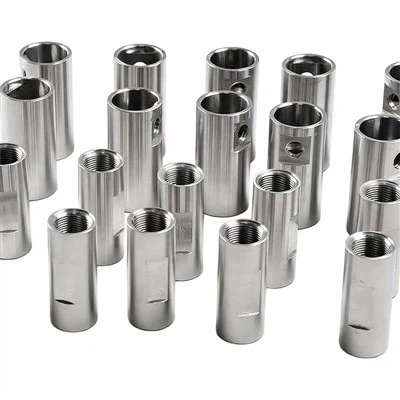
As a provider of precision sheet metal cutting services, I've witnessed firsthand the remarkable capabilities and widespread applications of this technology. Precision sheet metal cutting is a cornerstone in various industries, from electronics to construction, offering high - accuracy fabrication solutions. However, like any technology, it comes with its own set of limitations. In this blog, I'll delve into these limitations to provide a comprehensive understanding for those considering precision sheet metal cutting for their projects.
Material Constraints
One of the primary limitations of precision sheet metal cutting lies in the materials it can effectively handle. Different metals have distinct physical properties, such as hardness, ductility, and thermal conductivity, which can significantly impact the cutting process.
For instance, extremely hard metals like tungsten or certain high - alloy steels pose challenges. The high hardness makes it difficult for cutting tools to penetrate and shape the material. This often results in increased tool wear, which not only shortens the lifespan of the cutting tools but also affects the precision of the cut. In some cases, the cutting process may generate excessive heat, leading to thermal deformation of the metal. This can cause dimensional inaccuracies and compromise the quality of the final product.
On the other hand, very soft metals like pure aluminum can also present issues. Soft metals are prone to burring during the cutting process. Burrs are small, unwanted projections of material that can form on the edges of the cut. These burrs not only affect the aesthetic appearance of the product but can also cause problems in subsequent assembly processes. Removing burrs adds an extra step to the manufacturing process, increasing both time and cost.
Thickness Limitations
The thickness of the sheet metal is another crucial factor that limits precision cutting. Most precision sheet metal cutting methods, such as laser cutting and waterjet cutting, have a practical thickness range within which they can operate effectively.
Laser cutting, for example, is highly efficient for thin to medium - thickness sheet metals. However, as the thickness of the metal increases, the cutting speed decreases significantly. This is because the laser needs more energy to penetrate through the thicker material. Moreover, the quality of the cut may degrade. The heat affected zone (HAZ) becomes larger, which can lead to changes in the material's properties near the cut edge. This can be a major concern in applications where the integrity of the material is critical, such as in aerospace or medical device manufacturing.
Waterjet cutting can handle thicker materials compared to laser cutting. But even waterjet cutting has its limits. As the thickness increases, the cutting accuracy may be affected. The waterjet can disperse slightly as it travels through the material, resulting in a wider kerf (the width of the cut). This can lead to dimensional inaccuracies, especially when tight tolerances are required.
Geometric Complexity
Precision sheet metal cutting also faces limitations when it comes to geometric complexity. While modern cutting technologies can handle a wide range of shapes, there are still some geometries that are difficult to achieve.
Intricate designs with very small features or sharp corners can be challenging. For example, when cutting a design with extremely small holes or narrow slots, the cutting tool may not be able to reach or maintain the required precision. The size of the cutting tool and the minimum radius it can achieve limit the complexity of the design. Sharp corners can also cause stress concentrations during the cutting process, which may lead to cracking or deformation of the material.
In addition, three - dimensional shapes are more difficult to cut compared to two - dimensional ones. Precision sheet metal cutting is primarily designed for flat sheets. Creating complex 3D shapes often requires multiple cutting and forming operations, which increase the complexity and cost of the manufacturing process.


Cost Considerations
Cost is an important limitation in precision sheet metal cutting. The initial investment in cutting equipment is substantial. High - precision laser cutting machines, for example, can cost hundreds of thousands of dollars. This cost is often passed on to the customers, making precision sheet metal cutting relatively expensive, especially for small - scale projects.
Moreover, the cost of consumables, such as cutting tools and gases (in the case of laser cutting), can add up over time. The need for skilled operators also contributes to the overall cost. Precision sheet metal cutting requires operators with specialized knowledge and experience to ensure accurate and efficient cutting. Training these operators takes time and resources.
Surface Finish
The surface finish achieved through precision sheet metal cutting may not always meet the requirements of certain applications. Cutting processes can leave marks, such as striations or roughness, on the surface of the metal. These surface imperfections can be a problem in applications where a smooth and aesthetically pleasing surface is required, such as in consumer electronics or architectural applications.
In some cases, additional finishing processes, such as polishing or sandblasting, are required to improve the surface finish. These additional processes add time and cost to the manufacturing process.
Environmental Impact
Precision sheet metal cutting can have a significant environmental impact. Laser cutting, for example, consumes a large amount of energy. The high - power lasers used in the process require a substantial amount of electricity, which contributes to carbon emissions.
Waterjet cutting also has environmental implications. The water used in the process needs to be treated before it can be discharged. Additionally, the abrasive materials used in waterjet cutting need to be disposed of properly. Improper disposal of these materials can have a negative impact on the environment.
Applications and Workarounds
Despite these limitations, precision sheet metal cutting remains a vital technology in many industries. In the electronics industry, Computer Case Sheet Metal requires high - precision cutting to ensure proper fit and functionality. To overcome the limitations, manufacturers often use a combination of cutting methods. For example, they may use laser cutting for the initial rough cutting and then use secondary processes, such as machining, to achieve the required precision and surface finish.
In the construction industry, Sheet Metal Bending Stainless Steel for Case and Sheet Metal Bending Stainless Steel Building Bracket are common applications. When dealing with thick stainless steel sheets, waterjet cutting can be a more suitable option. However, to improve the cutting accuracy, manufacturers may use advanced software to optimize the cutting path and reduce the kerf width.
Conclusion
In conclusion, while precision sheet metal cutting offers many benefits, it is not without its limitations. Material constraints, thickness limitations, geometric complexity, cost considerations, surface finish, and environmental impact are all factors that need to be taken into account when choosing precision sheet metal cutting for a project.
If you're considering precision sheet metal cutting for your project, it's important to understand these limitations and work with a experienced provider who can offer solutions to overcome them. Whether you're in the electronics, construction, or any other industry, we're here to help you navigate the challenges and achieve the best results. If you have any questions or would like to discuss your project in more detail, feel free to reach out to us for a consultation.
References
- Smith, J. (2018). Precision Sheet Metal Cutting: Technologies and Applications. Metalworking Journal.
- Brown, A. (2019). Limitations and Solutions in Sheet Metal Fabrication. Manufacturing Insights.
- Johnson, R. (2020). Environmental Impact of Sheet Metal Cutting Processes. Sustainable Manufacturing Review.