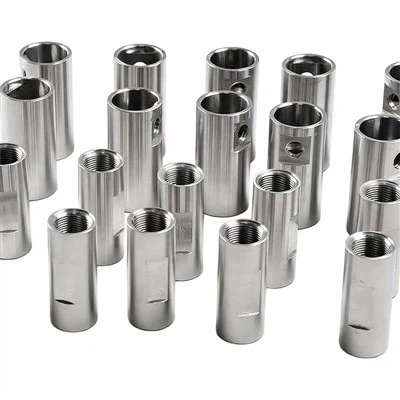
As a provider of Nylon SLS 3D printing parts, I often encounter a common question from clients: Are Nylon SLS 3D printing parts brittle? This question is crucial as it directly impacts the application and durability of the printed parts. In this blog, I'll delve into the characteristics of Nylon SLS 3D printing parts, explore the factors that might affect their brittleness, and provide insights to help you make informed decisions.
Understanding Nylon SLS 3D Printing
Selective Laser Sintering (SLS) is an additive manufacturing technology that uses a high - power laser to sinter powdered materials, layer by layer, to create a three - dimensional object. Nylon, a popular material for SLS 3D printing, offers several advantages. It has good mechanical properties, including high strength, flexibility, and chemical resistance.
Nylon is a semi - crystalline polymer, which means it has a combination of ordered and disordered molecular structures. This gives it unique mechanical properties that make it suitable for a wide range of applications. For example, in the automotive industry, Nylon SLS parts can be used for engine components, brackets, and interior parts. In the aerospace sector, they can be used for lightweight structural components.
Factors Affecting the Brittleness of Nylon SLS 3D Printing Parts
1. Material Properties
The type of nylon used in SLS 3D printing can significantly affect the brittleness of the parts. Different grades of nylon have different molecular weights and crystallinity levels. For instance, nylon 12 is a commonly used material in SLS 3D printing. It has a relatively low melting point and good flexibility, which generally results in less brittle parts. On the other hand, some high - performance nylons with higher crystallinity may be more prone to brittleness, especially if they are not processed correctly.
2. Printing Parameters
The printing parameters in SLS 3D printing, such as laser power, scan speed, and layer thickness, can also influence the brittleness of the parts. If the laser power is too high, it can cause over - sintering, which may lead to a more brittle structure. Conversely, if the power is too low, the powder may not be fully sintered, resulting in a weak and potentially brittle part.
The scan speed affects the time the laser spends on each area of the powder bed. A very high scan speed may not allow enough time for proper sintering, while a very low scan speed can cause over - heating and brittleness. Layer thickness is another critical parameter. A thicker layer may result in less uniform sintering and potentially more brittle parts.
3. Post - Processing
Post - processing steps can have a significant impact on the brittleness of Nylon SLS 3D printing parts. For example, heat treatment can improve the mechanical properties of the parts. Annealing, a common post - processing technique, can relieve internal stresses and increase the crystallinity of the nylon, which may reduce brittleness. However, if the heat treatment is not carried out correctly, it can also cause the parts to become more brittle.
4. Environmental Factors
The environment in which the Nylon SLS 3D printing parts are used can also affect their brittleness. Nylon is hygroscopic, which means it can absorb moisture from the air. When nylon absorbs moisture, its mechanical properties can change. In some cases, it may become more flexible, but in other cases, especially if the moisture content is not controlled, it can lead to brittleness. High - temperature environments can also affect the properties of nylon, potentially causing it to become more brittle over time.
Assessing the Brittleness of Nylon SLS 3D Printing Parts
To determine whether Nylon SLS 3D printing parts are brittle, several tests can be conducted. One common test is the impact test, which measures the ability of the part to withstand sudden impacts. A part that shatters or cracks easily during an impact test may be considered brittle.


Another test is the flexural test, which measures the part's ability to bend without breaking. A high flexural strength indicates that the part is less likely to be brittle. Tensile testing can also be used to evaluate the strength and ductility of the part. A part with high tensile strength and good elongation at break is generally less brittle.
Applications of Nylon SLS 3D Printing Parts
Despite the concerns about brittleness, Nylon SLS 3D printing parts have a wide range of applications. In the consumer goods industry, they can be used to create custom - made products such as jewelry, phone cases, and fashion accessories. These parts often require a combination of strength and flexibility, and Nylon SLS can meet these requirements.
In the industrial sector, Nylon SLS parts are used for tooling, jigs, and fixtures. They can be quickly produced and customized to fit specific manufacturing processes. For example, in the manufacturing of electronic devices, Nylon SLS parts can be used as housings and connectors.
If you are interested in exploring the potential of Nylon SLS 3D printing parts for your projects, you can check out our 3D Printing Model Parts page. We also offer 3D Printing Metal Part SLA Aluminum Stainless Steel and SLA 3D Printing for Medical Parts services to meet different needs.
Conclusion
In conclusion, while Nylon SLS 3D printing parts may have the potential to be brittle, it is not an inherent characteristic. By carefully selecting the appropriate nylon material, optimizing the printing parameters, performing proper post - processing, and considering the environmental factors, the brittleness of the parts can be minimized.
If you are in the market for high - quality Nylon SLS 3D printing parts, we are here to help. Our team of experts can work with you to ensure that the parts meet your specific requirements in terms of strength, flexibility, and durability. Contact us to start a discussion about your project and explore the possibilities of Nylon SLS 3D printing.
References
- Gibson, I., Rosen, D. W., & Stucker, B. (2015). Additive Manufacturing Technologies: 3D Printing, Rapid Prototyping, and Direct Digital Manufacturing. Springer.
- Wohlers, T., & Gornet, P. (2017). Wohlers Report 2017: 3D Printing and Additive Manufacturing State of the Industry. Wohlers Associates.
- ASTM International. (2019). Standard Test Methods for Tensile Properties of Plastics. ASTM D638 - 14.