Hey there! I'm a supplier of Humanoid Robot Joint Parts, and today I wanna chat about how these joint parts can affect a humanoid robot's response time.
First off, let's understand what response time means in the context of humanoid robots. Response time is basically how quickly a robot can react to a given input or stimulus. It's like how fast you can catch a ball that's thrown at you. For a humanoid robot, this could be responding to a voice command, reacting to an obstacle in its path, or performing a specific movement when instructed.
Now, let's dig into how the joint parts play a crucial role here. The design of the joint parts is super important. If the joints are well - designed, they can move smoothly and quickly. For example, a well - engineered joint can have a low friction coefficient. Friction is like the enemy of fast movement. When there's less friction in the joints, the robot can move its limbs more freely and respond faster.
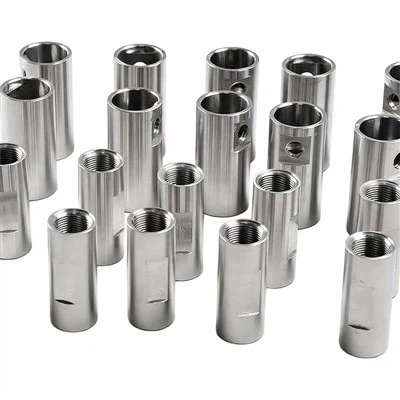
Imagine a robot with joints that are made of high - quality materials. Our Stainless Steel Metal Robot Parts are a great example. Stainless steel is strong, durable, and has relatively low friction. When the joints are made of such materials, they can withstand repeated movements without wearing out quickly. This means the robot can keep performing at a high speed over a long period.
Another factor is the precision of the joint parts. Precision is all about how accurately the joints can move to the desired position. If the joints are not precise, the robot might overshoot or undershoot the target position. This can lead to delays in the robot's response. For instance, if a robot is supposed to pick up an object and its joint doesn't move to the exact right position, it has to make adjustments, which takes time.
The weight of the joint parts also matters. Heavier joints require more energy to move. A robot with heavy joint parts will take longer to accelerate and decelerate its limbs. This directly affects the response time. On the other hand, lighter joint parts can be moved more quickly, allowing the robot to respond faster.
Let's talk about the control system in relation to the joint parts. The control system sends signals to the joints to make them move. If the joint parts are not compatible with the control system, it can cause communication issues. For example, if the control system sends a signal for a joint to move a certain way, but the joint can't interpret the signal correctly, there will be a delay in the response.
Now, let's consider the type of movement that the joint parts are designed for. Some joints are designed for simple, repetitive movements, while others are for more complex, multi - directional movements. Joints for complex movements might take longer to execute because they have to coordinate multiple axes of motion. For example, a CNC Machine Robot Arm that needs to perform precise machining operations might have joints that are designed for very accurate and complex movements. These joints might have a slightly longer response time compared to joints designed for simple up - and - down or back - and - forth movements.
In addition, the lubrication of the joint parts is a key factor. Proper lubrication reduces friction and wear. When the joints are well - lubricated, they can move more smoothly, which in turn improves the robot's response time. Without proper lubrication, the joints can become stiff, and the robot will have to work harder to move them, leading to slower response times.
The quality of the manufacturing process also impacts the response time. If the joint parts are not manufactured to high standards, there could be small defects or inconsistencies. These can cause the joints to not move as smoothly as they should. For example, a misaligned joint can cause the robot to move in an unexpected way, and it will take time to correct the movement.
So, as you can see, the humanoid robot joint parts have a huge impact on the robot's response time. Whether it's the material, design, precision, weight, or compatibility with the control system, every aspect of the joint parts matters.


If you're in the market for high - quality humanoid robot joint parts that can improve your robot's response time, we're here to help. We have a wide range of joint parts that are designed with the latest technology and highest quality standards. Whether you need parts for a simple robot or a complex industrial robot, we've got you covered. Reach out to us for a consultation and let's discuss how our products can meet your needs.
References:
- Robotics textbooks on robot design and movement
- Industry reports on humanoid robot performance and component quality