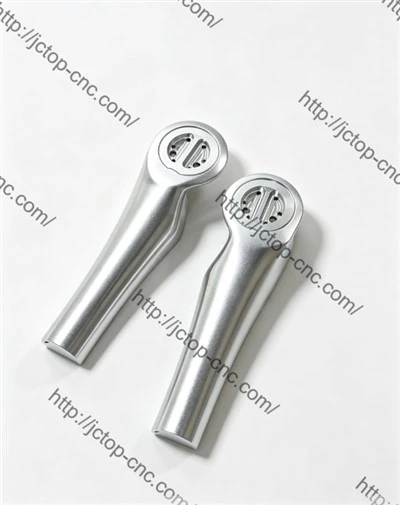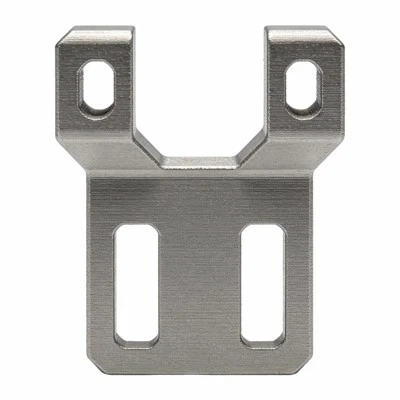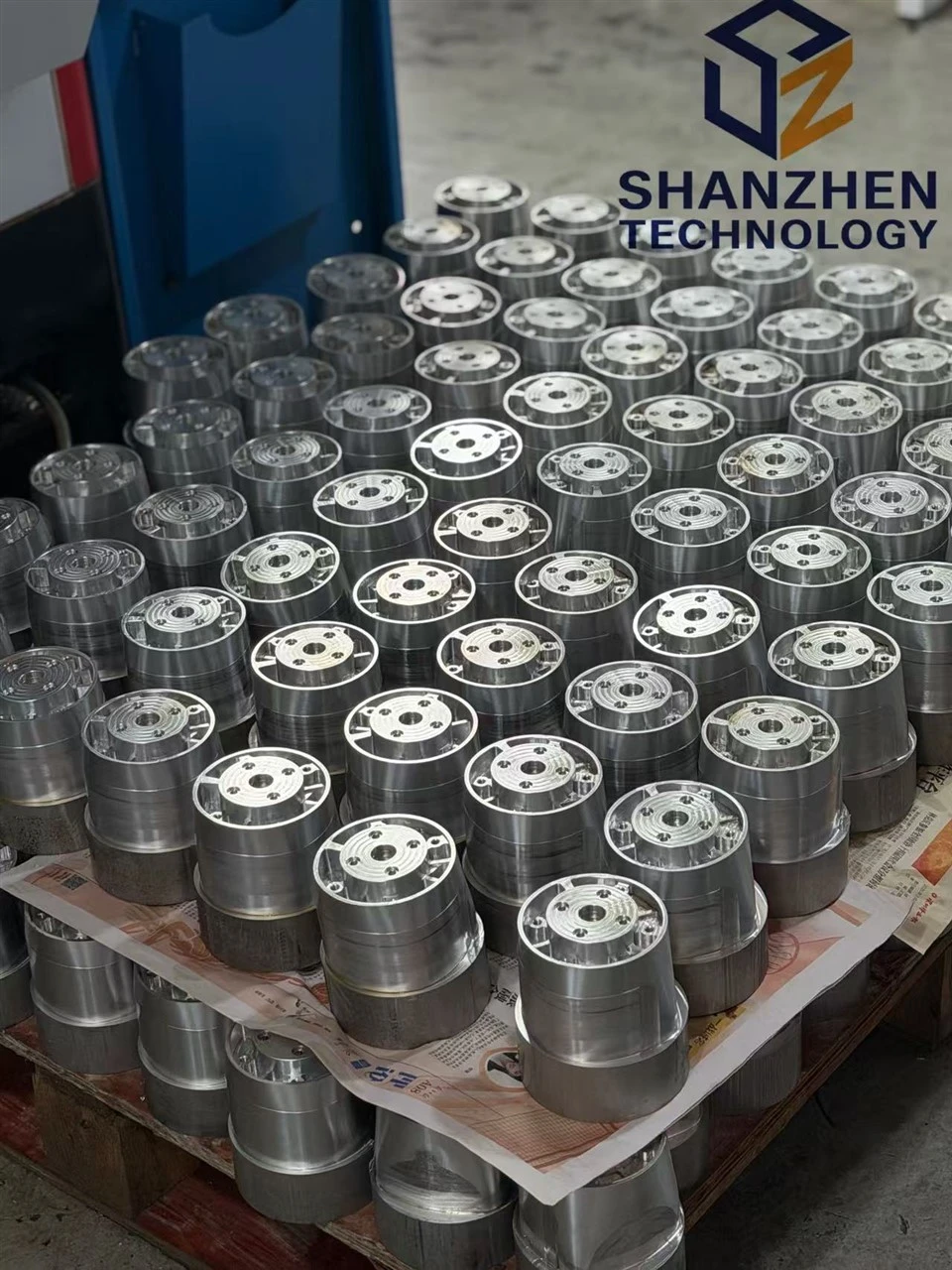
Shenzhen Jingcheng Dingyi Forming Technology Co., Ltd. is one of the leading manufacturers and suppliers of actuator housing in China, specialized in providing high quality customized products. If you're going to buy bulk cheap actuator housing, welcome to get quotation from our factory. Quality products and low price are available.
Designed Around the Joint Assembly
The housing is not simply an outer shell. Its internal and external features are designed around the components installed inside the actuator.
The internal cavity accommodates the motor, bearing, and harmonic reducer assembly, while the upper flange provides mounting interfaces for the end cover, harmonic reducer, encoder, or other joint components.
A circular pattern of threaded holes around the flange allows components to be securely fixed and repeatedly assembled.

Key Machined Features
Stepped cylindrical body
Provides different locating and mounting surfaces while keeping the actuator compact.
Internal cavity
Machined to accommodate the motor, bearings, harmonic reducer, and other actuator components.
Reducer mounting interface
The mounting surface and hole pattern can be manufactured according to the customer's harmonic reducer specifications.
Bearing locating features
Precision-machined bearing seats and locating surfaces help achieve the required assembly relationship between the motor, bearing, and transmission system.
Flanged mounting surface
Provides a stable connection for the end cover and other joint components.
Threaded mounting holes
The flange can be machined with customized thread sizes, hole patterns, and quantities according to the engineering drawing.

Materials
For humanoid robot actuator housings, aluminum alloys are commonly selected to reduce joint weight while maintaining sufficient structural rigidity.
Available materials include:
- 6061-T6 Aluminum – lightweight and cost-effective
- 7075-T6 Aluminum – higher strength for demanding joint applications
- Stainless Steel
Other metals according to project requirements
CNC Manufacturing
The housing can be manufactured using 3-axis or 5-axis CNC machining, depending on the geometry and tolerance requirements.
Critical features such as:
- Bearing seats
- Reducer mounting surfaces
- Locating bores
- Threaded holes
- Flange surfaces
- Internal cavities
can be controlled according to the customer's engineering drawings.
For high-volume production, process control and inspection are particularly important because even small dimensional variations can affect the assembly of the actuator.


Surface Finishing
Depending on the material and application, finishing options include:
- Anodizing
- Hard anodizing
- Bead blasting
- Polishing
- Passivation
- Custom surface treatments
For aluminum actuator housings, anodizing or hard anodizing can be selected when additional surface protection and wear resistance are required.
Built for Mass Production
This actuator housing is suitable for high-volume production of humanoid robot joint modules.
We can support projects from initial prototypes through production scaling, with attention to:
- Dimensional consistency
- Hole-position accuracy
- Critical mating surfaces
- Material consistency
- Surface finish
- Batch-to-batch repeatability
This is especially important for robot manufacturers moving from prototype validation to larger-scale production.

Why Choose Us
We manufacture precision CNC robot components from prototype quantities to high-volume production.
Our capabilities include CNC milling, 5-axis machining, CNC turning, surface finishing, and inspection. We can also review customer CAD models and drawings before production to identify potential machining or assembly issues.
If you are developing a humanoid robot actuator and need a manufacturing partner for actuator housings, joint housings, motor mounts, arm links, or other precision robot components, send us your 3D model or engineering drawing for a quotation.
01
High Quality
02
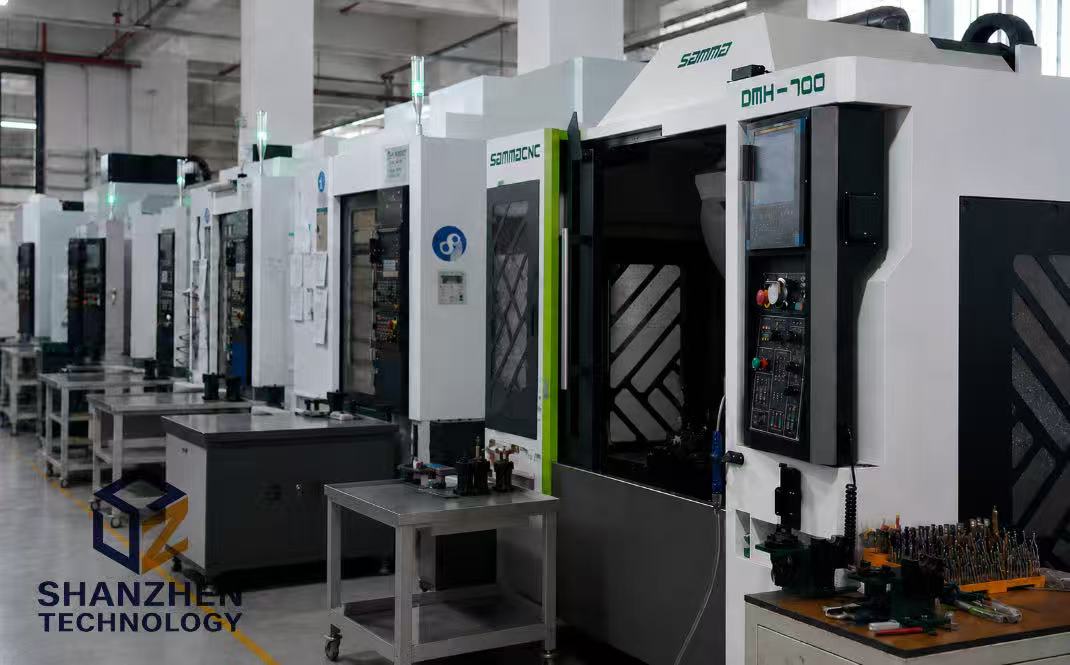
Advanced Equipment
03
Professional Team
04
Custom Service

FAQ
Q: 1. What is an actuator housing used for in humanoid robots?
A: An actuator housing is the main structural enclosure of a robotic joint actuator. It houses and protects components such as the motor, bearings, harmonic reducer, and encoder, while providing precise mounting interfaces for the joint assembly.
Q: 2. Where are actuator housings used in humanoid robots?
A: Actuator housings can be used in various rotary joints, including shoulder, hip, knee, elbow, and other articulated joints. The specific housing design depends on the joint's load, torque, size, and transmission configuration.
Q: 3. Can the housing be designed for harmonic drive reducers?
A: Yes. We can manufacture actuator housings with customized harmonic reducer mounting interfaces, including mounting holes, locating features, internal cavities, and flange surfaces according to the customer's reducer specifications and engineering drawings.
Q: 4. How do you ensure the housing is concentric with the motor and bearing assembly?
A: Critical features such as bearing seats, reducer mounting surfaces, locating bores, and shaft openings are machined according to the required tolerances. Proper machining setups and inspection procedures help maintain the required concentricity and positional accuracy.
Q: 5. Can you manufacture actuator housings with threaded holes around the flange?
A: Yes. We can machine circular patterns of tapped holes, through holes, counterbores, and mounting holes on the flange according to the customer's CAD model or engineering drawing.
Q: 6. What materials are commonly used for humanoid robot actuator housings?
A: 6061-T6 and 7075-T6 aluminum are commonly used because they provide a good balance of low weight, strength, machinability, and structural rigidity. Stainless steel and other materials can also be considered for applications requiring higher strength or specific mechanical properties.
Q: 7. Can you produce actuator housings for mass production?
A: Yes. We support prototype, low-volume, and high-volume CNC production. For large humanoid robot projects, we focus on dimensional consistency, process stability, and repeatable quality across production batches.
Q: 8. Can you manufacture the housing according to our existing 3D model?
A: Yes. Customers can provide a STEP, STP, IGES, or other compatible 3D CAD file, together with a 2D drawing when available. We can manufacture the actuator housing according to the specified dimensions, tolerances, materials, and finishing requirements.
Q: 9. Can you help optimize an actuator housing for CNC machining?
A: Yes. Our engineers can review the design for tool accessibility, wall thickness, pocket geometry, hole configuration, machining orientation, and material usage. Design optimization can help reduce machining time and production costs while maintaining the required structural performance.
Q: 10. What surface finishes are available for aluminum actuator housings?
A: Common options include anodizing, hard anodizing, bead blasting, polishing, and other customized finishes. The appropriate finish can be selected based on appearance, corrosion resistance, wear resistance, and assembly requirements.
Hot Tags: actuator housing, China actuator housing manufacturers