Why Stainless Steel Sheet Folding Is Important in Industrial Applications
Stainless steel is widely used due to its excellent corrosion resistance, mechanical strength, and durability. However, transforming flat sheets into functional structures requires controlled folding processes.
Key advantages of stainless steel folded parts:
High structural rigidity
Long-term corrosion resistance
Strong load-bearing capability
Suitable for harsh environments
Compatible with welding and assembly systems
Because of these advantages, stainless steel sheet folding is commonly used in high-performance mechanical systems where reliability is critical.
Common Stainless Steel Grades Used in Sheet Folding
Different grades of stainless steel behave differently during forming processes.
🧱 304 Stainless Steel
Most commonly used grade
Good corrosion resistance
Moderate formability
Widely used in industrial equipment
🧱 316 Stainless Steel
Higher corrosion resistance
Suitable for marine or chemical environments
Slightly harder to form
🧱 201 Stainless Steel
Lower cost alternative
Good mechanical strength
Used in less corrosive environments
Material selection directly affects bending accuracy, springback behavior, and final structural performance.
Challenges in Stainless Steel Sheet Folding
Although stainless steel is widely used, it presents several manufacturing challenges.
⚠️ 1. Springback Effect
After bending, stainless steel tends to partially return to its original shape, requiring compensation in tooling design.
⚠️ 2. Surface Damage Risk
Improper tooling or pressure control may cause scratches or deformation on visible surfaces.
⚠️ 3. High Forming Force Requirement
Stainless steel requires significantly higher bending force compared to aluminum or mild steel.
⚠️ 4. Dimensional Accuracy Control
Maintaining tight tolerances is difficult without precise CNC-controlled press brake systems.
Manufacturing Process of Stainless Steel Sheet Folding
Modern sheet folding relies on CNC-controlled press brake systems to ensure repeatability and precision.
Step 1: Engineering Design (CAD Modeling)
The folding sequence is designed based on:
Material thickness
Bend radius
Structural requirements
Step 2: Material Preparation
Stainless steel sheets are cut to required dimensions using laser cutting or CNC cutting systems.
Step 3: CNC Press Brake Folding
Using CNC-controlled press brakes, the sheet is bent according to programmed angles and sequences.
Step 4: Angle Calibration
Each folded part is measured and adjusted to ensure dimensional accuracy.
Step 5: Surface Finishing
Processes such as brushing, polishing, or passivation may be applied depending on application requirements.
CNC Folding vs Manual Bending
Modern manufacturing increasingly relies on CNC-controlled systems instead of manual bending.
CNC Folding Advantages
Higher precision
Repeatable consistency
Complex angle control
Reduced human error
Manual Bending Limitations
Lower accuracy
Inconsistent batch quality
Limited complexity handling
For industrial-grade stainless steel components, CNC folding is the preferred method.
Applications of Stainless Steel Sheet Folding Components
Folded stainless steel parts are widely used in engineering systems requiring strength and durability.

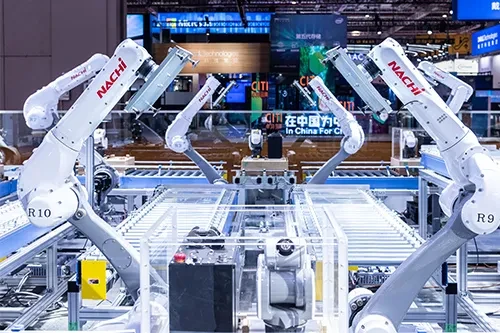
Robotics Industry
Robot structural covers
Joint protection housings
Equipment mounting brackets
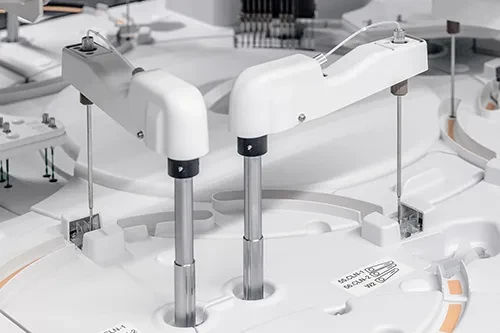
Industrial Machinery
Machine enclosures
Safety covers
Structural reinforcement panels
Construction Systems
Framing brackets
Structural support components
Reinforcement connectors
Engineering Considerations for High-Precision Folding
To ensure high-quality stainless steel folded components, several engineering factors must be considered:
Bend Radius Optimization
Incorrect radius design may lead to cracking or deformation.
Material Compensation Design
Springback must be compensated during CAD design stage.
Sequence Planning
Complex parts require multi-step folding sequences to avoid interference.
Our Manufacturing Capabilities for Stainless Steel Sheet Folding
We provide precision sheet metal fabrication services for industrial and engineering applications.
Manufacturing Equipment
CNC press brake systems
Laser cutting machines
Precision forming tools
Precision Capability
Standard tolerance: ±0.1mm
High precision capability: ±0.05mm (depending on structure)
Materials Supported
Stainless steel (304, 316, 201)
Carbon steel
Aluminum sheets
Production Services
Prototype manufacturing
Small batch production
Mass production support
Why Choose us
Professional manufacturing ensures:
Stable structural performance
High repeatability
Reduced assembly issues
Improved product lifespan
For industries such as robotics and automation, precision folding directly impacts system reliability and safety.
Conclusion
Stainless steel sheet folding is a fundamental process in modern precision manufacturing, enabling the production of durable and high-strength structural components across multiple industries.
With increasing demand for robotics, automation, and industrial equipment, CNC-controlled stainless steel folding continues to play a key role in delivering reliable and high-performance engineering solutions.

Get Custom Stainless Steel Folding Parts
We provide custom stainless steel sheet folding and CNC fabrication services for industrial applications.
Robot structural components
Industrial machine enclosures
Custom metal brackets
📩 Send your CAD drawing for fast quotation and engineering evaluation.