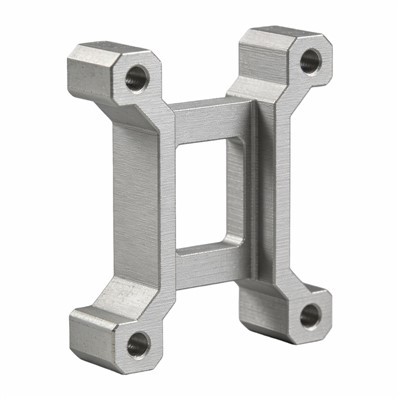
Hey there! As a supplier of Humanoid Robot Joint Parts, I've been deeply involved in the world of humanoid robots. One of the most fascinating aspects of these robots is how their joint parts interact with the control system. Let's dive right into it.
The Basics of Humanoid Robot Joint Parts
First off, humanoid robot joint parts are like the joints in our human body. They allow the robot to move in various ways, just like we can bend our elbows, knees, and other joints. These parts are crucial for the robot's mobility and functionality. They come in different shapes and sizes, each designed for a specific movement.
For example, some joints are designed for rotational movement, while others are for linear movement. The materials used in these joint parts are also important. They need to be strong enough to support the robot's weight and movement, yet lightweight to ensure efficient operation. That's why we often use high - quality metals and advanced composite materials in our joint parts.
How Joint Parts and the Control System Connect
The control system of a humanoid robot is like the brain. It sends signals to the joint parts to tell them what to do. When the control system decides that the robot should raise its arm, it sends an electrical signal to the relevant joint parts in the arm. These joint parts then convert this electrical signal into mechanical movement.
There are two main types of control systems: open - loop and closed - loop. In an open - loop system, the control system sends a signal to the joint parts, and the joint parts execute the movement without any feedback. This is a simpler and less expensive option, but it may not be as accurate.
On the other hand, a closed - loop system uses sensors in the joint parts to provide feedback to the control system. The sensors measure things like the position, speed, and force of the joint movement. The control system then uses this feedback to adjust the signals it sends to the joint parts, ensuring more accurate and precise movement.
The Role of Sensors in Joint Parts
Sensors play a vital role in the interaction between joint parts and the control system. In our joint parts, we use a variety of sensors, such as position sensors, force sensors, and torque sensors.
Position sensors are used to determine the exact position of the joint. They help the control system know where the joint is at any given time. This is crucial for tasks that require precise positioning, like picking up an object.
Force sensors measure the amount of force applied to the joint. This is important for tasks that require the robot to interact with the environment, such as pushing or pulling objects. The control system can use the force sensor data to adjust the movement of the joint to avoid applying too much or too little force.
Torque sensors measure the rotational force applied to the joint. They are used to ensure that the joint is operating within its safe limits. If the torque exceeds a certain threshold, the control system can take action to prevent damage to the joint parts.
The Impact of Joint Parts on the Control System's Performance
The quality and design of the joint parts can have a significant impact on the performance of the control system. High - quality joint parts with smooth movement and low friction can make it easier for the control system to send accurate signals and achieve precise movement.
For example, if the joint parts have a lot of play or looseness, the control system may have a hard time controlling the movement accurately. This can lead to jerky or inaccurate movements, which can be a problem for tasks that require high precision.
On the other hand, well - designed joint parts can enhance the performance of the control system. They can reduce the energy consumption of the robot, improve the response time of the control system, and increase the overall reliability of the robot.
Our Products and Their Advantages
As a supplier of Humanoid Robot Joint Parts, we offer a wide range of products that are designed to work seamlessly with the control system. Our joint parts are made from high - quality materials and are precision - engineered to ensure smooth and accurate movement.
We also offer a variety of CNC Machine Robot Arm options. These arms are designed to be highly flexible and can be used in a variety of applications. They are equipped with advanced sensors and control systems to ensure precise movement.
In addition, we have Aluminium Robot Chassis that are lightweight yet strong. The chassis provides a stable base for the robot and can support the weight of the joint parts and other components.
We also offer a range of Robot Accessories that can enhance the functionality of the robot. These accessories include grippers, cameras, and sensors that can be easily integrated with the joint parts and the control system.
The Future of Humanoid Robot Joint Parts and Control Systems
The future of humanoid robots looks very promising. As technology continues to advance, we can expect to see more sophisticated joint parts and control systems.


For example, we may see the development of joint parts that are more flexible and can mimic human movement even more closely. These joint parts may use new materials and technologies, such as shape - memory alloys and artificial muscles.
The control systems are also likely to become more intelligent. They may use artificial intelligence and machine learning algorithms to adapt to different situations and tasks. This will make humanoid robots more versatile and useful in a wide range of applications, such as healthcare, manufacturing, and service industries.
Contact Us for Your Robot Parts Needs
If you're in the market for high - quality Humanoid Robot Joint Parts, we'd love to hear from you. Our team of experts is ready to help you find the right parts for your specific needs. Whether you're building a small research robot or a large industrial humanoid, we have the products and expertise to support you.
So, don't hesitate to reach out to us for more information and to start a procurement discussion. We're looking forward to working with you to bring your robot projects to life!
References
- "Robotics: Modelling, Planning and Control" by Bruno Siciliano, Lorenzo Sciavicco, Luigi Villani, and Giuseppe Oriolo.
- "Introduction to Autonomous Mobile Robots" by Roland Siegwart, Illah R. Nourbakhsh, and Davide Scaramuzza.